

What Is Multimodal AI?
Multimodal AI is a form of artificial intelligence that can process and comprehend various forms of data, such as text, images, audio, and video, within a single system. It takes a combination of these to enhance understanding of the context, decision-making, and automation. IBM states that multimodal AI can combine different forms of data to produce more precise, contextually relevant results, which are stronger than those of established single-input AI systems.
What Are Multimodal AI Workers?
Multimodal AI workers are smart systems endowed with multimodal abilities to execute tasks independently. These systems can handle various types of data at any given time, comprehend situations, make decisions, and perform workflows without human input. In contrast to conventional software tools, which rely on human intervention, AI workers are digital employees who can be left alone to handle the process through to completion.
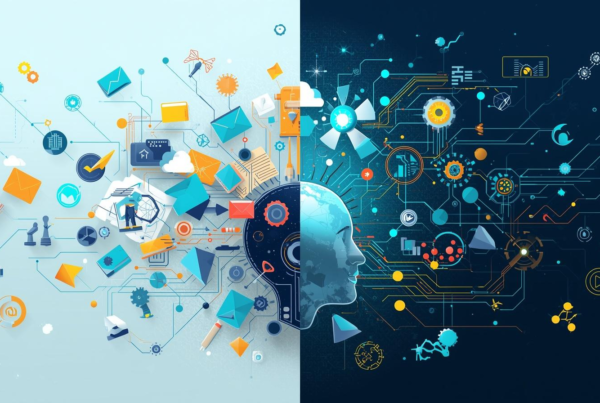
Over the decades, businesses have used traditional software tools such as CRM, analytics, design, and workflow automation to operate. All tools are purpose-driven and demand human touch, leading to disjointed workflows and operational inefficiencies. Nevertheless, this practice is changing with the advent of multimodal AI. Organizations have stopped using a variety of tools and instead rely on AI workers that can complete multiple tasks within a single system. McKinsey indicates that multimodal AI enables systems to accept and produce outputs across different data types, enhancing efficiency and enabling more sophisticated automation.
Such a transition is from tool-based operations to AI-based execution, where systems do not support but carry out work.
Types of Data Used in Multimodal AI
Multimodal AI systems operate on diverse types of data and are therefore better equipped to comprehend context and handle complex tasks.
| Data Type | Description | Example Use Case |
| Text | Written or structured data | Emails, reports, chat messages |
| Image | Visual information | Invoice scanning, document analysis |
| Audio | Voice-based data | Call transcription, voice assistants |
| Video | Motion-based visual data | Meeting analysis, surveillance |
This ability to combine different data types allows AI systems to reduce errors and improve decision-making by cross-verifying information across multiple inputs.
From Traditional Software to AI Workers
Conventional software environments require users to manually input data, run a series of workflows, and analyze the results. This system relies heavily on human input and is usually inefficient. Conversely, multimodal AI employees can be trained in natural language, process multiple data formats simultaneously, and perform tasks independently. This change puts human beings in the position of supervisors rather than operators, enabling businesses to focus more on strategic than routine operations.
Multimodal AI vs Traditional Software
Multimodal AI workers differ significantly from traditional software tools in how they operate and deliver value.
| Feature | Multimodal AI Workers | Traditional Software |
| Function | Performs tasks autonomously | Requires user operation |
| Data Handling | Multi-format | Single-format |
| Workflow | Automated | Manual |
| Decision Making | AI-driven | Human-driven |
| Integration | Unified system | Multiple tools required |
This comparison highlights a fundamental shift from software as a tool to AI as an execution system.
How Multimodal AI Works
Multimodal AI works by combining different data types into a unified model that can process inputs simultaneously and generate context-aware outputs. The system collects data, converts it into machine-readable formats, combines different inputs, analyzes patterns, and produces actions or responses based on the combined context.
| Step | Process | Description |
| 1 | Data Input | Collects text, image, audio, or video |
| 2 | Data Processing | Converts inputs into machine-readable format |
| 3 | Data Fusion | Combines multiple data types |
| 4 | Analysis | Identifies patterns and context |
| 5 | Output Generation | Produces response or action |
This integrated workflow enables AI systems to perform complex tasks that would otherwise require multiple tools and manual coordination.
Key Capabilities of Multimodal AI Workers
Multimodal AI employees can perceive and process multiple data types in parallel, enabling them to automate complex business processes and even perform tasks that once required people. They can process structured and unstructured information, communicate in natural language or via voice, make decisions based on context, and perform tasks without human intervention. The abilities enable them to be very useful in managing business processes at scale.
Why Multimodal AI Is Replacing Traditional Software
Conventional tools can only work with individual data, whereas multimodal AI integrates multiple sources to generate more information. IBM argues that AI systems can be more useful by integrating multiple data sources to improve precision.
Multimodal system AI workers can complete the entire workflow end to end, eliminating the need for multiple tools and manual intervention. Integration of multiple data inputs enhances reliability and reduces errors compared to systems that take a single input. Natural interaction: Multimodal AI supports voice, text, and visual inputs, making systems easier to interact with and learn from. It reduces reliance on multiple tools, serves as a centralized system capable of performing many functions, and simplifies technology stacks and reduces operational costs.
Real-World Examples of Multimodal AI
Multimodal AI is already being used across industries to replace traditional software tools and improve efficiency.
| Use Case | Traditional Tool | Multimodal AI Replacement |
| Customer Support | Helpdesk software | AI support agents |
| Sales | CRM + email tools | AI sales agents |
| Finance | Accounting software | AI document processors |
| Marketing | Content + design tools | AI content generators |
| Development | Coding tools | AI coding assistants |
These examples demonstrate how AI workers can consolidate multiple tools into a single intelligent system.
Benefits of Multimodal AI
Multimodal AI offers several benefits that make it more effective than traditional software tools.
| Benefit | Description |
| Higher Accuracy | Combines multiple data sources |
| Faster Workflows | Reduces manual processes |
| Cost Efficiency | Lowers operational costs |
| Better User Experience | Enables natural interaction |
| Scalability | Handles large workloads easily |
These advantages contribute to improved productivity and better decision-making across organizations.
Challenges and Limitations
Despite its advantages, multimodal AI also presents challenges.
| Challenge | Explanation |
| Accuracy Risks | AI may misinterpret data |
| Integration Complexity | Requires system compatibility |
| Data Privacy | Handling multiple data types increases risk |
| Workforce Impact | Automation may replace some roles |
Organizations must address these challenges through proper implementation and governance.
Enterprise Adoption Trends
Multimodal AI is attracting increasing investment in organizations because it effectively enhances efficiency and decision-making. McKinsey claims that the pace of AI adoption is accelerating across all sectors as corporations seek to remain productive and innovative.
This tendency shows that multimodal AI is an important element of the contemporary business strategy.
How Multimodal AI Workers Replace Software Categories
Multimodal AI workers are replacing multiple software categories by combining their functionalities into a single system.
| Software Category | Traditional Role | AI Replacement |
| CRM | Manage customer data | AI sales agents |
| Helpdesk | Support tickets | AI support agents |
| Analytics | Reporting dashboards | AI decision engines |
| Design Tools | Create visuals | AI generators |
| Workflow Tools | Process automation | AI agents |
This consolidation simplifies operations and reduces dependency on multiple tools.
Multimodal AI vs Single-Modal AI
Multimodal AI provides significant advantages over single-modal AI systems.
| Feature | Multimodal AI | Single-Modal AI |
| Data Input | Multiple formats | Single format |
| Accuracy | Higher due to context | Limited |
| Use Cases | Complex workflows | Specific tasks |
| Flexibility | High | Low |
This comparison highlights why multimodal AI is better suited to modern business applications.
Future of Multimodal AI Workers
Multimodal AI is likely to play a core role in business processes as organizations transition to automation and smart systems. As an alternative to using multiple software tools, companies can use a single AI system to control multiple workflows. This transition can be seen as a move towards automated operations, enabling organizations to act more efficiently and scale more rapidly.
Multimodal AI Summary
Multimodal AI employees are also changing the way businesses are run, as they are substituting the old software with new smart systems that have the capacity to handle various forms of data, automate operations, and perform tasks without human intervention. It is changing the nature of technology consumption in a business setup.
FAQ
What makes multimodal AI different from traditional AI?
Multimodal AI processes multiple data types simultaneously, while traditional AI typically focuses on a single data type, such as text or images.
Can multimodal AI replace SaaS tools?
Multimodal AI can reduce reliance on multiple SaaS tools by combining their functions into a single system, although full replacement depends on specific use cases.
How does multimodal AI work?
It combines inputs such as text, images, and audio into a unified model, analyzes patterns, and generates outputs based on the combined context.
What are examples of multimodal AI?
Examples include AI systems that analyze documents and images together, voice assistants that provide visual responses, and AI tools that automate workflows using multiple data inputs.
Conclusion
Multimodal AI is also a significant shift in how businesses use technology. Multimodal AI workers are designed to perform tasks autonomously and carry out functions on behalf of people, unlike traditional software tools, which humans operate. As adoption grows, organizations will abandon multiple tools and adopt intelligent AI systems capable of controlling workflows end-to-end. Early adopters in the business will be more efficient, realize lower costs, and have a strong competitive edge in the changing digital world.