

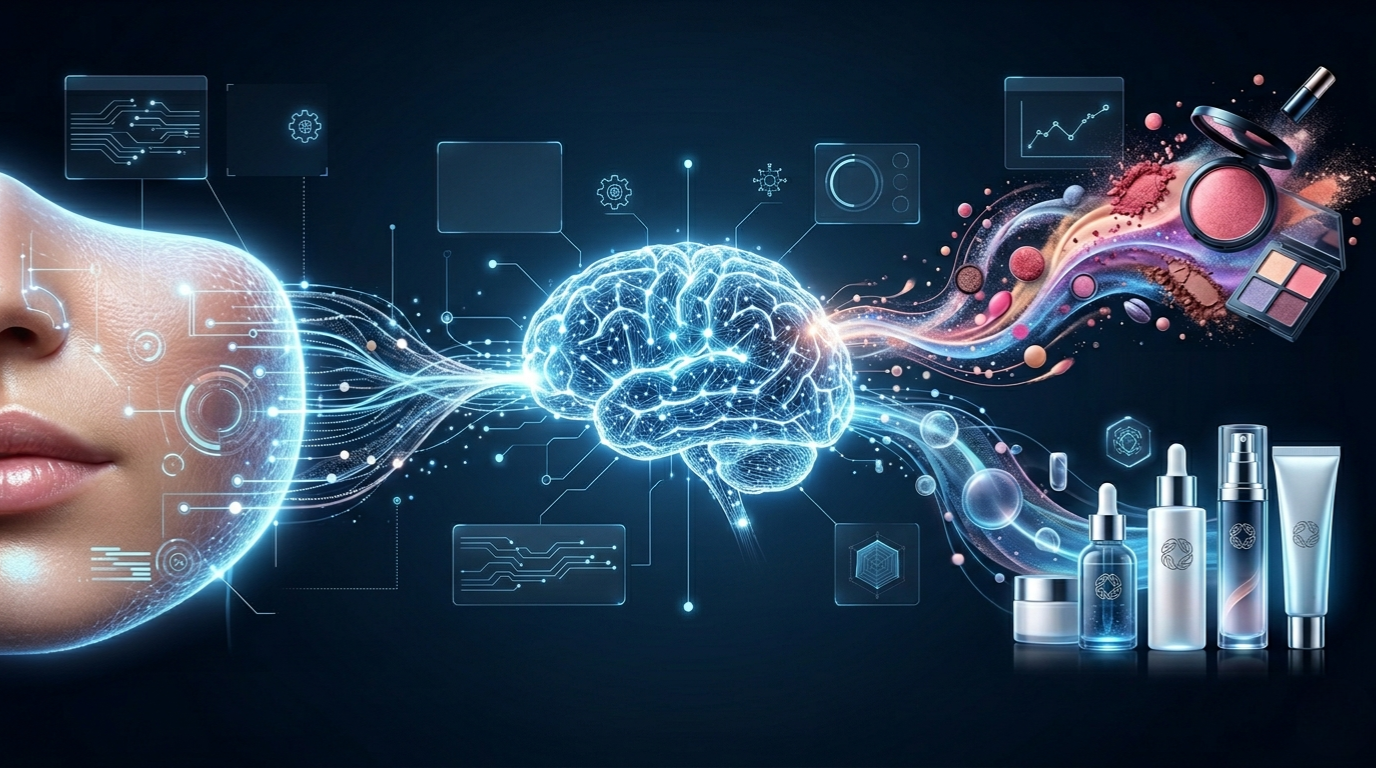
The beauty industry has always changed with time, culture, science, and technology. From ancient herbal remedies to modern skincare products, every era has tried to help people look better and feel more confident. But now, something new is happening beauty is no longer shaped only by human ideas. Artificial intelligence is also playing a big role.
At the center of this change is Generative AI, a type of technology that doesn’t just follow trends but helps create them. It can design new skincare formulas, suggest makeup styles, and even predict how products will look on different people. It can also build personal beauty routines based on individual needs, making beauty care more customized than ever before.
This is important because it allows beauty brands to offer highly personalized products to many people at the same time. With Generative AI, beauty is becoming more individual, affordable, and accessible, without making production complicated or expensive.
Understanding Generative AI in the Beauty Industry
Generative AI is all about systems learning from huge datasets and making new stuff, whether it’s images, product suggestions, or even chemical formulas. Unlike old-school AI, which mostly just predicts or categorizes things, generative AI comes up with something brand new.
This tech is huge for the beauty world. It can analyze zillions of skin types, weather conditions, and product effects to whip up personalized skincare advice. Also, it lets you see what a makeup look might resemble before you actually put it on. And get this it can dream up totally new skincare combos by forecasting how ingredients will mesh together.
The big deal here is that it transforms beauty tech’s function from reacting to customer needs to actually crafting those solutions itself. So instead of merely responding to what you want, it starts creating things specifically for you.
Why the Beauty Industry is Rapidly Adopting Generative AI
The beauty industry fits perfectly with generative AI since it’s very personal, visual, and always changing. These days, people aren’t happy with one-size-fits-all product they want something that cat fits their specific skin, tone, surroundings, and daily life.
- Trends in beauty also blow up overnight thanks to social media sites like Instagram and TikTok. You can’t rely on traditional methods anymore; those are way too slow. So brands need to find other ways to stay ahead, which is where AI steps in.
- On top of that, there’s the huge issue of cost. It typically takes ages to create, test, and get approval for new beauty items. It’s a long, pricey process. But with generative AI, companies can do simulations first, cutting down on expenses and speeding things up.
- Lastly, consumers nowadays expect super-interactive digital experiences. Virtual makeup try-ons and personalized recommendations people want these instantly. AI makes that happen, totally changing how brands connect with their audience.
How Generative AI is Transforming Beauty Experiences
One of the coolest changes from generative AI is hyper-personalization. Instead of lumping everyone into big groups like “oily skin” or “dry skin,” it can now look at way more detailed stuff think humidity, eating habits, sleep, pollution and use that info to make super specific skincare and makeup recommendations.
This really changes the game for customer experience. Like, imagine two people both having normal skin but one lives in a damp city while the other’s in an arid area. AI would suggest totally different routines for each person based on their unique environments. So instead of one-size-fits-all tips, you get something tailored just for you.
- Enhances personalization, allowing users to experiment with multiple looks instantly without physical application.
- Virtual try-ons allow real-time previews of products like lipstick, foundation, and hairstyles using AR technology.
- Reduces guesswork by showing how a product will actually look on your face before purchase.
- Improves buying confidence, helping users make quicker and more informed decisions.
- Creates a more enjoyable shopping experience by making beauty exploration interactive and fun.
- Supports inclusivity, as it works across different skin tones, facial features, and face shapes.
- Helps users avoid mismatched purchases, reducing product returns and dissatisfaction.
The Role of Generative AI in Predicting Beauty Trends
Beauty trends are swayed by social media, influencers, and what consumers like, and generative AI can figure out patterns in all this data we generate.
Imagine millions of people suddenly talking about specific skincare stuff or makeup looks online. AI spots these shifts fast and figures out these topics could go big in the future. This lets companies get ready and roll out their products way before everyone else, not after the trend blows up.
This changes how the beauty game works. Before, firms used gut feelings and studies to make decisions about new lines and ads. Now, they use live data streams, making AI super important for planning ahead.
Generative AI in Beauty Marketing and Content Creation
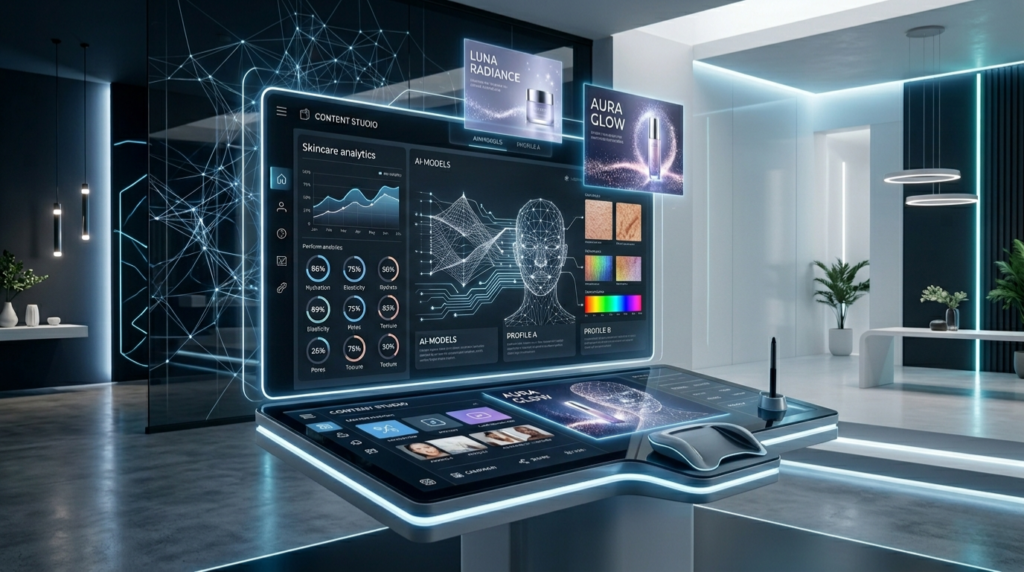
The beauty industry’s marketing is typically very visual and emotionally charged. In the past, putting together campaigns meant spending lots on photoshoots, models, and production crews. Now, generative AI is shaking things up.
With AI, beauty brands can whip up top-notch visuals, influencer-style posts, and ads. The tech can even mimic various lighting, skin colors, and backgrounds to tailor campaigns efficiently, cutting out the need for actual photo shoots.
Besides slashing expenses, this method ramps up flexibility too. Brands can now tweak a single product’s presentation for distinct audiences maybe luxe for one group and trendy for social media users fast tracked by AI.
| Traditional Approach | Generative AI Approach | Example |
|---|---|---|
| Needs photoshoots, models, studios | Creates full visuals digitally | AI skincare ad without shoot |
| Limited product photography setups | Generates unlimited product images | Lipstick in multiple backgrounds |
| Real influencers required | Uses virtual/AI influencers | AI beauty influencer campaigns |
| Slow ad production (weeks) | Fast ad creation (hours) | Instant seasonal campaign ads |
| Separate teams for content | AI creates visuals + copy together | Full Instagram post in one tool |
| Few creative variations | Many ad versions instantly | Multiple lipstick ad designs |
| High marketing cost | Lower production cost | Budget-friendly global campaigns |
Technologies Powering Generative AI in Beauty
These changes come from a bunch of advanced tech working together. Machine learning analyzes user behavior and product data, while computer vision maps faces and skin. GANs generate realistic images for virtual try-ons and marketing too. Natural language processing understands customer reviews and feedback.
All this tech works together to keep refining beauty products, constantly learning and improving them based on actual data in the real world.
Benefits of Generative AI in Beauty
The biggest perk of generative AI is its ability to personalize things on a massive scale. It lets every customer have a customized experience without making operations any more complicated. This totally transforms how beauty brands connect with customers.
- Another huge benefit? Speed. It used to take years for product development, but now thanks to AI, that’s been slashed to months sometimes even weeks. This lets companies keep up with new trends much faster.
- Cost efficiency is another biggie. Generative AI cuts down the need for tons of physical testing, massive photo shoots, and standard marketing materials. This means smaller brands have a fighting chance against the big dogs in the industry.
- Plus, customers get way more out of their shopping experience. It becomes interactive and immersive, making users feel more confident. They can virtually try out products and get instant, personalized advice too.
Challenges and Limitations of Generative AI in Beauty
Generative AI comes with some big challenges along with its advantages. The main worry is data privacy. Because these systems use info like your face and skin, keeping that private matters a lot.
Bias is another issue. If AI doesn’t learn from a diverse group, it might not work well for everyone’s skin color or background. That can really hit trust with users and harm inclusion too.
We also have to be careful about people relying too much on AI. Though it can offer neat ideas, it lacks the human edg our creativity and emotional insight mean AI can’t handle everything in beauty branding.
Lastly, transparency is huge now. People need to see how these AI systems do what they do, to know if we can really trust their advice.
| Challenge | Explanation | Impact |
|---|---|---|
| Data Privacy | Uses sensitive facial and skin data | Trust and security risks |
| AI Bias | Uneven training data across skin tones | Unfair or inaccurate results |
| Limited Creativity | AI lacks human emotion and intuition | Less authentic brand feel |
| High Cost | Needs advanced tools and infrastructure | Hard for small brands |
| Data Quality Issues | Poor data leads to poor outputs | Wrong recommendations |
| Lack of Transparency | Users don’t know how AI decides | Reduced trust |
| Over-Reliance | Too much automation | Loss of human touch in branding |
The Future of Generative AI in Beauty
The future of beauty is going to be super personal and immersive. You might have an AI-powered beauty assistant that recommends skincare based on the weather, your skin’s condition, or other changes in your life.
Eventually, products could be fully customized too. Think about getting a moisturizer perfectly made just for you and your skin, instead of a one-size-fits-all version.
There’ll probably be more cool tech too, like AR and AI blending together. So, those virtual mirrors could seem real, and emotional AI might even suggest makeup and routines to match your moods, tying how you look to how you feel.
Also, sustainability should get better, with AI cutting down waste in making products and using ingredients more wisely.
Conclusion
Generative AI is changing the beauty industry, making it super personalized and data-driven. It lets brands go beyond mass production and offer amazing customizations on a big scale.
But the real win will come from teamwork between humans and machines, not one or the other. AI can deal with speed and numbers, while we humans add emotions, tell stories, and set the creative path.
This shift means beauty now adapts intelligently to each person, becoming more than just looks it’s a unique, evolving experience for everyone.
FAQ’s
1. What is Generative AI in the beauty industry?
Generative AI refers to artificial intelligence systems that can create images, videos, text, product recommendations, and virtual beauty experiences. Beauty brands use it to personalize marketing campaigns, develop virtual try-ons, and create customized customer experiences.
2. How are beauty brands using Generative AI today?
Beauty companies use Generative AI for personalized skincare recommendations, AI-generated marketing content, virtual makeup trials, product design, influencer campaigns, and customer support. These applications help brands engage customers more effectively while reducing content production costs.
3. Can Generative AI help customers choose the right beauty products?
Yes. By analyzing factors such as skin type, tone, concerns, and preferences, Generative AI can recommend products tailored to individual needs. This creates a more personalized shopping experience and can improve customer satisfaction.
4. What are the benefits of Generative AI for beauty marketing?
Generative AI enables faster content creation, hyper-personalized campaigns, improved customer engagement, reduced marketing costs, and scalable creative production. It also helps brands test multiple campaign variations quickly.
5. Are there any challenges associated with Generative AI in beauty?
While Generative AI offers many advantages, challenges include data privacy concerns, algorithmic bias, authenticity issues, and the need for responsible AI governance. Brands must ensure transparency and ethical use of AI-generated content.