

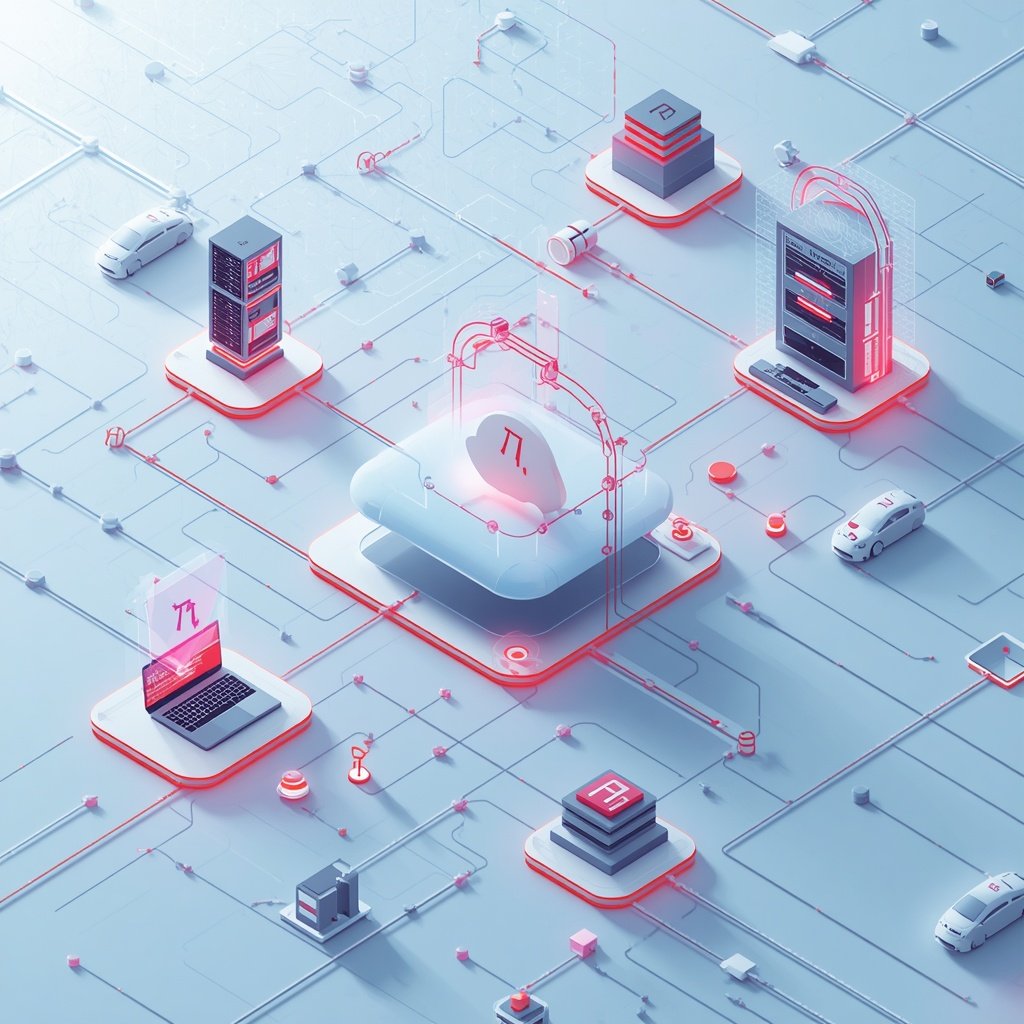
AI agents are quickly moving beyond simple chatbot experiences. Unlike traditional generative AI applications that primarily answer questions or create content, AI agents can reason through tasks, use tools, access enterprise data, trigger workflows, and take actions with limited human intervention.
This creates a major challenge for businesses. Building an AI agent is relatively easy compared with operating one reliably inside a real business environment. An enterprise AI agent may need access to customer data, internal applications, cloud platforms, APIs, databases, communication tools, and business workflows.
That means organizations need a strong AI agent infrastructure. The infrastructure behind an AI agent determines whether it can operate securely, scale effectively, maintain context, access accurate information, and complete tasks without creating unnecessary risks.
Businesses that focus only on choosing the best large language model may overlook the larger technical foundation required for successful deployment. The question is no longer simply, Which AI model should we use?
The more important question is:
What infrastructure does an AI agent need to operate safely and reliably inside our organization?
This article explains the technology foundation behind AI agents and what businesses should build first when developing an enterprise AI agent strategy.

What Is AI Agent Infrastructure?
AI agent infrastructure refers to the technology systems, platforms, services, data layers, security controls, and operational processes that enable AI agents to function reliably. An AI agent does not operate in isolation. It requires an environment where it can receive information, process requests, access approved tools, remember relevant context, perform actions, and report outcomes.
A complete infrastructure can include:
- AI models and model gateways
- Cloud computing resources
- Data platforms
- APIs and integrations
- Agent orchestration systems
- Memory systems
- Vector databases
- Identity and access management
- Security controls
- Monitoring platforms
- Evaluation frameworks
- Governance systems
In simple terms, the AI model acts as the intelligence, while the infrastructure provides the environment needed for that intelligence to perform useful work.
A simple way to understand it
| AI Agent Capability | Infrastructure Required |
|---|---|
| Understand a request | AI model and inference platform |
| Access business information | Data infrastructure |
| Use external applications | APIs and connectors |
| Complete multiple tasks | Agent orchestration |
| Remember previous context | Memory systems |
| Access tools securely | Identity and access controls |
| Handle high workloads | Scalable cloud infrastructure |
| Detect errors | Monitoring and observability |
| Follow company policies | AI governance |
Without this foundation, AI agents can become difficult to manage as they move from experiments into production.
Why AI Agents Need More Than an LLM
Many early AI projects begin with a simple architecture.
A user enters a prompt, the application sends the prompt to a large language model, and the model generates a response.
This approach works for basic generative AI use cases.
AI agents are different.
An agent may need to perform a sequence of actions.
For example, imagine an enterprise sales agent receives this instruction:
Identify inactive high-value prospects, review recent engagement data, generate personalized follow-up messages, and schedule tasks for the sales team.
To complete this request, the AI agent may need to:
- Access the CRM.
- Retrieve prospect information.
- Analyze engagement data.
- Identify qualified prospects.
- Generate personalized content.
- Access an email platform.
- Create sales tasks.
- Record the activity.
The large language model provides reasoning and language capabilities.
However, the surrounding infrastructure makes the workflow possible.
This is why businesses must think beyond the model.
A successful enterprise AI strategy requires an architecture that connects intelligence with data, tools, workflows, and governance.
The Core Components of AI Agent Infrastructure
AI agent infrastructure usually consists of several connected layers.
1. Model Layer
The model layer provides the intelligence that allows an AI agent to understand instructions, reason through problems, and generate responses.
Businesses may use:
- Large language models
- Small language models
- Multimodal AI models
- Domain-specific models
- Open-source models
- Proprietary cloud models
Many organizations will eventually use multiple models rather than relying on one provider.
This makes model abstraction important.
A model gateway can help businesses route workloads based on cost, performance, availability, and security requirements.
2. Data Layer
AI agents need reliable access to information.
This may include:
- Enterprise databases
- CRM platforms
- Customer support systems
- Document repositories
- Data warehouses
- Knowledge bases
- Internal applications
The challenge is not simply connecting data to an AI agent.
Businesses must also ensure that the agent accesses accurate and authorized information.
Poor data quality can directly affect agent performance.
3. Tool and Integration Layer
AI agents become more useful when they can interact with external systems.
These interactions may happen through:
- APIs
- Web services
- Enterprise connectors
- Automation platforms
- Internal software tools
For example, an AI agent might access a CRM, update a database, create a support ticket, or trigger a workflow.
This tool layer transforms an AI system from a passive assistant into an active digital worker.
4. Orchestration Layer
AI agents often need to manage multiple steps.
The orchestration layer helps coordinate those steps.
It can manage:
- Task planning
- Tool selection
- Workflow execution
- Model calls
- Agent collaboration
- Error handling
- Retry logic
As AI environments become more complex, orchestration becomes increasingly important.
5. Memory Layer
Traditional AI interactions are often temporary.
An AI agent may need persistent context.
Memory systems allow agents to retain relevant information across tasks.
For example, an agent may remember:
- Previous customer interactions
- Workflow history
- Business preferences
- Completed actions
- User instructions
Memory must be carefully managed because retaining too much information can create privacy, security, and compliance concerns.
6. Security and Governance Layer
AI agents may have permission to access sensitive systems.
That creates significant security requirements.
Businesses need controls around:
- Authentication
- Authorization
- Identity verification
- Data access
- Tool permissions
- Audit trails
- Policy enforcement
An AI agent should never receive unlimited access simply because it needs to complete a task.
What Businesses Must Build First
Organizations do not need to build every part of a massive AI platform immediately.
The most effective approach is to build the foundation in stages.
The first priority should be creating a secure and controlled environment for AI agents.
A practical starting point includes five major areas.
1. Secure Access to Enterprise Data
AI agents cannot provide meaningful value without access to relevant information.
However, unrestricted access creates risk.
Businesses should begin by identifying:
- Which data agents need
- Where the data is stored
- Who owns the data
- Which users can access it
- Which actions agents are allowed to perform
The goal is to create controlled data access rather than simply connecting every database.
2. Standardized APIs and Integrations
AI agents need a reliable way to interact with business systems.
Companies should identify the most important applications involved in their workflows.
These may include:
- CRM platforms
- ERP systems
- Customer service software
- Marketing platforms
- Collaboration tools
- Data warehouses
Standardized APIs make AI agent integration more reliable and easier to manage.
3. Identity and Permission Controls
Every AI agent should have a defined identity.
Businesses need to know:
- Which agent is performing an action
- What data the agent accessed
- Which tools it used
- What permissions it has
- Who authorized those permissions
This principle is similar to identity management for human users and software applications.
AI agents should operate with the minimum permissions necessary.
4. Monitoring and Logging
Businesses should be able to understand what an AI agent is doing.
Monitoring should track:
- Agent decisions
- Tool calls
- Workflow execution
- Model performance
- Failures
- Costs
- Latency
Without observability, diagnosing AI agent problems becomes extremely difficult.
5. Human Approval for High-Risk Actions
Not every AI agent action should be fully autonomous.
Businesses should define when human approval is required.
For example, an agent may be allowed to:
- Analyze data automatically
- Draft a response
- Recommend an action
However, a human may need to approve:
- Financial transactions
- Contract changes
- Sensitive customer communications
- Security changes
Human oversight is especially important during early deployment.
Data Infrastructure for AI Agents
Data is one of the most important parts of AI agent infrastructure.
An AI agent can only make useful decisions when it receives reliable information.
However, enterprise data is often distributed across multiple systems.
Customer information may exist in a CRM. Financial data may exist in an ERP. Product information may exist in a separate database.
This fragmentation creates challenges.
Businesses need a data architecture that allows AI agents to access information without creating unnecessary duplication or security risks.
Key requirements include:
Data Quality
AI agents can produce poor results when they receive inaccurate information.
Businesses should improve:
- Data accuracy
- Consistency
- Completeness
- Freshness
Data Connectivity
Agents need controlled access to information across systems.
API-based integration can help reduce unnecessary data movement.
Retrieval Systems
Retrieval systems help agents locate relevant information when needed.
Instead of placing all enterprise data directly inside a model prompt, agents can retrieve information dynamically.
Data Permissions
An AI agent should only access information that the requesting user or workflow is authorized to use.
This prevents AI systems from becoming a pathway for unauthorized data exposure.
Compute and Cloud Infrastructure
AI workloads can create significant computing requirements.
An organization may need infrastructure for:
- Model inference
- Agent execution
- Data processing
- API calls
- Workflow automation
- Monitoring
Cloud infrastructure provides flexibility because businesses can scale resources based on demand.
However, cost management becomes important.
AI agents may perform multiple model calls and tool interactions to complete a single task.
A poorly optimized agent can consume unnecessary resources.
Businesses should monitor:
- Compute usage
- Token consumption
- API costs
- Workflow duration
- Infrastructure utilization
Cost observability should be part of the infrastructure strategy from the beginning.
AI Agent Orchestration
An AI agent may need to perform a complex sequence of tasks.
For example:
Request → Planning → Data Retrieval → Tool Selection → Action → Verification → Response
Orchestration systems help manage this process.
They can determine:
- Which step happens next
- Which model should process the request
- Which tool should be used
- What happens when a task fails
- When human approval is required
As businesses deploy multiple AI agents, orchestration becomes even more important.
A future enterprise workflow may involve specialized agents.
For example:
| Agent | Primary Responsibility |
|---|---|
| Research Agent | Collects information |
| Data Agent | Analyzes enterprise data |
| Sales Agent | Supports sales workflows |
| Support Agent | Handles customer issues |
| Security Agent | Monitors potential risks |
| Orchestrator Agent | Coordinates other agents |
This creates the foundation for multi-agent systems.
Memory and Context Management
AI agents need context to perform meaningful work.
However, memory should not be treated as unlimited storage.
There are several types of agent memory.
Short-Term Memory
Used during a current task.
For example, the agent remembers information from earlier steps in the same workflow.
Long-Term Memory
Stores information that may remain useful across future interactions.
Examples include:
- User preferences
- Business rules
- Workflow history
Episodic Memory
Stores information about previous tasks or events.
This can help agents learn from past outcomes.
Knowledge Memory
Provides access to enterprise documents and structured information.
A strong memory strategy helps agents become more consistent.
However, businesses should define retention policies and security controls.
Security and Identity Controls for AI Agents
Security is one of the most important areas of enterprise AI deployment.
Traditional software typically follows predefined instructions.
AI agents can make decisions and select actions dynamically.
That creates new security challenges.
An agent might be manipulated through malicious instructions, access unauthorized data, or misuse a connected tool.
Businesses should implement several security principles.
Principle of Least Privilege
Give each agent only the permissions it needs.
Strong Authentication
AI agents should have controlled identities when interacting with systems.
Action Authorization
Sensitive actions should require additional verification.
Input Validation
External data and user instructions should be treated carefully.
Audit Logging
Businesses should maintain records of agent activity.
Environment Isolation
Testing and production environments should remain separate.
Security should not be added after an AI agent is deployed.
It should be part of the infrastructure design from the beginning.
Monitoring and Observability
Traditional applications are monitored for errors and performance.
AI agents require additional layers of observability.
Businesses may need to monitor:
- Model responses
- Tool usage
- Agent decisions
- Task success rates
- Failure patterns
- Latency
- Cost
- Security events
For example, if an AI agent fails to complete a workflow, businesses need to understand why.
Possible causes may include:
- Poor model reasoning
- API failures
- Missing data
- Permission problems
- Incorrect tool selection
- Workflow errors
Observability allows teams to improve agent performance over time.
A production AI agent should never operate as a complete black box.
Governance and Human Oversight
AI agents can make decisions at a scale that traditional software cannot.
This makes governance essential.
Businesses should establish clear policies around:
- Acceptable agent behavior
- Data access
- Tool permissions
- Human approval
- Compliance
- Monitoring
- Incident response
A useful governance framework can divide actions into risk levels.
| Risk Level | Example Action | Required Oversight |
|---|---|---|
| Low | Summarizing documents | Fully automated |
| Medium | Drafting customer emails | Human review |
| High | Updating financial records | Approval required |
| Critical | Security configuration changes | Strict human authorization |
This approach allows businesses to automate low-risk tasks while maintaining control over sensitive actions.
Building Infrastructure for Multi-Agent Systems
The next stage of enterprise AI may involve multiple specialized agents working together.
Instead of one general-purpose AI agent handling every task, businesses may deploy smaller agents with specific responsibilities.
For example:
A customer service workflow could involve:
- A routing agent identifies the request.
- A knowledge agent retrieves relevant information.
- A support agent prepares a solution.
- A quality agent checks the response.
- A workflow agent updates the customer record.
This architecture can improve specialization.
However, multi-agent environments also introduce new challenges.
Businesses need systems for:
- Agent communication
- Task delegation
- Identity management
- Shared context
- Conflict resolution
- Monitoring
The infrastructure must understand not only what one agent is doing but also how multiple agents interact.
Common AI Agent Infrastructure Challenges
Businesses often face several challenges during deployment.
Challenge 1: Fragmented Enterprise Systems
Many organizations operate with disconnected software platforms.
AI agents need integrations across these systems.
Challenge 2: Unclear Permissions
Companies may not have clear policies for what AI agents are allowed to access.
Challenge 3: Limited Observability
Without monitoring, teams cannot understand why an agent made a decision.
Challenge 4: High Infrastructure Costs
Agent workflows may generate significant compute and API expenses.
Challenge 5: Security Risks
Connected agents can potentially access sensitive systems.
Challenge 6: Poor Data Quality
AI agents cannot consistently perform well when enterprise data is outdated or inaccurate.
Challenge 7: Over-Automation
Businesses may allow agents to perform high-risk actions before sufficient testing.
A Practical AI Agent Infrastructure Roadmap
Businesses should take a phased approach.
Phase 1: Identify High-Value Use Cases
Start with specific workflows.
Good early use cases include:
- Internal research
- Knowledge retrieval
- Customer support assistance
- Sales preparation
- Workflow automation
Avoid starting with the most complex business process.
Phase 2: Build the Data and Integration Foundation
Identify the systems the agent needs.
Create secure connections to:
- Databases
- APIs
- Knowledge platforms
- Enterprise applications
Phase 3: Establish Identity and Security Controls
Define:
- Agent identities
- Permissions
- Authentication
- Authorization policies
Phase 4: Introduce Monitoring
Track performance before expanding deployment.
Measure:
- Accuracy
- Task completion
- Latency
- Cost
- Failures
Phase 5: Add Controlled Autonomy
Allow agents to perform low-risk actions automatically.
Require approval for high-risk actions.
Phase 6: Scale to Multiple Agents
Once governance and monitoring are mature, businesses can introduce specialized agents.
Best Practices for Enterprise AI Agent Adoption
Organizations can improve their AI strategy by following several best practices.
Start with a specific problem
Avoid deploying AI agents simply because the technology is popular.
Build reusable infrastructure
Create common services for identity, monitoring, data access, and security.
Keep agents modular
Smaller, specialized agents are often easier to test and manage.
Monitor everything
Track both technical performance and business outcomes.
Maintain human oversight
Increase autonomy gradually.
Test before production
Simulate failures and unexpected scenarios.
Measure ROI
Track whether AI agents improve productivity, speed, cost, or customer experience.
The Future of AI Agent Infrastructure
AI agent infrastructure is likely to become a major part of enterprise technology architecture.
Businesses will increasingly need platforms capable of managing large numbers of AI agents.
Future infrastructure may include:
- AI agent identity platforms
- Agent-to-agent communication protocols
- Autonomous workflow platforms
- Advanced AI observability
- Agent governance systems
- Specialized agent marketplaces
- Dynamic model routing
- AI-native security frameworks
The enterprise technology stack is evolving. Previously, infrastructure primarily supported applications and human users. Now it must also support autonomous software systems that can reason, plan, and take actions. This shift will change how businesses think about cloud computing, cybersecurity, identity management, and workflow automation.
Conclusion
AI agents are becoming an important part of enterprise technology.
However, businesses should not view them as simple chatbots with additional capabilities. AI agents can access information, interact with applications, execute workflows, and potentially make decisions that affect business operations.
That level of autonomy requires a strong technical foundation. The most successful organizations will focus not only on selecting powerful AI models but also on building secure, scalable, and observable AI agent infrastructure. The priority should be clear.
Start with reliable data access, secure integrations, identity controls, monitoring, and governance. Once these foundations are in place, businesses can gradually expand the capabilities and autonomy of their AI agents.
The future of enterprise AI will not be defined only by the intelligence of individual models. It will also depend on the infrastructure that allows AI agents to work safely, reliably, and at scale.
Frequently Asked Questions
1. What is AI agent infrastructure?
AI agent infrastructure is the collection of technologies, systems, data platforms, integrations, security controls, and monitoring tools required to operate AI agents reliably.
2. Why do AI agents need infrastructure?
AI agents need infrastructure to access data, connect with tools, execute workflows, maintain context, scale workloads, and operate securely.
3. What is the difference between an AI model and an AI agent?
An AI model provides intelligence and generates outputs. An AI agent uses AI models together with tools, memory, workflows, and decision-making systems to complete tasks.
4. What should businesses build first for AI agents?
Businesses should first focus on secure data access, API integrations, identity controls, monitoring, and governance.
5. How do AI agents access enterprise systems?
AI agents typically interact with enterprise systems through APIs, connectors, approved tools, and controlled integration layers.
6. Are AI agents secure?
AI agents can be deployed securely, but they require strong identity management, permission controls, monitoring, and governance.
7. What is AI agent orchestration?
AI agent orchestration manages how agents plan tasks, select tools, execute workflows, handle failures, and coordinate with other agents.
8. What is a multi-agent system?
A multi-agent system involves multiple specialized AI agents working together to complete complex tasks.
9. Why is monitoring important for AI agents?
Monitoring helps businesses track agent actions, performance, failures, costs, security events, and workflow outcomes.
10. What is the future of AI agent infrastructure?
AI agent infrastructure is expected to evolve toward more advanced orchestration, agent identity, governance, observability, security, and multi-agent collaboration systems.