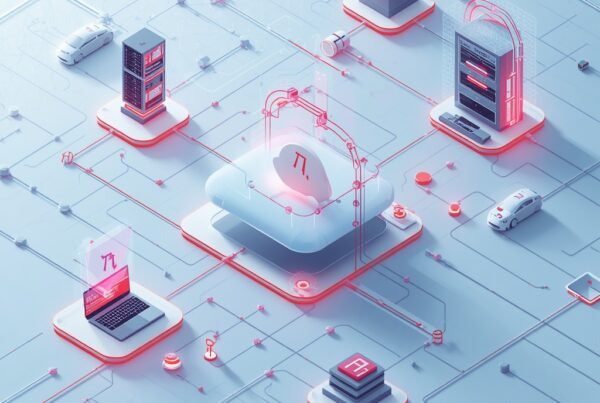


Artificial intelligence is no longer an experimental technology sitting outside the enterprise. It is becoming part of everyday business operations. Organizations now use AI for customer service, software development, cybersecurity, data analysis, marketing, financial operations, and decision-making. At the same time, AI agents are beginning to take actions, access enterprise systems, use APIs, and complete multi-step workflows. This rapid adoption is creating a new security challenge.
Traditional cybersecurity tools were designed primarily to protect networks, endpoints, applications, users, and cloud infrastructure. They were not built specifically to secure AI models, prompts, training data, agent behavior, model integrations, or the growing number of AI-driven workflows operating inside enterprises.
That is why AI security platforms are becoming a critical layer of enterprise technology. An AI security platform helps organizations identify, monitor, govern, and protect AI systems throughout their lifecycle. It addresses risks such as sensitive data exposure, prompt injection, unauthorized model access, insecure APIs, model misuse, shadow AI, and risky AI agent behavior.
For enterprises investing heavily in generative AI and autonomous AI agents, the question is no longer simply, “How can we use AI?”
The more important question is:
How can we use AI at scale without creating a new and unmanaged attack surface?
This is where AI security platforms are becoming increasingly important.
What Are AI Security Platforms?
An AI security platform is a technology solution designed to protect artificial intelligence systems, models, data, applications, and AI-driven workflows from security threats and misuse. These platforms provide security controls specifically designed for the way modern AI systems operate.
For example, an enterprise may use:
- Large language models
- Generative AI applications
- AI copilots
- AI agents
- Machine learning models
- Third-party AI APIs
- Retrieval-augmented generation systems
- Private enterprise AI models
Each of these technologies can introduce different security risks.
An AI security platform helps organizations gain visibility into these systems and apply controls around how they access data, interact with users, connect with applications, and perform actions.
In simple terms
Traditional cybersecurity asks:
Is the network secure?
AI security asks additional questions:
- What AI models are being used?
- What enterprise data can those models access?
- Can users expose sensitive information through prompts?
- Can an attacker manipulate an AI model?
- Is an AI agent authorized to perform a specific action?
- Can the organization monitor AI behavior?
- Are employees using unauthorized AI tools?
These questions are becoming increasingly important as enterprise AI adoption expands.

Why Enterprise AI Creates New Security Challenges
AI systems operate differently from traditional software.
A conventional application generally follows predefined instructions. AI systems, particularly large language models and AI agents, can generate dynamic outputs based on prompts, context, data, and interactions.
This flexibility creates new opportunities, but it also creates new risks.
For example, an employee may ask an AI assistant to analyze internal documents. If proper security controls are missing, sensitive information could potentially be exposed to an unauthorized model or external service.
Similarly, an AI agent connected to enterprise applications may have permission to:
- Access databases
- Read documents
- Send emails
- Update customer records
- Execute workflows
- Call APIs
If that agent is manipulated or misconfigured, the consequences could extend beyond incorrect answers.
The AI system could potentially take an unintended action.
This is why AI security is increasingly moving from a niche concern to a core enterprise requirement.
The enterprise AI security challenge
The problem is not only securing the AI model.
Organizations must also secure the entire AI ecosystem.
This includes:
| AI Security Layer | Security Focus |
|---|---|
| AI Models | Model access, misuse and vulnerabilities |
| Data | Sensitive information and privacy |
| Prompts | Prompt injection and malicious inputs |
| Applications | Secure AI integrations |
| APIs | Authentication and authorization |
| AI Agents | Permissions and autonomous actions |
| Users | Identity and access management |
| Infrastructure | Cloud and runtime protection |
| Governance | Policies, monitoring and compliance |
A modern AI security strategy must consider all of these layers.
Why Traditional Cybersecurity Tools Are Not Enough
Traditional security tools remain essential. Organizations still need endpoint security, identity management, network protection, cloud security, data security, and security operations. However, AI introduces security challenges that traditional tools may not fully understand.
For example, a firewall may detect suspicious network activity, but it may not understand whether a prompt is attempting to manipulate an AI model.
Similarly, an identity platform may verify that a user is authenticated, but it may not determine whether an AI agent should be allowed to perform a particular sequence of actions.
AI security requires additional context.
The security system must understand:
- AI interactions
- Model behavior
- Prompt inputs
- Data flows
- Agent permissions
- Tool usage
- Model outputs
This is why enterprises are increasingly looking at dedicated AI security capabilities.
The security gap
Traditional security primarily focuses on systems and infrastructure.
AI security must also focus on behavior and context.
For example:
A user may be authorized to access a document.
But should an AI agent automatically share that document with another application?
That requires a different level of security analysis.
The Growing AI Attack Surface
Every new AI implementation can potentially expand the enterprise attack surface.
The attack surface becomes even larger when organizations connect AI systems to internal data and business applications.
Consider a typical enterprise AI environment.
It may include:
- Employees using public AI tools
- Internal AI assistants
- Third-party AI APIs
- Cloud AI platforms
- AI agents
- Internal knowledge bases
- Enterprise databases
- SaaS applications
- APIs and automation tools
Each connection introduces potential risk.
Shadow AI is becoming a major concern
Employees may use AI tools without approval from the IT or security team.
This is often called shadow AI.
An employee might upload:
- Customer information
- Financial data
- Internal documents
- Source code
- Product plans
- Confidential business information
into an external AI tool.
Without visibility, organizations may not know how widely AI is being used or where sensitive data is going.
AI security platforms can help organizations discover and monitor AI usage across the enterprise.
How AI Security Platforms Work
AI security platforms create a security layer around enterprise AI systems.
They can monitor interactions between users, AI models, data sources, applications, and AI agents.
A typical AI security workflow may look like this:
- A user sends a request to an AI application.
- The security platform evaluates the prompt.
- The system checks for malicious or risky content.
- The platform verifies user permissions.
- The AI system accesses approved data.
- The model generates a response.
- The security layer evaluates the output.
- Risky actions or data exposure can be blocked or flagged.
- Security teams receive monitoring and audit information.
The exact architecture depends on the organization and AI environment.
However, the goal remains the same:
Make AI systems more secure without preventing employees from using AI productively.

Key Capabilities of an AI Security Platform
Not every AI security platform provides the same features. However, enterprise-grade solutions are increasingly focusing on several important capabilities.
1. AI Asset Discovery
Organizations need to know where AI is being used.
AI discovery helps identify:
- AI models
- AI applications
- AI APIs
- AI agents
- Third-party AI services
- Shadow AI usage
You cannot secure technology you cannot see.
AI asset discovery provides the visibility needed to create an accurate AI security strategy.
2. Prompt Security
Prompts are a new interaction layer.
Attackers may attempt to manipulate AI systems using malicious prompts.
This can include attempts to:
- Override system instructions
- Extract confidential information
- Manipulate AI behavior
- Access restricted data
- Trigger unauthorized actions
AI security platforms can monitor prompts and apply controls to reduce these risks.
3. Sensitive Data Protection
Enterprise AI systems frequently interact with valuable business data.
Security controls may help detect sensitive information such as:
- Personally identifiable information
- Financial information
- Credentials
- Customer records
- Intellectual property
The platform can then apply policies to control how that information is processed or shared.
4. AI Access Control
Not every user should have access to every AI capability.
AI security platforms can support access controls based on:
- User identity
- Role
- Data permissions
- Application context
- Risk level
This becomes particularly important when AI systems access multiple enterprise resources.
5. AI Agent Security
AI agents introduce a more advanced challenge.
Unlike traditional chatbots, AI agents may perform actions.
They can:
- Call APIs
- Access applications
- Retrieve information
- Execute workflows
AI security controls can help manage agent permissions and monitor their behavior.
6. Monitoring and Visibility
Security teams need visibility into how AI is being used.
Monitoring may include:
- AI model activity
- Prompt interactions
- Data access
- Agent actions
- Policy violations
- Suspicious behavior
This information can help organizations investigate incidents and improve security policies.
The Role of AI Security in AI Agents
AI agents are one of the biggest reasons AI security is becoming more important.
A traditional AI chatbot primarily provides information.
An AI agent may take action.
For example, an AI sales agent could:
- Analyze a customer record.
- Search internal databases.
- Update CRM information.
- Draft an email.
- Schedule a follow-up.
This creates a much larger security responsibility.
The agent needs access to systems.
But how much access should it receive?
The principle of least privilege
AI agents should not receive unlimited permissions.
Instead, enterprises should consider the principle of least privilege.
This means giving an AI agent only the permissions necessary to complete its assigned task.
For example:
| AI Agent | Required Permission |
|---|---|
| Research Agent | Read approved knowledge sources |
| Sales Agent | Access limited CRM records |
| Support Agent | View authorized customer data |
| Finance Agent | Access selected financial workflows |
| Automation Agent | Execute approved actions |
The goal is to reduce unnecessary access.
AI security platforms can help organizations monitor and control these permissions.
AI Security Platforms vs Traditional Security Tools
AI security platforms are not designed to replace every existing security solution.
Instead, they add specialized protection.
| Traditional Security Tools | AI Security Platforms |
|---|---|
| Protect networks | Protect AI interactions |
| Secure endpoints | Secure AI applications |
| Manage user identity | Control AI access and behavior |
| Monitor infrastructure | Monitor AI models and agents |
| Detect malware | Detect AI-specific threats |
| Protect cloud environments | Protect AI data and workflows |
| Monitor system activity | Monitor prompts and AI actions |
The strongest approach is integration.
AI security should become part of the broader cybersecurity ecosystem.
Major AI Security Risks for Enterprises
Understanding the threat landscape is the first step toward building an effective AI security strategy.
Prompt Injection
Prompt injection occurs when malicious instructions attempt to influence an AI system.
The goal may be to:
- Override instructions
- Manipulate responses
- Access restricted information
- Trigger unintended actions
Prompt security is becoming particularly important for AI applications connected to enterprise data and tools.
Sensitive Data Leakage
Employees may accidentally provide sensitive data to an AI system.
AI systems can also expose information if access controls are not properly designed.
Organizations need clear policies around:
- What data AI systems can access
- What information users can submit
- Where data can be processed
Insecure AI APIs
AI systems often rely on APIs.
If APIs are poorly secured, attackers may attempt to gain unauthorized access or manipulate AI workflows.
Security teams should apply:
- Strong authentication
- Authorization controls
- API monitoring
- Rate limiting
- Activity logging
Model Misuse
An AI model may be used in ways that violate organizational policies.
For example, users may attempt to use enterprise AI for unauthorized tasks or risky activities.
AI governance and monitoring can help detect misuse.
Shadow AI
Unauthorized AI usage creates visibility and compliance challenges.
Employees may choose convenient AI tools without understanding security risks.
Organizations need a strategy that balances security with employee productivity.
Simply banning AI may not solve the problem.
Providing secure enterprise AI alternatives can often be a more practical approach.
How AI Security Platforms Protect Enterprise Data
Data is at the center of enterprise AI.
AI models become more valuable when they can access relevant information.
However, greater access also creates greater risk.
AI security platforms can support data protection through:
- Data classification
- Access policies
- Sensitive data detection
- Data loss prevention controls
- Encryption
- Monitoring
- Audit logging
For example, an AI assistant may be allowed to access marketing documents but restricted from accessing confidential financial information.
This creates a more controlled AI environment.
Context-aware security matters
The future of enterprise security will increasingly depend on context.
A security platform may need to understand:
- Who is making the request?
- What data is being requested?
- Which AI model is involved?
- What is the intended action?
- What systems are connected?
This level of context can help organizations make more intelligent security decisions.
The Importance of AI Governance
Security is closely connected to AI governance.
AI governance establishes the rules for how AI is developed, deployed, and used.
A strong AI governance strategy may define:
- Approved AI tools
- Data usage policies
- AI access rules
- Model evaluation requirements
- Monitoring processes
- Compliance responsibilities
- Incident response procedures
Without governance, AI adoption can become fragmented.
Different teams may deploy different AI tools without consistent security controls.
This creates unnecessary risk.
Security and governance must work together
AI security focuses on protection.
AI governance focuses on responsible management.
Together, they help enterprises build a more controlled AI environment.
Securing AI Throughout Its Lifecycle
AI security should not begin only after an application is deployed.
Security needs to be considered throughout the AI lifecycle.
Stage 1: AI Planning
Organizations should evaluate:
- Business purpose
- Data requirements
- Security risks
- Compliance requirements
Stage 2: AI Development
Development teams should consider:
- Secure coding
- Data protection
- Model validation
- API security
Stage 3: AI Deployment
Before deployment, organizations should evaluate:
- Access permissions
- Model security
- Application integrations
- Monitoring capabilities
Stage 4: AI Operations
After deployment, continuous monitoring becomes essential.
Organizations should monitor:
- AI usage
- Policy violations
- Data access
- Agent actions
- Emerging threats
Stage 5: AI Improvement
Security teams should continuously update controls as AI systems evolve.
AI security is not a one-time project.
It is an ongoing process.
How to Choose an AI Security Platform
Selecting the right platform depends on the organization’s AI environment.
Before choosing a solution, enterprises should evaluate their current AI ecosystem.
Important questions include:
What AI technologies are being used?
Organizations should identify:
- Public AI tools
- Private models
- Cloud AI platforms
- AI agents
- Internal applications
Where is sensitive data located?
The platform should support the organization’s data protection requirements.
Can the platform integrate with existing security tools?
Integration is important.
AI security should work alongside:
- Identity platforms
- SIEM tools
- Cloud security platforms
- Data security tools
Does the platform support AI agents?
As agent adoption increases, agent security capabilities will become more important.
Can the platform scale?
AI usage can grow rapidly.
The security architecture should be able to support increasing numbers of models, users, applications, and AI workflows.
Building an Enterprise AI Security Strategy
A strong strategy should combine technology, governance, and operational processes.
Step 1: Discover AI Usage
Identify where AI is currently being used.
Include:
- Employees
- Applications
- Cloud platforms
- APIs
- AI agents
Step 2: Classify AI Risks
Not every AI system carries the same level of risk.
Organizations should prioritize systems based on:
- Data sensitivity
- Access permissions
- Business impact
- Automation level
Step 3: Define Security Policies
Create clear policies for:
- AI tool usage
- Data access
- Model selection
- AI agent permissions
Step 4: Implement Security Controls
Apply controls across:
- Identity
- Data
- Models
- Applications
- APIs
Step 5: Monitor Continuously
AI environments change quickly.
Continuous monitoring helps security teams identify emerging risks.
Step 6: Train Employees
Employees should understand how to use AI securely.
Training should cover:
- Sensitive data
- Approved AI tools
- AI security risks
- Reporting procedures
A Practical AI Security Framework
Organizations can think about AI security across five layers.
Layer 1: Identity
Control who can access AI systems.
Layer 2: Data
Control what information AI systems can access.
Layer 3: Models
Secure models and model interactions.
Layer 4: Applications
Secure AI-powered applications and APIs.
Layer 5: Actions
Monitor what AI agents and automated systems are allowed to do.
This layered approach can help organizations create stronger protection.
The Future of AI Security Platforms
AI security platforms are likely to evolve quickly as enterprise AI adoption increases.
Several trends are likely to shape the future.
AI Agent Security Will Become a Major Priority
AI agents will require stronger:
- Identity controls
- Permission management
- Activity monitoring
- Action verification
AI Security Will Become More Autonomous
Security systems may increasingly use AI to detect suspicious AI activity.
This could help security teams respond faster.
AI Governance and Security Will Converge
Organizations will increasingly manage security, compliance, risk, and AI governance together.
AI Security Will Become Part of Enterprise Architecture
AI security will eventually become a standard technology layer.
Just as organizations now invest in cloud security and identity security, AI security will become a fundamental part of enterprise AI infrastructure.
Key Benefits of AI Security Platforms
A strong AI security platform can help organizations:
- Discover AI usage across the enterprise
- Reduce shadow AI risks
- Protect sensitive data
- Secure AI applications
- Monitor AI interactions
- Control AI agent permissions
- Improve governance
- Support compliance efforts
- Increase visibility
- Enable safer AI adoption
The biggest advantage is not simply stronger protection.
It is the ability to adopt AI with greater confidence.
Conclusion
Enterprise AI is creating one of the biggest technology shifts in modern business.
Organizations are moving beyond simple AI experimentation and integrating AI into critical workflows, customer interactions, software development, and business operations.
However, every new AI capability can also introduce new security challenges.
The enterprise attack surface is no longer limited to endpoints, networks, cloud environments, and applications.
It now includes AI models, prompts, AI agents, data pipelines, model APIs, and autonomous workflows.
This is why AI security platforms are becoming a critical layer of enterprise AI.
The goal is not to slow down AI adoption.
The goal is to make AI adoption safer, more visible, and more manageable.
Enterprises that build security into their AI strategy from the beginning will be better positioned to scale AI responsibly. As AI systems become more autonomous and deeply connected to business operations, AI security will move from an emerging technology category to a fundamental part of the enterprise cybersecurity architecture.
The future of enterprise AI will not depend only on how powerful AI systems become.
It will also depend on how securely organizations can deploy, govern, and trust them.
Frequently Asked Questions
What is an AI security platform?
An AI security platform is designed to protect AI models, applications, data, users, and AI-driven workflows from security threats, misuse, and unauthorized access.
Why do enterprises need AI security?
Enterprise AI introduces new risks involving prompts, models, sensitive data, AI agents, APIs, and autonomous actions. Dedicated security controls help organizations manage these risks.
What is shadow AI?
Shadow AI refers to employees or teams using AI tools without formal approval, visibility, or governance from the organization’s IT and security teams.
Can traditional cybersecurity tools secure AI?
Traditional cybersecurity tools remain important, but they may not provide specialized visibility and controls for AI-specific risks such as prompt injection, model interactions, and AI agent behavior.
Why is AI agent security important?
AI agents can access systems and perform actions. Strong security controls are needed to manage permissions, monitor behavior, and prevent unauthorized actions.
What should enterprises look for in an AI security platform?
Important capabilities include AI discovery, data protection, prompt security, access control, monitoring, governance, API security, and AI agent security.