Cybersecurity is entering a new era. Enterprises are no longer defending only against malware, phishing emails, stolen credentials, and known software vulnerabilities. They are increasingly facing faster, more adaptive, and highly automated threats supported by artificial intelligence. At the same time, AI is becoming one of the most important technologies available to cybersecurity teams.
This creates a major challenge for modern enterprises. Artificial intelligence can help security teams detect threats faster, identify suspicious behavior, automate repetitive tasks, and improve incident response. However, the same technology can also help attackers automate reconnaissance, create convincing social engineering campaigns, discover vulnerabilities, and scale malicious activities.
The result is an increasingly complex security environment where speed, intelligence, and adaptability matter more than ever.
This is where AI-powered cybersecurity is becoming essential. Instead of relying entirely on manual monitoring and rule-based security tools, enterprises can use AI and machine learning to analyze massive volumes of security data, identify unusual patterns, prioritize threats, and support faster decision-making.
However, implementing AI-powered cybersecurity is not simply about purchasing another security platform. Organizations need the right strategy, governance, data, human expertise, and security architecture.
This article explores how AI-powered cybersecurity works, why it matters, the emerging threats enterprises need to understand, and how organizations can use artificial intelligence to build stronger cyber defenses.

What Is AI-Powered Cybersecurity?
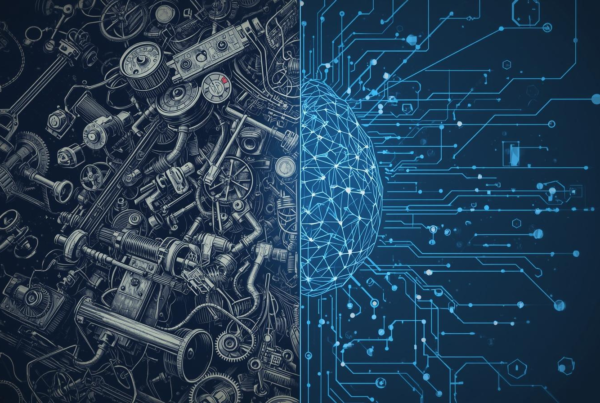
AI-powered cybersecurity refers to the use of artificial intelligence, machine learning, automation, and advanced analytics to improve an organization’s ability to prevent, detect, investigate, and respond to cyber threats. Traditional cybersecurity tools often depend heavily on predefined rules and known threat signatures.
For example, a traditional security system may identify malware because the malicious file matches a previously known signature. While this approach remains useful, it can struggle against new, modified, or previously unseen threats. AI-powered cybersecurity takes a broader approach.
AI systems can analyze large volumes of information and identify patterns that may indicate suspicious or malicious activity. These systems can learn from historical data and continuously evaluate behavior across networks, devices, users, applications, cloud environments, and security systems.
For example, AI can help identify:
- Unusual login behavior
- Suspicious network activity
- Abnormal file access
- Potential account compromise
- Phishing attempts
- Malware behavior
- Insider threats
- Unusual cloud activity
- Potential data exfiltration
- Vulnerabilities requiring immediate attention
AI can also help security teams prioritize alerts.
This is especially important because modern enterprises generate an enormous amount of security data every day. Security teams may receive thousands of alerts, many of which are low priority or false positives.
AI can help reduce this burden by identifying which events are more likely to represent genuine threats.
According to NIST, AI and machine learning systems introduce their own security risks, including evasion, poisoning, privacy, and misuse attacks. This means enterprises must use AI both as a cybersecurity capability and as a technology that requires dedicated protection.
AI-Powered Cybersecurity vs Traditional Cybersecurity
| Traditional Cybersecurity | AI-Powered Cybersecurity |
|---|---|
| Relies heavily on predefined rules | Uses patterns, behavior, and data-driven analysis |
| Focuses strongly on known threats | Can help identify previously unseen anomalies |
| Requires significant manual investigation | Automates parts of detection and investigation |
| Often produces large volumes of alerts | Can help prioritize high-risk alerts |
| May react after suspicious activity is identified | Supports more proactive threat detection |
| Depends heavily on human analysts | Augments human security teams |
| Rule updates may be required manually | Models can adapt based on new data and patterns |
AI-powered cybersecurity does not eliminate the need for traditional security technologies.
Instead, it enhances them.
Firewalls, endpoint protection, identity security, encryption, network segmentation, vulnerability management, and security awareness training continue to play critical roles. AI adds another layer of intelligence that can help these systems operate more effectively.
Why AI Is Becoming Critical for Enterprise Cybersecurity
The cybersecurity landscape is becoming more difficult to manage for several reasons. Enterprises now operate across cloud platforms, SaaS applications, remote devices, hybrid infrastructure, APIs, third-party services, and increasingly AI-powered systems.
This has dramatically expanded the attack surface. At the same time, cybercriminals are becoming more organized and sophisticated. Attackers can automate activities that previously required significant technical skills.
AI is accelerating this shift. The World Economic Forum has identified AI as a major force reshaping cybersecurity, emphasizing that AI can strengthen detection, defense, and response while also creating risks related to misuse, cyberattacks, and data exposure.
For enterprises, this means traditional reactive security approaches are becoming increasingly difficult to sustain.
Organizations need to answer questions such as:
- What is happening across the entire enterprise environment?
- Which security alerts actually matter?
- Is this behavior normal for a user or device?
- Is a small anomaly the beginning of a larger attack?
- Which vulnerabilities present the greatest business risk?
- How quickly can the organization investigate and respond?
AI can help answer these questions faster.
The Growing Speed of Cyber Threats
One of the biggest advantages AI gives attackers is speed.
Cybercriminals can potentially use AI to accelerate:
- Information gathering
- Vulnerability discovery
- Social engineering
- Malware development
- Credential attacks
- Attack automation
- Phishing campaign creation
- Data analysis
This creates a difficult situation for security teams.
An attack that once required extensive manual work may become increasingly automated. Security teams therefore need technologies that can analyze threats and respond at machine speed where appropriate. Recent industry warnings have also highlighted growing concern about AI-enabled cyberattacks and the potential for AI to make sophisticated attacks more accessible and scalable.
This does not mean every cyberattack will become fully autonomous. However, it does mean the speed and scale of attacks may continue to increase.
How AI-Powered Cybersecurity Works
AI-powered cybersecurity generally combines several technologies and approaches.
These may include:
- Machine learning
- Behavioral analytics
- Natural language processing
- Automation
- Predictive analytics
- Threat intelligence
- Large language models
- Anomaly detection
- Security orchestration
Together, these technologies help security teams process and understand complex information.
Machine Learning
Machine learning algorithms can analyze large datasets and identify patterns.
In cybersecurity, machine learning may be used to recognize suspicious behavior that differs from normal activity.
For example, a system may detect that an employee is:
- Logging in from an unusual location
- Accessing systems at an unusual time
- Downloading unusually large volumes of data
- Attempting to access sensitive resources they do not normally use
The individual event may not always indicate an attack.
However, multiple unusual signals combined together may suggest elevated risk.
Behavioral Analytics
Behavioral analytics focuses on understanding what normal activity looks like.
Once a baseline is established, AI systems can identify unusual changes.
This approach is particularly valuable because attackers often attempt to use legitimate credentials and legitimate tools.
If a stolen account is used to access enterprise systems, traditional signature-based security may not immediately identify the activity as malicious.
Behavioral analytics can add another layer of visibility.
Natural Language Processing
Natural language processing can help security teams analyze text-based information.
Potential use cases include:
- Security alerts
- Threat intelligence reports
- Incident reports
- Phishing emails
- Vulnerability information
- Security documentation
AI can help summarize large amounts of information and provide security analysts with relevant context.
Security Automation
Security teams frequently perform repetitive activities.
These may include:
- Collecting security data
- Enriching alerts
- Checking threat intelligence
- Categorizing incidents
- Investigating suspicious indicators
Automation can reduce the amount of manual work required.
This allows analysts to focus more time on complex investigations and strategic security decisions.
Predictive Analytics
Predictive analytics can help organizations identify potential future risks based on historical data and emerging patterns.
For example, AI may help organizations identify:
- Systems with increasing risk
- Likely attack paths
- High-risk vulnerabilities
- Suspicious user behavior
- Potential security gaps
The goal is not to predict the future with perfect accuracy.
Instead, predictive analytics helps organizations make more informed risk decisions.
Major Cyber Threats Enterprises Face Today
To understand the importance of AI-powered cybersecurity, enterprises must understand how the threat landscape is changing.
AI-Enhanced Phishing Attacks
Phishing remains one of the most effective cyberattack methods.
AI can potentially make phishing campaigns more convincing by helping attackers create:
- More natural language
- Personalized messages
- Better translations
- Target-specific content
- Fake communications at greater scale
Traditional phishing emails often contained obvious spelling mistakes and generic language.
Modern attacks may be more difficult to identify because malicious messages can appear more personalized and professionally written.
Enterprises need stronger email security, identity protection, behavioral analytics, and employee awareness programs.
Deepfake and Impersonation Threats
AI can also create realistic audio, video, and images.
This creates new risks for businesses.
Attackers may attempt to impersonate executives, employees, vendors, or customers.
A finance employee, for example, may receive what appears to be a legitimate voice or video request involving a payment.
Organizations therefore need verification processes that do not depend entirely on voice or visual appearance.
Critical actions should require additional validation.
AI-Driven Vulnerability Discovery
Attackers are constantly searching for weaknesses.
AI can potentially accelerate vulnerability research and automate parts of reconnaissance.
This increases pressure on organizations to improve vulnerability management.
Enterprises cannot simply focus on patching every vulnerability at the same speed.
They need to understand which vulnerabilities are most likely to create serious business risk.
AI-powered risk prioritization can help organizations consider factors such as:
- Asset importance
- Exposure
- Exploitability
- Threat intelligence
- Existing security controls
This can help security teams focus on vulnerabilities that require urgent action.
Automated Credential Attacks
Stolen credentials remain valuable to attackers.
AI and automation can potentially make credential attacks more scalable.
Organizations need stronger identity security strategies, including:
- Multi-factor authentication
- Passwordless authentication
- Privileged access management
- Identity monitoring
- Behavioral analytics
- Conditional access
Identity has become one of the most important cybersecurity control points.
As more applications and infrastructure move to the cloud, controlling who can access what becomes increasingly critical.
AI System Attacks
AI itself is now becoming a target.
Organizations deploying AI systems need to consider threats such as:
- Prompt injection
- Data poisoning
- Model manipulation
- Model extraction
- Privacy attacks
- Training data risks
- Unauthorized tool access
- AI agent misuse
NIST’s adversarial machine learning guidance specifically categorizes attacks such as evasion, poisoning, privacy attacks, and misuse attacks across predictive and generative AI systems.
This means enterprises need to secure not only traditional IT infrastructure but also AI models, training data, prompts, APIs, model connections, and agent permissions.
Key Benefits of AI-Powered Cybersecurity
AI-powered cybersecurity provides several important advantages.
Faster Threat Detection
Cybersecurity data is growing rapidly.
Humans cannot manually review every event generated across a large enterprise environment.
AI can analyze data at scale and identify suspicious patterns more quickly.
This can reduce the time between:
Threat activity → Detection → Investigation → Response
Faster detection can reduce the potential impact of an attack.
Improved Threat Prioritization
Security teams often face alert fatigue.
If analysts receive too many alerts, important threats may be overlooked.
AI can help prioritize events based on risk.
For example, an alert involving a critical administrator account may receive higher priority than an alert involving a low-risk test system.
Context matters.
AI can help security teams evaluate that context faster.
Reduced False Positives
Traditional security systems may generate alerts for legitimate activity.
AI can analyze behavior over time and provide additional context.
This may help reduce unnecessary investigations.
However, enterprises should not assume that AI will eliminate false positives completely.
AI models require high-quality data, testing, monitoring, and continuous improvement.
Better Incident Response
AI can support security teams during incident response.
It can help analysts:
- Collect relevant information
- Identify related alerts
- Summarize incidents
- Suggest investigation paths
- Identify affected systems
- Support response workflows
Automation can also handle specific low-risk actions based on predefined policies.
Human approval should remain important for high-impact decisions.
Stronger Threat Intelligence
Threat intelligence comes from many sources.
Security teams may need to analyze:
- Vulnerability information
- Malware reports
- Attack techniques
- Indicators of compromise
- Industry reports
- Internal incidents
AI can help process and organize this information.
This can improve the speed at which security teams understand emerging threats.

AI-Powered Cybersecurity Use Cases for Enterprises
AI-Powered Security Operations Centers
Modern Security Operations Centers can use AI to improve monitoring and investigation.
AI can help:
- Correlate alerts
- Identify anomalies
- Prioritize incidents
- Summarize investigations
- Recommend next steps
This can reduce the time analysts spend moving between multiple security tools.
AI should support analysts rather than replace them completely.
Intelligent Endpoint Security
Endpoints remain a major target.
AI-powered endpoint security can analyze behavior and identify suspicious activities that may not match known malware signatures.
For example, an AI system may identify unusual processes, file activity, or credential access behavior.
AI in Network Security
AI can analyze network traffic and identify abnormal communication patterns.
Potential examples include:
- Unexpected data transfers
- Suspicious lateral movement
- Unusual connections
- Abnormal traffic volumes
This can help organizations detect attacks that move across enterprise environments.
Cloud Security
Cloud environments change rapidly.
Resources can be created, modified, and removed automatically.
AI can help organizations identify:
- Misconfigurations
- Unusual access patterns
- Suspicious cloud activity
- Potential privilege escalation
- Abnormal data movement
Identity Threat Detection
Identity security is becoming increasingly important.
AI can establish behavioral baselines and identify suspicious account activity.
Examples include:
- Impossible travel patterns
- Unusual access requests
- Unexpected privilege changes
- Abnormal administrator activity
Vulnerability Prioritization
Enterprises may have thousands of vulnerabilities.
AI can help security teams prioritize remediation efforts.
A vulnerability should not always be prioritized based only on severity scores.
Organizations also need to consider whether the system is exposed, business-critical, actively targeted, or protected by compensating controls.
AI can help combine these factors.
AI Is Not a Replacement for Cybersecurity Professionals
One of the biggest misconceptions about AI-powered cybersecurity is that AI will completely replace security teams.
That is unlikely.
Cybersecurity requires context, judgment, business understanding, and accountability.
AI may generate incorrect conclusions.
It may misunderstand context.
It may also be manipulated.
Security professionals are still needed to:
- Validate high-risk decisions
- Investigate complex incidents
- Define security strategy
- Manage risk
- Respond to major attacks
- Review AI recommendations
- Ensure compliance
- Make business decisions
The strongest cybersecurity model is therefore human intelligence augmented by artificial intelligence.
AI can handle speed and scale.
Humans provide judgment and accountability.
Risks of Using AI in Cybersecurity
AI is powerful, but it introduces new risks.
Poor Data Quality
AI systems depend on data.
If data is incomplete, inaccurate, biased, or outdated, AI decisions may also be unreliable.
Organizations need strong data governance.
AI Hallucinations
Generative AI systems can produce incorrect information.
If a security analyst accepts an AI-generated conclusion without verification, this could create serious problems.
AI-generated recommendations should be validated before major actions are taken.
Adversarial Attacks
Attackers may attempt to manipulate AI systems.
Potential attacks include:
- Evasion
- Data poisoning
- Prompt injection
- Model extraction
- Privacy attacks
NIST continues to develop guidance around AI security and resilience because existing security approaches do not fully address the expanding attack surface associated with AI systems.
Data Exposure
- Employees may enter sensitive information into external AI tools.
- This can create privacy, compliance, and intellectual property risks.
- Enterprises need clear AI usage policies.
Excessive Automation
- Automation can improve speed.
- However, excessive automation can create problems.
- An incorrect automated action could disrupt business operations or create additional security issues.
- Organizations should use risk-based automation.
- Low-risk actions may be automated.
- High-impact actions may require human approval.

How Enterprises Can Build an AI-Powered Cybersecurity Strategy
A successful strategy requires more than technology.
Step 1: Understand the Enterprise Attack Surface
Organizations should identify:
- Critical systems
- Sensitive data
- Cloud environments
- SaaS applications
- APIs
- AI systems
- Third-party connections
- Privileged accounts
Security teams cannot protect what they cannot see.
Visibility should be the foundation of the cybersecurity strategy.
Step 2: Identify High-Value AI Use Cases
Enterprises should avoid deploying AI simply because it is trending.
Instead, identify specific problems.
Examples include:
- Alert prioritization
- Phishing detection
- Threat hunting
- Incident investigation
- Vulnerability prioritization
- Identity anomaly detection
Start with use cases that provide measurable value.
Step 3: Improve Data Quality
AI-powered cybersecurity requires reliable data.
Organizations should review:
- Data sources
- Data quality
- Log coverage
- Data access controls
- Retention policies
Incomplete data can create security blind spots.
Step 4: Keep Humans in the Loop
Human oversight should be built into the strategy.
Security teams should define:
- Which actions AI can automate
- Which actions require analyst review
- Escalation processes
- Approval requirements
This creates a safer balance between automation and control.
Step 5: Secure the AI Systems
AI systems require their own security controls.
Organizations should protect:
- Training data
- Models
- APIs
- Prompts
- Agent permissions
- Credentials
- Connected applications
NIST’s current AI security work includes implementation-focused efforts addressing generative AI, predictive AI, single-agent systems, multi-agent systems, and security controls for AI developers.
Step 6: Continuously Monitor Performance
Cyber threats evolve.
AI models and security controls need continuous monitoring.
Organizations should evaluate:
- Detection accuracy
- False positive rates
- False negative risks
- Automation outcomes
- Model performance
- Emerging attack techniques
AI security is not a one-time implementation.
It is an ongoing process.
Best Practices for AI-Powered Cybersecurity
Enterprises can improve their results by following several best practices.
Use AI as Part of a Larger Security Strategy
AI should complement existing controls.
Organizations still need:
- Strong identity security
- Network segmentation
- Encryption
- Backup and recovery
- Vulnerability management
- Endpoint security
- Security awareness training
Prioritize Zero Trust Principles
Zero Trust focuses on continuous verification rather than automatically trusting users or devices.
AI can support this approach by analyzing behavior and identifying unusual activity.
Implement Strong AI Governance
AI governance should define:
- Approved AI tools
- Data usage rules
- Access permissions
- Monitoring requirements
- Human oversight
- Risk management processes
Test AI Systems Against Adversarial Threats
Enterprises should test how AI systems respond to malicious manipulation.
Security testing should include relevant scenarios such as:
- Prompt injection
- Data manipulation
- Unauthorized access attempts
- Model misuse
Build an AI Security Culture
Employees should understand both the benefits and risks of AI.
Training should include:
- Safe AI usage
- Sensitive data protection
- Deepfake awareness
- Social engineering risks
- AI security policies
A Practical AI-Powered Cybersecurity Framework
The following framework can help enterprises organize their strategy.
| Stage | Enterprise Action | AI Opportunity |
|---|---|---|
| Identify | Discover assets and risks | Automated asset and risk analysis |
| Protect | Strengthen security controls | Intelligent policy recommendations |
| Detect | Monitor systems continuously | Anomaly and threat detection |
| Investigate | Analyze suspicious activity | Alert correlation and summarization |
| Respond | Contain security incidents | Automated response workflows |
| Recover | Restore systems and improve resilience | Post-incident analysis |
| Govern | Manage AI and cyber risks | Continuous monitoring and reporting |
This framework should be adapted to the organization’s size, industry, risk profile, and regulatory environment.
The Future of AI-Powered Cybersecurity
AI will continue to reshape cybersecurity.
In the future, enterprises may increasingly rely on AI to:
- Analyze complex attack patterns
- Automate security investigations
- Predict high-risk attack paths
- Protect cloud environments
- Secure AI agents
- Detect identity threats
- Improve vulnerability management
However, attackers will also continue to use AI. This means the cybersecurity environment will become an increasingly competitive technology race.
Gartner’s 2026 cybersecurity outlook identifies AI, geopolitical pressures, and an accelerating threat environment as major forces affecting cybersecurity strategy, including the growing need for oversight around agentic AI. The most successful organizations will not necessarily be those that deploy the largest number of AI tools.
They will be the organizations that use AI strategically. They will combine AI capabilities with strong cybersecurity fundamentals, effective governance, skilled professionals, and resilient infrastructure.
Conclusion
AI-powered cybersecurity is becoming increasingly important as cyber threats grow faster, more complex, and more automated. For enterprises, artificial intelligence offers significant opportunities to improve threat detection, automate repetitive security tasks, prioritize risks, and accelerate incident response.
However, AI is not a magic solution. It introduces new attack surfaces, governance challenges, privacy risks, and opportunities for adversarial manipulation. The most effective approach is to treat AI as both a cybersecurity tool and a technology that requires security.
Enterprises should begin with clear use cases, high-quality data, strong governance, and human oversight. They should use AI to enhance existing cybersecurity capabilities rather than replace essential security controls. As AI-enabled threats continue to evolve, organizations that remain reactive may find it increasingly difficult to keep up.
The future of cybersecurity will depend on the ability to combine intelligent automation with human expertise. By building an AI-powered cybersecurity strategy today, enterprises can improve visibility, strengthen resilience, and stay better prepared for the emerging threats of tomorrow.
Frequently Asked Questions
What is AI-powered cybersecurity?
AI-powered cybersecurity uses artificial intelligence, machine learning, automation, and analytics to help organizations prevent, detect, investigate, and respond to cyber threats.
How does AI improve cybersecurity?
AI can analyze large volumes of security data, identify suspicious patterns, prioritize alerts, support threat detection, and automate repetitive security tasks.
Can AI replace cybersecurity professionals?
No. AI can automate and support many cybersecurity activities, but human professionals are still required for judgment, strategy, investigation, governance, and high-risk decisions.
What are the biggest AI cybersecurity threats?
Major risks include AI-enhanced phishing, deepfakes, automated attacks, adversarial machine learning, data poisoning, prompt injection, privacy attacks, and AI system misuse.
How can enterprises secure their AI systems?
Enterprises should secure training data, models, APIs, prompts, identities, permissions, connected applications, and agent actions. They should also implement AI governance and continuous security monitoring.
What is the future of AI-powered cybersecurity?
The future will likely involve greater use of AI for threat detection, security automation, predictive analytics, identity security, cloud protection, and AI agent security. Human oversight will remain essential.
Why is AI governance important in cybersecurity?
AI governance helps organizations define how AI systems are used, what data they can access, which actions can be automated, and where human oversight is required.