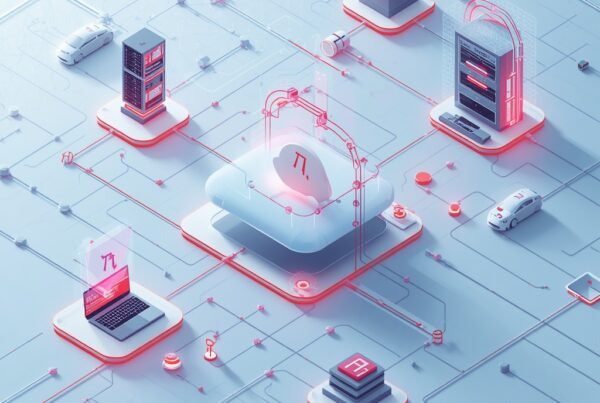

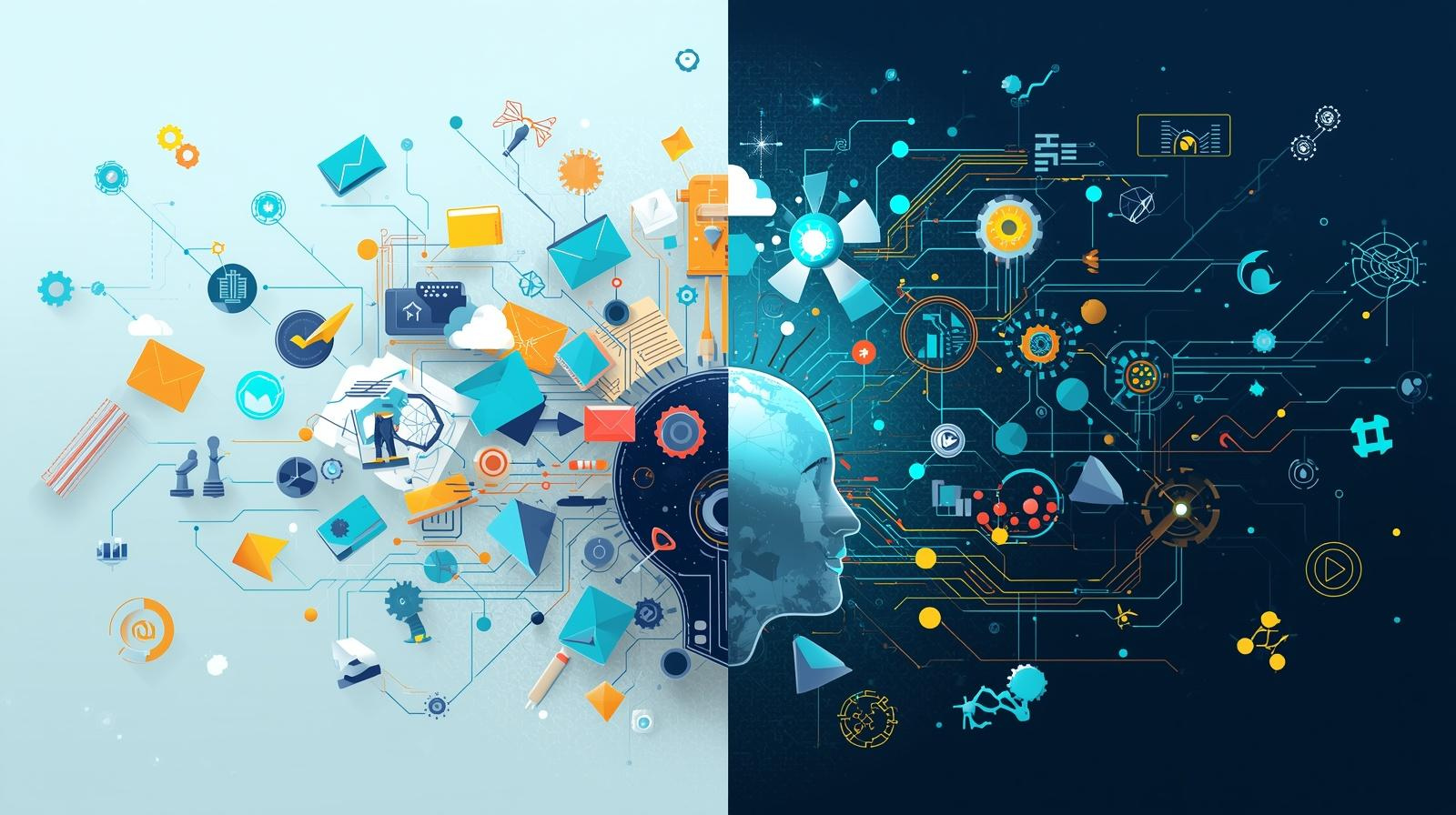
AI agents refer to programmed software systems that are self-directed to perform business processes without human oversight. They are also able to interpret context, make decisions and execute multi-step processes across systems such as CRM, ERP and IT platforms unlike the traditional automation tools.
The AI agents that are being used in businesses to automate business processes like customer care, lead processing, financial transactions, and IT processes have led to higher performance, lower costs and better efficiency.
The past decade has witnessed a tremendous change in the business workflows. The traditional method of operation management involved the use of manual operation systems, spreadsheets, and exercises that were rule based to manage operations in organizations. Although such systems were useful in enhancing efficiency they had shortcomings in managing complex and dynamic situations.
These systems have the ability to analyze data, comprehend context and perform whole workflows without needing predetermined rules. This change is changing how companies automate their tasks to smart, end-to-end workflow implementations.
What Are AI Agents?
AI-agents are smart computer-based programs that are used to carry out tasks independently. They are able to read instructions, perform multi-step procedures on multi-platforms, analyse structured and unstructured information, and process assessments.
These systems are machine learning-based systems which integrate artificial intelligence and large language models to imitate the capabilities of decision-making. In contrast to conventional tools, AI-agents are self-adaptive and constantly change in accordance with new inputs and data patterns.
Traditional Workflows vs AI Agents
| Feature | Traditional Workflows (RPA) | AI Agents |
| Logic Type | Rule-based | Context-aware reasoning |
| Flexibility | Low | High |
| Error Handling | Stops on exception | Adapts dynamically |
| Integration | Limited | Cross-system |
| Decision Making | No | Yes |
| Automation Level | Task-level | End-to-end workflows |
Artificial Intelligence is reshaping how businesses operate, and one of the most significant developments is the rise of AI-agents. These intelligent software systems are designed to perform tasks autonomously, make decisions based on context, and execute complex workflows without constant human supervision. Unlike traditional automation tools that follow predefined rules, AI-agents can understand information, adapt to changing situations, and interact across multiple business platforms.
Today, organizations are using AI agents to automate customer support, sales processes, financial operations, IT management, and many other business functions. As a result, companies are experiencing improved efficiency, lower operational costs, faster decision-making, and greater scalability.
Over the past decade, businesses have relied heavily on manual workflows, spreadsheets, and rule-based automation systems to manage operations. While these methods improved productivity to some extent, they often struggled when faced with complex processes, changing business conditions, and large volumes of data.
AI agents are changing this landscape entirely. By combining artificial intelligence, machine learning, and large language models, these systems can analyze information, understand context, and complete entire workflows from start to finish. This shift is enabling organizations to move beyond simple task automation and embrace intelligent workflow automation.
As AI adoption accelerates across industries, business operations are becoming faster, more accurate, and more adaptive. The transformation is not just improving efficiency it is fundamentally redefining how modern enterprises operate.
Traditional Workflows vs AI Agents

Traditional automation systems, including Robotic Process Automation (RPA), are designed to automate repetitive tasks by following predefined instructions. While effective for routine processes, these systems often fail when unexpected situations arise.
AI agents take automation a step further by understanding context and making intelligent decisions throughout a workflow.
| Feature | Traditional Workflows (RPA) | AI Agents |
|---|---|---|
| Logic Type | Rule-Based | Context-Aware |
| Flexibility | Limited | High |
| Error Handling | Stops on Exceptions | Adapts Dynamically |
| Integration | Limited Systems | Cross-System Operations |
| Decision Making | No | Yes |
| Automation Scope | Task-Level | End-to-End Workflows |
This evolution represents a major shift from simple task automation to fully autonomous workflow execution.
Why AI Agents Are Replacing Traditional Workflows
Massive Enterprise Adoption
AI agents have rapidly moved beyond the experimental stage. Organizations across industries are deploying AI-powered systems to improve efficiency, automate processes, and support business growth.
Businesses increasingly view AI as a core operational capability rather than a supplementary technology. From customer service and sales to finance and IT operations, AI agents are becoming an integral part of daily business activities.
This widespread adoption reflects growing confidence in AI’s ability to manage complex workflows while delivering measurable business value.
Significant Productivity Improvements
One of the primary reasons organizations are adopting AI agents is their ability to improve productivity. By automating repetitive and time-consuming tasks, AI agents allow employees to focus on higher-value strategic activities.
In many organizations, AI-powered systems have reduced workflow processing times, accelerated issue resolution, and increased operational output. Tasks that once required hours of manual effort can now be completed in minutes.
The result is greater efficiency, faster service delivery, and improved business performance.
Cost Reduction at Scale
AI agents help businesses reduce operational expenses by automating routine processes across departments. Organizations can streamline back-office operations, eliminate manual data entry, reduce administrative overhead, and improve resource utilization.
As AI systems handle larger volumes of work without requiring additional staff, businesses can scale operations more efficiently while controlling costs.
This ability to combine efficiency with cost savings is a major factor driving AI adoption across enterprises.
Real-Time Decision Making
Traditional workflows often depend on manual reporting and delayed analysis, which can slow decision-making processes.
AI agents continuously analyze data in real time, identify patterns, and generate actionable insights instantly. This enables organizations to make faster and more informed decisions based on current information rather than historical reports.
Real-time intelligence allows businesses to respond more effectively to market changes, customer needs, and operational challenges.
End-to-End Workflow Automation
Traditional automation tools typically focus on individual tasks within a larger process. AI agents, however, can automate complete workflows from beginning to end.
For example, in a sales environment, an AI agent can identify prospects, score leads, personalize outreach, schedule follow-ups, and update customer relationship management systems automatically.
Similarly, in finance, AI agents can process invoices, validate data, route approvals, and generate reports without requiring manual intervention.
This level of automation enables organizations to achieve higher efficiency, greater accuracy, and faster execution across business functions.
Future of AI Workflows
The future of business operations will be heavily influenced by AI agents and intelligent automation technologies. As organizations continue to generate larger volumes of data and manage increasingly complex workflows, traditional automation systems will struggle to keep pace with evolving business demands. AI agents are expected to become a fundamental part of enterprise operations, helping companies automate not just individual tasks but entire business processes from start to finish.
In the coming years, organizations will deploy multiple AI agents that work together as interconnected digital teams. Rather than handling isolated functions, these agents will collaborate across departments such as sales, marketing, finance, customer support, human resources, and IT. For example, an AI agent responsible for lead generation may work directly with another agent managing customer engagement and a third agent handling sales forecasting. This coordinated approach will enable businesses to operate more efficiently while reducing delays caused by manual handoffs between teams.
Conclusion
AI agents are rapidly transforming the way businesses manage workflows and execute daily operations. Unlike traditional automation tools that rely on predefined rules, AI agents can understand context, analyze information, make decisions, and perform complex multi-step processes across multiple systems. This capability enables organizations to move beyond simple task automation and embrace intelligent, end-to-end workflow management.
The benefits of AI agents extend across virtually every business function. They improve operational efficiency by automating repetitive processes, reduce costs by minimizing manual intervention, enhance accuracy by reducing human error, and support faster decision-making through real-time data analysis. From customer service and sales to finance, IT operations, and software development, AI agents are helping organizations achieve higher productivity and better business outcomes.
Frequently Asked Questions
What are AI agents in business operations?
AI agents are intelligent software systems that can perform tasks, analyze data, make decisions, and execute workflows with minimal human intervention. They help businesses automate complex processes across departments such as sales, finance, customer support, and IT.
How do AI agents differ from traditional automation tools?
Traditional automation tools follow predefined rules and can only handle structured tasks. AI agents can understand context, learn from data, adapt to changing situations, and make decisions, enabling them to automate entire workflows rather than individual tasks.
Can AI agents replace human employees?
AI agents are designed to augment human capabilities rather than completely replace workers. They handle repetitive and time-consuming tasks, allowing employees to focus on strategic planning, creativity, problem-solving, and customer relationships.
Which business processes can be automated using AI agents?
AI agents can automate a wide range of processes, including lead generation, customer support, invoice processing, employee onboarding, IT help desk operations, marketing campaigns, reporting, and data analysis.
What are the benefits of implementing AI agents?
Organizations can benefit from increased productivity, lower operational costs, faster decision-making, improved accuracy, better customer experiences, and scalable workflow automation across multiple business functions.
Are AI agents suitable for small businesses?
Yes. Many AI-powered solutions are scalable and can be implemented by small and medium-sized businesses to automate routine operations, improve efficiency, and support growth without requiring large teams.
What challenges do organizations face when adopting AI agents?
Common challenges include integration with legacy systems, data quality issues, governance and compliance concerns, employee training requirements, and the need for clear implementation strategies and measurable business objectives.