
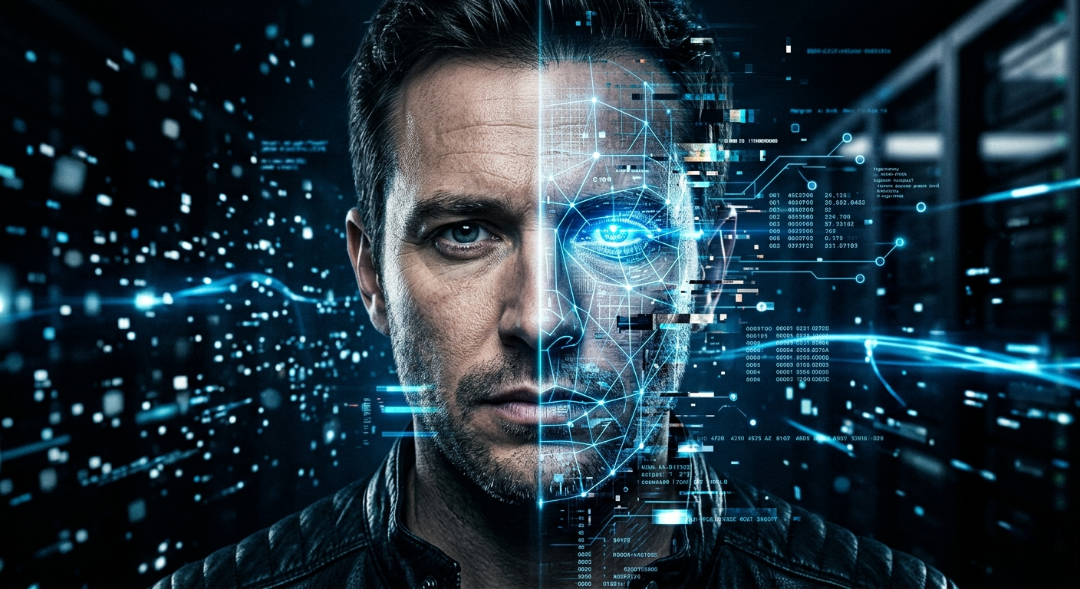
In the age of connectivity, what is posted online may not necessarily be true. Deepfake technology has revolutionized the process of digital content creation, distribution, and consumption. Whether it is a video clip, audio recording, or snippet of news, deepfake technology can make content look and sound highly authentic despite its artificial nature.
Deepfake technology owes its effectiveness to its ability to mimic realistic human behavior. Facial gestures, voice pitch, emotions, and even micro-expressions are not beyond its reach anymore. The thin line between authentic and artificial digital content has become increasingly blurred in recent years.
This blog post explores the implications of deepfake technology, its risks, application areas, and contribution to shaping digital trust.
What is Deepfake Technology?
A deepfake is any artificial intelligence media that mimics real-life individuals using deep learning techniques and artificial neural networks. This involves analyzing tens of thousands of photos, videos, and audio recordings to create realistic fakes.
The main purpose of creating a deeppfake is to manufacture fake media that seems genuine and is artificially made.
Main features of deepfake:
- Highly realistic face duplication
- Cloning of human voices
- Emotion creation
- Live video manipulation
- Hard to detect
How Deepfake Technology Works
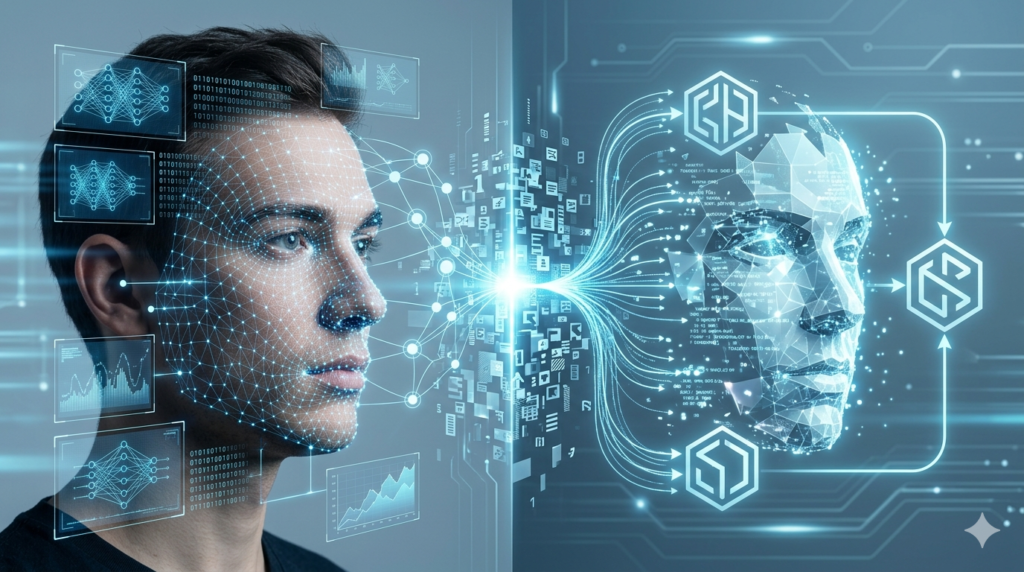
To understand the risks of deepfakes, it is important to first understand how they work. Deepfake systems are typically built using a Generative Adversarial Network (GAN). This framework consists of two artificial intelligence models working together. One AI is responsible for generating content, while the other AI evaluates it by trying to determine whether the content is real or fake.
A deepfake system uses a model called GAN (Generative Adversarial Network). It consists of two parts:
- One AI generates fake content
- The other AI tries to detect if it is fake
Major Deepfake Risks
1. Identity Theft and Impersonation
The first danger that comes with deepfakes includes identity manipulation. The fraudsters have the ability to act as authentic individuals using fake videos or calls mimicking another individual.
Examples of scams include:
- Orders from an impersonator CEO
- False financial transactions
- Fake customer support calls
An individual video alone can lead to losses amounting to several million dollars.
2. Fake News and Political Manipulation
The misuse of deeppfake in politics is increasing rapidly. Fake speeches and videos can influence public opinion.
Risks include:
- False political statements
- Manipulated election content
- Viral misinformation campaigns
| Type of Deepfake | Impact |
|---|---|
| Political videos | Public confusion |
| Fake speeches | Reputation damage |
| Edited interviews | Media distrust |
3. Cybersecurity Threats
Deepfake technology has evolved into a true cyber security threat. Criminals have resorted to voice cloning as a way of circumventing security systems, by using artificial intelligence-generated audio that is capable of impersonating actual employees or executives to legitimize their fraudulent acts. This new trend has already resulted in many cases of fraudulent employee verification calls, banking fraud via voice, and very convincing social engineering.
Main Points:
- Voice cloning for bypassing authentication
- Growing cases of fake employee verification calls
- Voice fraud leading to banking fraud
- Surge in social engineering attacks
4. Reputation Damage
Just one deepfake video can tarnish an individual’s reputation forever, despite attempts at disproving its validity. It is bound to trigger a fast-growing backlash on social media platforms, negatively impact career possibilities, and cause irreparable damage to trust levels. The speed of information dissemination through such online channels is so high that any damage control efforts become difficult.
Important Aspects:
- Reputational damage caused by one fake video
- Fast-growing backlash on social media
- Career and opportunity-related negative impacts
- Irreparable loss of trust levels
5. Psychological and Social Impact
Constant exposure is slowly causing us to lose faith in what we see on the internet. With each iteration becoming increasingly believable, the ability to distinguish between reality and fabrication is becoming more difficult, which causes anxiety and uncertainty. This leads to increased concerns regarding authenticity on the internet and a loss of faith in news agencies and media organizations.
Important Points:
- Loss of faith in media organizations
- Difficulties in discerning reality from fiction
- Anxiety regarding authenticity on the internet
- Uncertainty due to increasingly realistic AI content
Deepfake Risk Comparison Table
| Risk Area | Severity | Impact Level |
|---|---|---|
| Financial fraud | Very High | Critical |
| Political misuse | High | Global |
| Cybersecurity | Very High | Critical |
| Reputation damage | High | Personal |
| Social trust | Medium | Long-term |
Real-World Deepfake Use Cases (Good vs Bad)
Not all this usage is harmful. Some applications are creative and useful.
Positive Uses:
- Movie CGI and VFX
- Educational simulations
- Language translation videos
- Entertainment industry
Negative Uses of:
- Scams and fraud
- Fake news creation
- Identity theft
- Online manipulation
How to Identify Deepfake Content
| Category | Detection Signs | Description |
|---|---|---|
| Visual Hints | Abnormal blinking | Eyes may blink unnaturally or rarely |
| Blurry outlines | Edges around face or head may look unclear | |
| Inconsistent lighting | Light and shadows may not match the environment | |
| Strange facial movements | Facial expressions may look unnatural or stiff | |
| Auditory Clues | Robot-like voice | Speech may sound artificial or unnatural |
| Flat emotional range | Lack of natural emotion in voice | |
| Delayed reaction time | Slight lag between speech and facial movement | |
| General Gut-Check | Too perfect appearance | Video may look unrealistically flawless |
| Unverified source | Content comes from unknown or suspicious origin | |
| Unnatural expressions | Facial emotions may feel off or forced |
How to Protect Yourself from Deepfake Attacks
Defending yourself from deepfakes is all about remaining vigilant and having the proper tools at hand.
Preventive measures:
- Make sure you know who is creating the content—the source needs to be verified.
- Resist the urge to react quickly to trending videos.
- Use AI-based detection software to gauge credibility.
- Enable two-factor authentication for banking services.
- Educate your staff about deepfake fraud.
Impact of Deepfake on Digital Trust
But the main significance of deepfakes is not just about the impressive technologies used. It’s a slow but steady destruction of the credibility that was attributed to digital media before. When the rule of “seeing is believing” governed people’s views and actions, now that technology has taken place, the idea loses its meaning. “Seeing is not always believing” seems to be true now. This change affects many aspects of everyday life, including journalism, politics, social media usage, and digital conversations.
Future of Deepfake Technology
Prospects for Deepfake technology lie in both fascination and concern. The possible developments include further advances in the creation of hyper-realistic video using AI, voice impersonation technology happening in real time during an actual conversation, as well as fully digital AI-driven influencer models. At the same time, it is predicted that detection capabilities will be significantly upgraded, allowing one to better identify deepfakes. Governments and large companies are working on sophisticated solutions that will hopefully ensure responsible development in this domain.
Conclusion
This is a technology which has a potential to bring a lot of innovation into entertainment industry, while at the same time creating threats for individuals’ privacy, safety and overall credibility of information that can be found online.
To survive and thrive in 2026, it becomes crucial to understand AI. Otherwise, people would not only fail to take full advantage of the innovative technology but also expose themselves to dangers that come with ignorance and lack of knowledge.
It will become as important to identify deepfakes and limit their spread as it will be to create deepfake videos.