

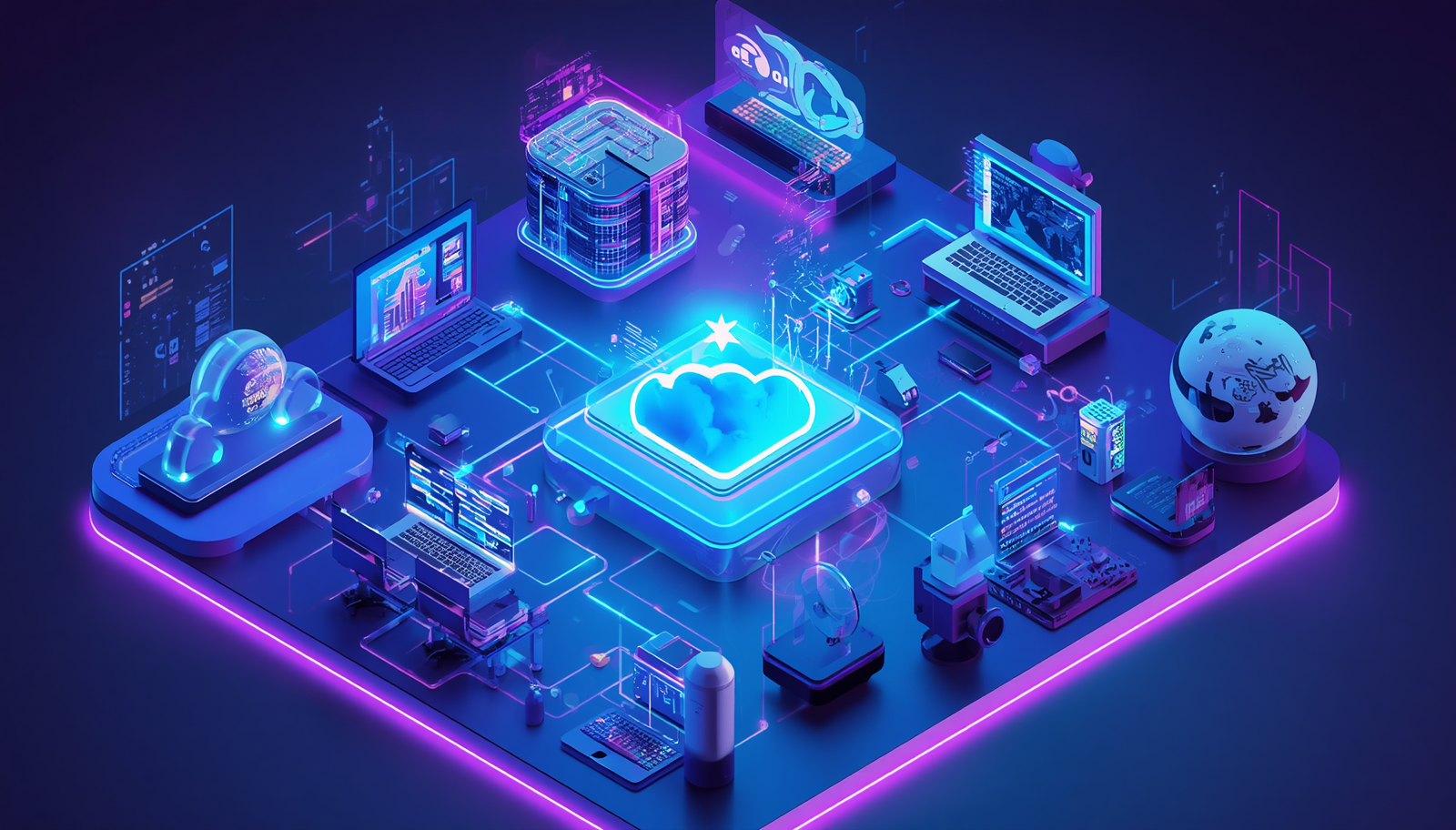
Artificial intelligence is no longer just a futuristic concept. It has become a core part of modern business strategy. Organizations of all sizes are adopting AI to streamline operations, improve customer experiences, reduce costs, and make faster decisions.
This transformation has given rise to Enterprise AI, AI solutions designed specifically for business environments. Unlike consumer AI tools, Enterprise AI integrates with existing business systems and supports company-wide operations while maintaining security, compliance, and scalability.
Businesses today generate huge volumes of data every second. Enterprise AI transforms this data into valuable insights, helping organizations automate repetitive work, identify opportunities for growth, and improve overall performance.

What Is Enterprise AI?
Enterprise AI refers to the use of artificial intelligence across an organization to automate processes, analyze business data, improve decision-making, and enhance operational efficiency.
Unlike AI tools created for individual users, Enterprise AI is designed to support complete organizations. It connects with enterprise software such as CRM platforms, ERP systems, HR applications, financial software, and customer service solutions to create intelligent business workflows.
Instead of replacing employees, Enterprise AI helps teams work more efficiently by handling repetitive tasks, providing recommendations, and delivering real-time insights.
Key Characteristics of Enterprise AI
- Automates repetitive business processes
- Works across multiple departments
- Integrates with existing enterprise software
- Processes large volumes of business data
- Provides predictive insights
- Improves employee productivity
- Supports enterprise-level security
- Continuously learns from new information
Enterprise AI vs Traditional AI
| Feature | Enterprise AI | Traditional AI |
|---|---|---|
| Purpose | Business transformation | Task-specific automation |
| Users | Entire organization | Individual users |
| Integration | CRM, ERP, HRMS, Finance systems | Standalone applications |
| Scalability | Enterprise-wide | Limited |
| Security | Enterprise-grade security | Basic security |
| Decision Making | Business-wide insights | Single-function solutions |
Why Enterprise AI Is Becoming Essential
Modern businesses operate in a highly competitive environment where customer expectations, market trends, and operational challenges change quickly.
Companies manage thousands of customers, employees, suppliers, transactions, and digital interactions every day. Traditional manual processes are no longer enough to handle this level of complexity.
Enterprise AI helps organizations:
- Reduce operational costs
- Improve employee productivity
- Automate repetitive tasks
- Analyze large amounts of data
- Deliver personalized customer experiences
- Make faster business decisions
- Detect risks before they become major problems
- Improve overall operational efficiency
Rather than replacing human expertise, Enterprise AI allows employees to focus on strategic planning, innovation, and customer relationships while AI manages repetitive and data-heavy activities.
Organizations that successfully implement Enterprise AI often experience faster workflows, fewer errors, improved customer satisfaction, and stronger business performance.
Core Technologies Behind Enterprise AI
Enterprise AI combines multiple advanced technologies that work together to improve business operations.
Technologies Powering Enterprise AI
| Technology | Business Purpose | Example |
| Machine Learning | Predict future outcomes | Sales forecasting |
| Natural Language Processing | Understand human language | AI chatbots |
| Generative AI | Create new content | Reports and emails |
| Computer Vision | Analyze visual information | Product inspection |
| Predictive Analytics | Forecast future trends | Demand planning |
| Robotic Process Automation | Automate repetitive workflows | Invoice processing |
| AI Agents | Perform complex tasks | Customer support automation |
These technologies work together to automate processes, improve accuracy, and provide businesses with better decision-making capabilities.
How Enterprise AI Works
Enterprise AI follows a structured process that transforms raw business data into meaningful insights and automated actions.
Although the technology behind AI systems is complex, the working process can be explained through five simple stages.
Step 1: Data Collection
Enterprise-AI collects information from different business systems, including:
- CRM platforms
- ERP software
- Financial systems
- HR applications
- Customer support platforms
- Supply chain systems
- Websites and mobile applications
- IoT devices
This creates a centralized data environment where AI can analyze information from different sources.
Step 2: Data Processing
Business data often contains duplicate records, missing information, or inconsistent formats.
Enterprise-AI prepares data by:
- Cleaning inaccurate information
- Removing duplicate records
- Standardizing data formats
- Organizing datasets
- Improving data quality
High-quality data allows AI models to generate more accurate predictions and recommendations.
Step 3: AI Analysis
Machine learning models analyze processed data to identify important patterns and trends.
Enterprise-AI can identify:
- Customer behavior patterns
- Business opportunities
- Operational problems
- Financial risks
- Sales trends
- Demand forecasts
These insights help businesses make smarter decisions based on real-time information.
Step 4: Intelligent Recommendations
After analyzing business data, Enterprise AI provides recommendations such as:
- Inventory optimization suggestions
- Customer product recommendations
- Sales forecasts
- Workforce planning insights
- Risk alerts
- Marketing campaign improvements
In advanced systems, AI can automatically perform certain actions without requiring manual approval.
Step 5: Continuous Learning
One of the biggest advantages of Enterprise-AI is its ability to improve over time.
As new business data becomes available, AI systems:
- Learn from previous outcomes
- Improve prediction accuracy
- Adapt to changing market conditions
- Optimize future recommendations
This continuous improvement helps organizations maintain efficiency and competitiveness.
Enterprise AI Workflow
| Stage | Activity | Business Outcome |
| Data Collection | Gather business data | Centralized information |
| Data Processing | Clean and organize data | Better accuracy |
| AI Analysis | Identify patterns | Useful insights |
| Decision Support | Recommend actions | Faster decisions |
| Continuous Learning | Improve AI models | Long-term performance |
Why Businesses Are Investing in Enterprise AI
Organizations are investing in Enterprise-AI because it creates measurable value across different business functions.
The major reasons include:
- Lower operational expenses
- Higher employee productivity
- Faster decision-making
- Improved customer experiences
- More accurate forecasting
- Enhanced cybersecurity
- Better resource management
- Stronger competitive advantage
Enterprise AI is becoming an important part of digital transformation strategies because it enables businesses to operate faster, smarter, and more efficiently.
As AI technologies continue to evolve, organizations that adopt Enterprise AI early can build stronger operational foundations and respond more effectively to future business challenges.

How Enterprise AI Improves Business Operations
Enterprise-AI is transforming the way organizations manage daily operations, make decisions, and interact with customers. Instead of using AI for only one specific task, businesses are now implementing AI across multiple departments to create connected and intelligent workflows.
From automating customer support to improving financial forecasting, Enterprise-AI helps organizations increase efficiency while reducing manual effort. It enables employees to access better insights, complete tasks faster, and focus on higher-value activities.
The impact of Enterprise-AI can be seen across almost every business function, including:
- Sales and marketing
- Customer service
- Finance
- Human resources
- Information technology
- Supply chain management
- Manufacturing operations
- Cybersecurity
Let’s explore how Enterprise AI improves different areas of business operations.
1. Enterprise AI Improves Customer Service Operations
Customer expectations have changed significantly. People now expect faster responses, personalized recommendations, and support available at any time.
Traditional customer service teams often struggle with high ticket volumes, repetitive questions, and increasing customer demands. Enterprise-AI helps businesses provide faster and more efficient support.
AI-powered customer service solutions can:
- Answer common customer questions automatically
- Provide 24/7 customer assistance
- Analyze customer sentiment
- Prioritize urgent requests
- Recommend personalized solutions
- Reduce response time
AI chatbots and virtual assistants can handle routine queries while human agents focus on complex customer issues that require personal attention.
For example, a banking company can use Enterprise AI to answer account-related questions, detect customer frustration, and route complex issues to the right department.
Enterprise AI in Customer Service
| AI Capability | Business Impact |
|---|---|
| AI Chatbots | Faster customer responses |
| Sentiment Analysis | Better understanding of customer emotions |
| Automated Ticket Routing | Improved support efficiency |
| Customer Data Analysis | Personalized experiences |
| Virtual Assistants | 24/7 customer availability |
Enterprise-AI also helps businesses understand customer behavior by analyzing conversations, feedback, purchase history, and support interactions.
These insights allow companies to improve products, optimize services, and create stronger customer relationships.
2. Enterprise AI Enhances Sales Operations
Sales teams depend on accurate information to identify opportunities, understand customers, and close deals faster.
Enterprise-AI helps sales departments move from traditional decision-making to data-driven selling.
AI-powered sales systems can analyze:
- Customer interactions
- Purchase history
- Market trends
- Sales pipeline data
- Customer engagement patterns
This allows sales teams to identify high-value prospects and focus their efforts on opportunities with higher conversion potential.
Key Benefits of Enterprise AI in Sales
- Better lead scoring
- Improved sales forecasting
- Automated follow-ups
- Personalized customer recommendations
- Faster deal analysis
- Improved pipeline management
For example, AI can analyze thousands of customer profiles and identify which prospects are most likely to purchase a product. Sales teams can then prioritize those leads instead of spending time on low-quality opportunities.
Enterprise AI Applications in Sales
| Sales Activity | AI Application | Result |
|---|---|---|
| Lead Generation | AI lead scoring | Better quality leads |
| Forecasting | Predictive analytics | Accurate revenue predictions |
| Customer Research | Data analysis | Better customer understanding |
| Follow-ups | Automated communication | Faster engagement |
| Sales Reporting | AI-generated insights | Better decisions |
3. Enterprise AI Transforms Marketing Operations
Modern marketing requires businesses to understand customer behavior, create personalized campaigns, and measure performance across multiple channels.
Enterprise-AI helps marketing teams analyze large amounts of customer data and optimize campaigns automatically.
AI can support marketing activities such as:
- Customer segmentation
- Content recommendations
- Campaign optimization
- Audience analysis
- Marketing analytics
- Customer journey mapping
Instead of creating generic campaigns, businesses can use AI to deliver personalized messages based on customer interests, behavior, and preferences.
For example, an e-commerce company can use Enterprise-AI to analyze browsing patterns and recommend products that customers are more likely to purchase.
How Enterprise AI Improves Marketing
- Increases campaign effectiveness
- Improves customer targeting
- Reduces marketing costs
- Provides real-time performance insights
- Enhances personalization
AI-powered marketing platforms also help teams identify which campaigns generate the highest return on investment and where improvements are needed.
4. Enterprise AI Improves Financial Operations
Finance departments handle large volumes of transactions, reports, and compliance requirements. Manual financial processes can be time-consuming and vulnerable to errors.
Enterprise-AI improves financial operations by automating repetitive tasks and providing accurate insights.
Common financial applications include:
- Fraud detection
- Automated invoice processing
- Expense analysis
- Financial forecasting
- Risk assessment
- Budget optimization
AI systems can analyze thousands of transactions in real time and identify unusual patterns that may indicate fraud or financial risks.
For example, financial institutions use AI models to detect suspicious transactions by analyzing customer behavior, transaction history, and risk factors.
Enterprise AI in Finance
| Finance Function | AI Application |
|---|---|
| Accounting | Automated data entry |
| Payments | Fraud detection |
| Budgeting | Predictive forecasting |
| Reporting | Automated financial analysis |
| Compliance | Risk monitoring |
Enterprise-AI also improves financial decision-making by providing executives with real-time insights into revenue trends, expenses, and business performance.
5. Enterprise AI Optimizes Human Resource Operations
Human resources departments manage recruitment, employee engagement, training, and workforce planning.
Enterprise-AI helps HR teams make better decisions while improving employee experiences.
AI-powered HR solutions can assist with:
- Resume screening
- Candidate matching
- Employee onboarding
- Workforce analytics
- Employee engagement analysis
- Training recommendations
Recruitment teams can use AI to analyze thousands of applications and identify candidates whose skills match job requirements.
AI can also help companies understand employee satisfaction by analyzing surveys, feedback, and workplace trends.
Benefits of Enterprise AI in HR
- Faster recruitment processes
- Better candidate selection
- Improved employee experiences
- Smarter workforce planning
- Reduced administrative workload
By automating repetitive HR activities, professionals can spend more time on employee development and strategic workforce planning.
6. Enterprise AI Improves IT Operations
IT teams manage complex technology environments that require constant monitoring, maintenance, and security management.
Enterprise-AI helps IT departments improve reliability and reduce downtime through intelligent automation.
AI can support IT operations by:
- Monitoring system performance
- Detecting technical issues
- Predicting failures
- Automating troubleshooting
- Improving cybersecurity monitoring
- Managing cloud resources
AI-powered IT systems can identify unusual patterns before they become major problems.
For example, predictive AI models can detect server performance issues and recommend maintenance actions before system failures occur.
Enterprise AI Benefits for IT Teams
- Reduced downtime
- Faster issue resolution
- Automated IT support
- Improved infrastructure management
- Better resource utilization
As organizations continue adopting cloud computing and digital platforms, Enterprise AI is becoming essential for managing modern IT environments.
7. Enterprise AI in Supply Chain Management
Supply chains involve complex processes including inventory management, logistics, supplier relationships, and demand forecasting.
AI can analyze:
- Customer demand patterns
- Inventory levels
- Supplier performance
- Transportation data
- Market conditions
This enables organizations to predict demand more accurately and avoid issues such as overstocking or product shortages.
Enterprise AI Supply Chain Benefits
- Better demand forecasting
- Reduced inventory costs
- Improved delivery planning
- Faster response to disruptions
- Optimized resource allocation
For example, manufacturers can use AI to predict equipment maintenance needs and avoid unexpected production delays.
Enterprise AI Business Impact Summary
| Business Area | How AI Helps |
|---|---|
| Customer Service | Faster support and personalization |
| Sales | Better forecasting and lead management |
| Marketing | Smarter campaigns and targeting |
| Finance | Automation and risk detection |
| HR | Improved hiring and workforce planning |
| IT | Predictive maintenance and automation |
| Supply Chain | Better forecasting and optimization |
Enterprise AI is creating a new generation of intelligent business operations where organizations can automate processes, improve decisions, and deliver better experiences.
How Businesses Can Successfully Implement Enterprise AI
Adopting Enterprise AI is not just about purchasing an AI tool and connecting it to business systems. Successful implementation requires proper planning, high-quality data, employee adoption, security considerations, and a clear understanding of business objectives.
Many organizations fail to achieve expected AI outcomes because they focus only on technology rather than creating a complete AI strategy.
A successful implementation involves:
- Identifying business problems
- Preparing quality data
- Selecting the right AI solutions
- Integrating AI with existing systems
- Training employees
- Monitoring AI performance
- Improving AI models continuously
Step 1: Identify Business Goals and Use Cases
Before implementing Enterprise-AI, organizations should clearly define what they want to achieve.
AI adoption should focus on solving real business challenges rather than using AI simply because it is a trending technology.
Businesses should identify areas where AI can create measurable improvements, such as:
- Reducing operational costs
- Improving customer experience
- Automating manual workflows
- Increasing sales efficiency
- Improving forecasting accuracy
- Enhancing cybersecurity
For example, a retail company may use AI to improve demand forecasting, while a financial company may focus on fraud detection and risk analysis.
A clear objective helps businesses select the right AI technology and measure success effectively.
Step 2: Build a Strong Data Foundation
Data is the foundation of Enterprise-AI. AI models require accurate, organized, and reliable data to produce valuable insights.
Many organizations have large amounts of data but struggle with:
- Data silos
- Duplicate information
- Poor data quality
- Lack of data governance
- Inconsistent formats
Before deploying AI solutions, businesses should improve their data infrastructure.
Important data preparation activities include:
- Data cleaning
- Data integration
- Data classification
- Data security management
- Data governance implementation
High-quality data improves AI accuracy and ensures better business outcomes.
Importance of Data in Enterprise AI
| Data Challenge | Impact on AI | Solution |
|---|---|---|
| Poor data quality | Incorrect predictions | Data cleaning |
| Data silos | Limited insights | Data integration |
| Missing information | Reduced accuracy | Data improvement |
| Security issues | Compliance risks | Data protection |
| Unstructured data | Difficult analysis | AI processing |
Step 3: Choose the Right Enterprise AI Technology
The Enterprise-AI market includes various solutions designed for different business needs.
Organizations should evaluate AI platforms based on:
- Business requirements
- Scalability
- Security features
- Integration capabilities
- Cost effectiveness
- Industry compliance
Generative AI Platforms
Generative AI helps businesses create content, automate communication, summarize information, and support employee productivity.
Common applications:
- AI writing assistants
- Automated reports
- Knowledge management
- Customer communication
AI Agents
AI agents are advanced systems capable of performing tasks autonomously.
They can:
- Analyze information
- Make decisions
- Complete workflows
- Communicate with other systems
Businesses are increasingly adopting AI agents for customer service, sales automation, IT support, and business operations.
Machine Learning Platforms
Machine learning platforms help businesses create predictive models for:
- Demand forecasting
- Risk analysis
- Customer behavior prediction
- Operational optimization
Choosing the right technology depends on the organization’s goals and existing infrastructure.
Step 4: Integrate Enterprise AI With Existing Systems
Enterprise-AI delivers maximum value when connected with existing business applications.
Organizations typically integrate AI with:
- Customer Relationship Management (CRM)
- Enterprise Resource Planning (ERP)
- Marketing platforms
- Financial systems
- HR software
- Cloud infrastructure
- Data warehouses
Integration allows AI to access real-time business information and provide more accurate recommendations.
For example, integrating AI with a CRM platform allows sales teams to receive customer insights, lead predictions, and automated recommendations directly within their workflow.
Step 5: Train Employees and Encourage AI Adoption
Technology alone cannot guarantee Enterprise-AI success. Employees need to understand how AI works and how it can support their daily activities.
Organizations should provide:
- AI training programs
- Employee education
- Workflow guidance
- Responsible AI practices
- Change management support
Some employees may initially worry that AI will replace their roles. Businesses should communicate that Enterprise-AI is designed to improve productivity and support human decision-making.
Successful AI adoption happens when employees see AI as a productivity partner rather than a replacement.
Challenges of Enterprise AI Implementation
Although Enterprise AI provides significant benefits, organizations may face several challenges during implementation.
Understanding these challenges helps businesses create better AI strategies.
1. Data Privacy and Security Concerns
Enterprise AI systems process large amounts of sensitive business information.
Organizations must ensure:
- Data protection
- Access control
- Encryption
- Regulatory compliance
- Secure AI models
Strong security practices are essential to prevent unauthorized access and data misuse.
2. High Implementation Costs
Enterprise AI adoption may require investment in:
- AI software
- Cloud infrastructure
- Data management systems
- Employee training
- AI specialists
However, businesses can reduce costs by starting with specific use cases and expanding AI adoption gradually.
3. Lack of AI Skills
Many organizations face shortages of professionals with expertise in:
- Machine learning
- Data engineering
- AI development
- AI governance
Companies can address this challenge through employee training, partnerships, and AI platforms that simplify implementation.
4. Integration Complexity
Connecting AI solutions with existing enterprise systems can be challenging.
Businesses may need to modernize outdated infrastructure and create better data-sharing processes between departments.
5. AI Governance and Compliance
Organizations must ensure AI systems operate responsibly.
Enterprise AI governance includes:
- Monitoring AI decisions
- Reducing bias
- Maintaining transparency
- Following regulations
- Ensuring ethical AI usage
Enterprise AI Challenges and Solutions
| Challenge | Solution |
|---|---|
| Data security risks | Strong security frameworks |
| High costs | Start with targeted AI projects |
| Skill shortages | Employee training and partnerships |
| System integration issues | Modernize IT infrastructure |
| AI governance concerns | Create responsible AI policies |
Real-World Enterprise AI Use Cases Across Industries
Enterprise AI adoption is growing across multiple industries. Companies are using AI to improve efficiency, reduce costs, and create better customer experiences.
Healthcare Industry
Healthcare organizations use Enterprise AI for:
- Medical image analysis
- Patient data management
- Drug discovery
- Appointment automation
- Predictive healthcare analytics
AI helps healthcare providers make faster decisions and improve patient outcomes.
Banking and Financial Services
Banks use Enterprise AI for:
- Fraud detection
- Credit risk assessment
- Customer support automation
- Personalized financial recommendations
- Transaction monitoring
AI helps financial institutions improve security and deliver better customer experiences.
Manufacturing Industry
Manufacturers use Enterprise AI to:
- Predict equipment failures
- Improve quality control
- Optimize production
- Manage inventory
- Reduce downtime
AI-powered predictive maintenance helps companies avoid unexpected machine failures.
Retail Industry
Retail businesses use AI for:
- Product recommendations
- Customer behavior analysis
- Inventory optimization
- Personalized marketing
- Demand forecasting
Enterprise AI helps retailers create better shopping experiences and improve operational efficiency.
Logistics and Transportation
Companies use AI to improve:
- Route optimization
- Delivery planning
- Fleet management
- Supply chain visibility
AI enables faster and more cost-effective transportation operations.
Enterprise AI Adoption by Industry
| Industry | AI Applications |
|---|---|
| Healthcare | Diagnostics, patient analytics, automation |
| Banking | Fraud detection, risk management |
| Manufacturing | Predictive maintenance, quality control |
| Retail | Recommendations, inventory management |
| Logistics | Route optimization, supply chain intelligence |
| Education | Personalized learning systems |
Enterprise AI is becoming a strategic advantage for organizations across industries. Companies that successfully implement AI can improve productivity, reduce costs, and create more intelligent business processes.
Key Benefits of Enterprise AI for Businesses
Enterprise AI is helping organizations move from traditional operations to intelligent, automated, and data-driven business models. By combining artificial intelligence with enterprise systems, companies can improve efficiency, reduce costs, and create better experiences for customers and employees.
The biggest advantage of Enterprise AI is that it allows businesses to make smarter decisions using real-time data instead of relying only on manual analysis or historical reports.
1. Improved Operational Efficiency
One of the biggest benefits of Enterprise AI is process automation. Many businesses spend significant time managing repetitive tasks that require manual effort.
Enterprise AI helps automate activities such as:
- Data entry and processing
- Document management
- Customer support requests
- Report generation
- Workflow approvals
- Routine administrative tasks
By reducing manual work, employees can focus on strategic activities that require creativity, problem-solving, and decision-making.
For example, an enterprise can use AI-powered automation to process thousands of invoices automatically, reducing processing time and minimizing human errors.
2. Better Business Decision-Making
Modern businesses generate massive amounts of data, but collecting data alone is not enough. Organizations need meaningful insights to make better decisions.
Enterprise AI analyzes business information and identifies patterns that humans may miss.
It helps leaders with:
- Predictive forecasting
- Market trend analysis
- Customer behavior insights
- Risk identification
- Performance optimization
With AI-powered insights, businesses can make faster and more accurate decisions.
3. Enhanced Customer Experience
Customer expectations are continuously increasing. People want personalized services, quick responses, and seamless interactions.
Enterprise AI helps businesses deliver better customer experiences through:
- AI-powered chatbots
- Personalized recommendations
- Customer sentiment analysis
- Automated support solutions
- Predictive customer service
AI allows companies to understand customer needs and provide relevant solutions at the right time.
4. Reduced Operational Costs
Enterprise AI reduces costs by improving efficiency and minimizing unnecessary manual work.
Organizations can save costs through:
- Automated workflows
- Optimized resource allocation
- Reduced errors
- Predictive maintenance
- Improved inventory management
For example, manufacturing companies use AI-powered predictive maintenance to identify equipment issues before failures occur, reducing repair costs and production downtime.
5. Increased Employee Productivity
Enterprise AI acts as an intelligent assistant that helps employees complete tasks faster.
Employees can use AI for:
- Data analysis
- Research assistance
- Content creation
- Report generation
- Knowledge discovery
- Workflow automation
Instead of spending hours searching for information, employees can use AI systems to quickly access relevant insights.
6. Stronger Cybersecurity Protection
Cyber threats are becoming more advanced, and traditional security methods are often not enough.
Enterprise AI improves cybersecurity by:
- Detecting unusual activities
- Identifying potential threats
- Monitoring network behavior
- Automating security responses
- Predicting cyber risks
AI-powered security systems can analyze millions of events in real time and quickly identify suspicious patterns.
Business Benefits of Enterprise AI
| Benefit | Business Impact |
|---|---|
| Automation | Faster and more efficient workflows |
| Data Analysis | Better business insights |
| Personalization | Improved customer experience |
| Cost Reduction | Lower operational expenses |
| Productivity | Employees complete tasks faster |
| Security | Faster threat detection |
Enterprise AI vs Generative AI: Understanding the Difference
Many businesses use the terms Enterprise AI and Generative AI interchangeably, but they have different purposes.
Enterprise AI is a broader concept that includes multiple AI technologies designed to improve business operations. Generative AI is one component of Enterprise AI that focuses on creating new content and information.
Enterprise AI vs Generative AI
| Feature | Enterprise AI | Generative AI |
|---|---|---|
| Definition | AI solutions for business operations | AI that creates new content |
| Purpose | Automation and decision support | Content generation and assistance |
| Applications | Analytics, forecasting, workflows | Text, images, code generation |
| Business Role | Complete AI strategy | One AI capability |
| Examples | AI systems, ML platforms, AI agents | AI writing tools, coding assistants |
Generative AI has accelerated Enterprise AI adoption by making AI tools easier for employees to use. Businesses now combine generative AI with other technologies to create intelligent enterprise ecosystems.
Future Trends of Enterprise AI
Enterprise AI will continue evolving as businesses demand smarter, faster, and more autonomous systems.
Several emerging trends will shape the future of Enterprise AI.
1. Growth of AI Agents
AI agents are becoming one of the most important developments in enterprise technology.
Unlike traditional AI systems that only provide recommendations, AI agents can complete tasks independently.
Future enterprise AI agents will help businesses:
- Manage workflows
- Analyze information
- Communicate with customers
- Automate complex processes
- Support employees
Organizations are moving toward autonomous AI-powered operations where multiple AI agents work together.
2. AI-Powered Business Automation
Businesses will increasingly use AI to automate complete workflows rather than individual tasks.
Future automation will include:
- Automated decision-making
- Intelligent process management
- Self-optimizing workflows
- AI-powered operations management
This will help companies achieve higher efficiency and faster execution.
3. Enterprise AI Search
Traditional search systems often struggle to find information across large organizations.
Enterprise AI search uses natural language processing and machine learning to help employees find information faster.
It can search across:
- Documents
- Emails
- Databases
- Knowledge bases
- Internal applications
This improves productivity by reducing the time employees spend searching for information.
4. AI Governance and Responsible AI
As AI adoption grows, organizations will focus more on responsible AI practices.
Future Enterprise AI strategies will include:
- AI transparency
- Data privacy protection
- Bias reduction
- AI monitoring
- Compliance management
Strong governance will become essential for safe and reliable AI adoption.
5. AI-Powered Digital Transformation
Enterprise AI will become a core part of digital transformation strategies.
Businesses will use AI to create:
- Intelligent workplaces
- Automated operations
- Predictive business models
- Personalized customer journeys
Companies that integrate AI effectively will gain a competitive advantage in the digital economy.
Best Practices for Enterprise AI Adoption
Organizations should follow proven strategies to maximize the value of Enterprise AI.
Start With Clear Business Objectives
Businesses should focus on specific challenges rather than implementing AI without a clear purpose.
Prioritize Data Quality
High-quality data is essential for accurate AI results.
Companies should invest in:
- Data management
- Data security
- Data governance
Begin With Small AI Projects
Organizations should test AI through smaller projects before expanding across the entire business.
This approach helps identify challenges and measure results.
Involve Employees
Employee adoption plays a major role in AI success.
Businesses should provide:
- Training programs
- AI awareness sessions
- Workflow guidance
Conclusion
Enterprise AI is transforming modern business operations by enabling automation, improving decision-making, and creating more intelligent workflows. Organizations across industries are using AI to reduce costs, improve productivity, strengthen security, and deliver better customer experiences.
Unlike traditional automation solutions, Enterprise AI provides businesses with the ability to analyze large amounts of data, predict future outcomes, and continuously improve operations.
The future of business will be shaped by organizations that successfully combine human expertise with artificial intelligence. Companies that invest in Enterprise AI today will be better prepared to handle future challenges and create more efficient, innovative, and competitive operations.
As AI technologies continue advancing, Enterprise AI will move from being a competitive advantage to becoming an essential foundation for modern business growth.
Frequently Asked Questions (FAQs)
What is Enterprise AI?
Enterprise AI is the use of artificial intelligence technologies across organizations to automate processes, analyze data, improve decisions, and enhance business operations.
How does Enterprise AI improve business operations?
Enterprise AI improves operations by automating repetitive tasks, providing real-time insights, optimizing workflows, improving customer experiences, and supporting better decision-making.
What industries use Enterprise AI?
Industries using Enterprise AI include healthcare, banking, manufacturing, retail, logistics, education, and technology.
Is Enterprise AI replacing employees?
No. Enterprise AI is designed to support employees by automating repetitive work and helping them focus on strategic and creative tasks.
What is the difference between AI and Enterprise AI?
Traditional AI may focus on specific tasks, while Enterprise AI is designed to support complete business operations with security, scalability, and system integration.
What are the challenges of implementing Enterprise AI?
Common challenges include data quality issues, implementation costs, security concerns, lack of AI skills, and integration complexity.
What is the future of Enterprise AI?
The future of Enterprise AI includes AI agents, autonomous workflows, AI-powered search, intelligent automation, and responsible AI governance.