Cybersecurity has become a key concern for organizations across the board. With the increasing use of cloud computing, remote working practices, AI systems, and interconnected devices, cybersecurity issues are continuously evolving. Consequently, it has become increasingly difficult for conventional methods to adequately secure sensitive data and other assets within companies.
Criminals have become more advanced, employing new and improved tactics in order to hack into organizations’ systems and disrupt their activities. Therefore, organizations have started investing more in cutting-edge cybersecurity methods to ensure that they can handle any upcoming challenges.
This article provides information on ten revolutionary cybersecurity trends that are set to impact businesses.
Why Cybersecurity Matters More Than Ever
Businesses today rely on digital systems for nearly every aspect of their operations. From customer from databases and financial data to cloud computing and communication tools; crucial organizational processes rely upon a secure technological foundation.
A single cyberattack can lead to:
- Financial repercussions
- System outages
- Fines from regulatory bodies
- Data theft
- Damage to reputation
- Lack of client confidence
Organizations need to implement proactive security solutions as the number of cyberattacks grows in terms of both quantity and sophistication.
Cybersecurity Trends at a Glance
| Trend | Primary Focus | Business Impact |
|---|---|---|
| AI-Powered Security | Threat detection | Faster response times |
| Zero Trust Architecture | Access control | Reduced insider threats |
| Cloud Security Evolution | Cloud protection | Safer cloud environments |
| Extended Detection and Response (XDR) | Unified monitoring | Better visibility |
| Cybersecurity Mesh | Distributed security | Flexible protection |
| Ransomware Defense | Attack prevention | Reduced business disruption |
1. Artificial Intelligence-Powered Cybersecurity
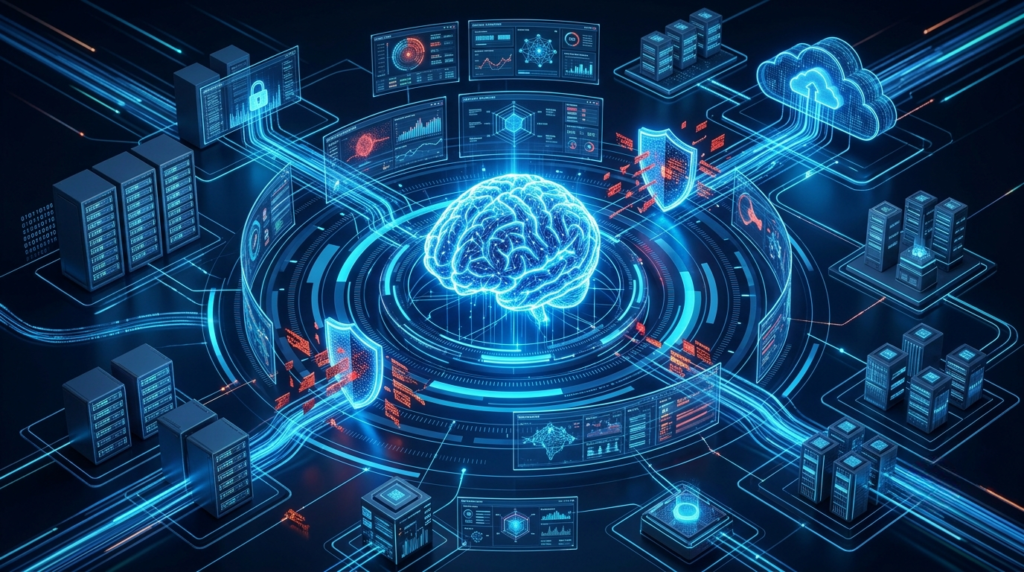
The emergence of artificial intelligence technology is causing significant changes in the way companies handle cyber threats. Security solutions can be overwhelmed by the number and sophistication of cyber threats that exist today. AI technologies allow companies to analyze massive amounts of security data on-the-go.
Machine learning technologies make it possible for companies to detect abnormal activity patterns and spot suspicious actions at an early stage. An AI security system constantly learns about new threats and improves its security skills.
Companies have already started implementing AI for:
- Threat intelligence
- Detection of malware
- Behavioral analysis
- Automation of security
- Cyber threat response
AI also lowers the load on security professionals by handling routine tasks and speeding up investigation processes.
Benefits of AI Security
| Benefit | Description |
|---|---|
| Faster Detection | Identifies threats in real time |
| Improved Accuracy | Reduces false positives |
| Automation | Handles repetitive security tasks |
| Scalability | Processes large data volumes |
| Predictive Security | Anticipates emerging threats |
As cyberattacks become more sophisticated, AI is becoming an essential component of modern cybersecurity strategies.
2. Zero Trust Security Architecture
The traditional security model assumed that users and devices inside a network could be trusted. However, modern cyber threats have proven this assumption to be risky.
Zero Trust Architecture follows the principle of “never trust, always verify.” Every user, device, application, and connection must be continuously authenticated and authorized before accessing resources.
This approach is particularly important for organizations with remote employees, cloud environments, and hybrid workforces.
Key components of Zero Trust include:
- Multi-factor authentication
- Identity verification
- Device security validation
- Continuous monitoring
- Least-privilege access
By limiting access rights and continuously validating users, organizations can significantly reduce the risk of unauthorized access and insider threats.
3. Cloud Security Becomes a Top Priority
Cloud adoption continues to accelerate as businesses seek greater flexibility, scalability, and cost efficiency. However, moving critical workloads to the cloud introduces new security challenges.
Organizations must secure:
- Cloud applications
- Cloud storage
- Virtual machines
- Containers
- Multi-cloud environments
Misconfigured cloud resources remain one of the leading causes of data breaches. Businesses are investing in advanced cloud security tools that provide visibility, monitoring, and automated threat detection.
Cloud security strategies now focus on:
- Data encryption
- Access management
- Cloud workload protection
- Security posture management
- Compliance monitoring
As cloud environments become increasingly complex, robust cloud security practices are essential for protecting business assets.
4. Extended Detection and Response (XDR)
Many organizations use multiple security tools that operate independently. This fragmented approach can create security blind spots and make threat detection more difficult.
Extended Detection and Response (XDR) solves this problem by integrating security data from multiple sources into a single platform.
XDR combines information from:
- Endpoints
- Networks
- Cloud environments
- Email systems
- Identity platforms
This unified approach enables security teams to gain comprehensive visibility across their entire environment.
How XDR Improves Security
| Security Challenge | XDR Solution |
|---|---|
| Data Silos | Centralized visibility |
| Slow Investigations | Automated analysis |
| Complex Threats | Correlated detection |
| Manual Processes | Security automation |
| Limited Context | Comprehensive threat insights |
Organizations adopting XDR often experience faster detection, quicker response times, and improved security efficiency.
5. Cybersecurity Mesh Architecture
With the increasing decentralization within organizations, security models built around a perimeter are proving to be less effective. The Cybersecurity Mesh Architecture (CSMA) allows security control measures to be implemented closer to the users, endpoints, and applications irrespective of their geographical location.
In contrast to a security model where only the network perimeter gets protected, cybersecurity mesh provides a more flexible security environment.
Cybersecurity mesh is useful for companies that have:
- A hybrid work arrangement
- Multiple cloud-based solutions
- Remote workers
- External applications
A cybersecdopting mesh architectures to address the challenges of modern distributed ecosystems.
6. Advanced Ransomware Defense Strategies
Ransomware remains one of the most damaging cyber threats facing businesses today. Attackers encrypt critical data and demand payment in exchange for restoring access.
Modern ransomware attacks are becoming more sophisticated, often involving:
- Double extortion
- Data theft
- Supply chain infiltration
- Targeted attacks
Organizations are shifting from reactive recovery strategies to proactive ransomware prevention.
Key defense measures include:
- Endpoint protection
- Regular backups
- Employee awareness training
- Network segmentation
- Threat intelligence monitoring
Security teams are also implementing rapid incident response plans to minimize operational disruptions during attacks.
Ransomware resilience has become a central component of enterprise cybersecurity programs.
7. Identity and Access Security Gains Importance
Identity has become the new security perimeter. With employees, contractors, partners, and customers accessing systems from multiple locations and devices, managing identities securely is essential. Cybercriminals frequently target user credentials through phishing attacks, credential theft, and social engineering.
Businesses are strengthening identity security through:
- Multi-factor authentication (MFA)
- Passwordless authentication
- Identity governance
- Single sign-on
- Privileged access management
Strong identity security reduces the likelihood of unauthorized access and helps organizations maintain control over sensitive resources.
Identity-centric security strategies are expected to remain a major focus area for years to come.
8. Supply Chain Cybersecurity Becomes Critical
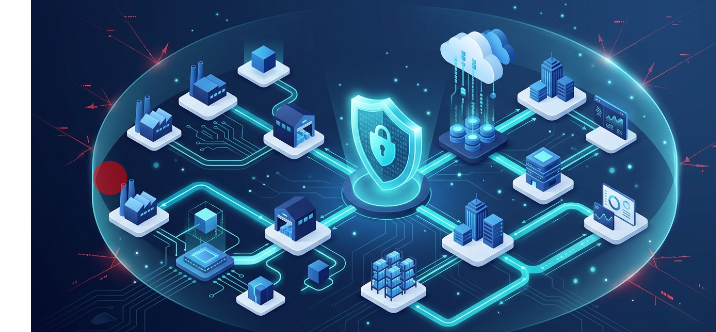
Businesses increasingly rely on third-party vendors, software providers, and service partners. While these relationships improve efficiency, they also introduce additional security risks.
Cybercriminals often target suppliers and vendors to gain access to larger organizations. Recent supply chain attacks have demonstrated how vulnerabilities in one organization can impact thousands of businesses worldwide.
To reduce risks, organizations are:
- Assessing vendor security practices
- Monitoring third-party access
- Conducting security audits
- Implementing risk management programs
- Requiring stronger compliance standards
Supply chain security is no longer optional. It has become a fundamental component of enterprise risk management.
9. Growing Focus on IoT and Operational Technology Security
The number of connected devices continues to grow rapidly across industries. Businesses now rely on Internet of Things (IoT) devices and Operational Technology (OT) systems to support critical operations.
Examples include:
- Smart sensors
- Manufacturing equipment
- Industrial control systems
- Medical devices
- Connected infrastructure
Unfortunately, many connected devices were not originally designed with strong security protections.
Common risks include:
- Weak authentication
- Outdated firmware
- Unpatched vulnerabilities
- Insecure communication protocols
Organizations are implementing specialized security solutions to monitor and protect these devices from cyber threats.
As digital transformation accelerates, IoT and OT security will become increasingly important.
10. Compliance and Security Automation
Cybersecurity regulations continue to evolve across industries and regions. Organizations must comply with numerous standards related to data privacy, security controls, and risk management.
Manual compliance processes can be time-consuming and prone to errors. To address these challenges, businesses are adopting compliance automation solutions that streamline security governance activities.
Automation helps organizations:
- Monitor compliance continuously
- Generate audit reports
- Track security controls
- Identify policy violations
- Reduce administrative burden
Benefits of Compliance Automation
| Advantage | Business Value |
|---|---|
| Continuous Monitoring | Real-time compliance visibility |
| Faster Audits | Reduced preparation time |
| Improved Accuracy | Fewer compliance errors |
| Resource Efficiency | Less manual effort |
| Risk Reduction | Early issue detection |
By automating compliance processes, organizations can improve both security and operational efficiency.
How Businesses Can Prepare for These Trends
Organizations should take a strategic approach to cybersecurity modernization. Rather than implementing isolated technologies, businesses should develop comprehensive security programs that align with their operational needs.
Key preparation steps include:
- Conduct regular risk assessments
- Strengthen identity and access management
- Invest in security awareness training
- Adopt Zero Trust principles
- Improve cloud security controls
- Implement threat detection solutions
- Secure third-party relationships
- Automate security operations where possible
Cybersecurity should be viewed as a business enabler rather than simply a technical requirement. Companies that proactively embrace emerging security trends will be better positioned to protect their assets, customers, and reputation.
The Future of Business Cybersecurity
Cybersecurity will depend on the following: intelligence, automation, and adaptability in the future as hackers are becoming smarter with each passing day and, as such, the business world needs to adapt to them.
The use of artificial intelligence, Zero Trust model, cloud-based cybersecurity, and threat detection technologies will be essential to any cybersecurity strategy for companies. However, businesses will also need to tackle problems such as protecting identities, managing supply chain cybersecurity, and securing connected devices.
A company’s success will depend greatly on whether the firm considers cyber security as a constant evolution process instead of a once-off thing..
Conclusion
The evolution of cybersecurity is taking place today because of the emergence of advanced technology that companies need to protect themselves from. Cybersecurity trends such as artificial intelligence-driven solutions, Zero Trust framework, cloud security, Extended Detection & Response (XDR) solution, cybersecurity mesh, ransomware, identity, supply chain, Internet-of-Things (IoT), and compliance are changing the field.
These cybersecurity trends are not only important for the development of technology but also imply a completely new way of protecting business and ensuring its safety. By adopting these trends, businesses can manage their risks and comply with various requirements.
Understanding cybersecurity trends is essential today since cybersecurity threats continue to increase.