

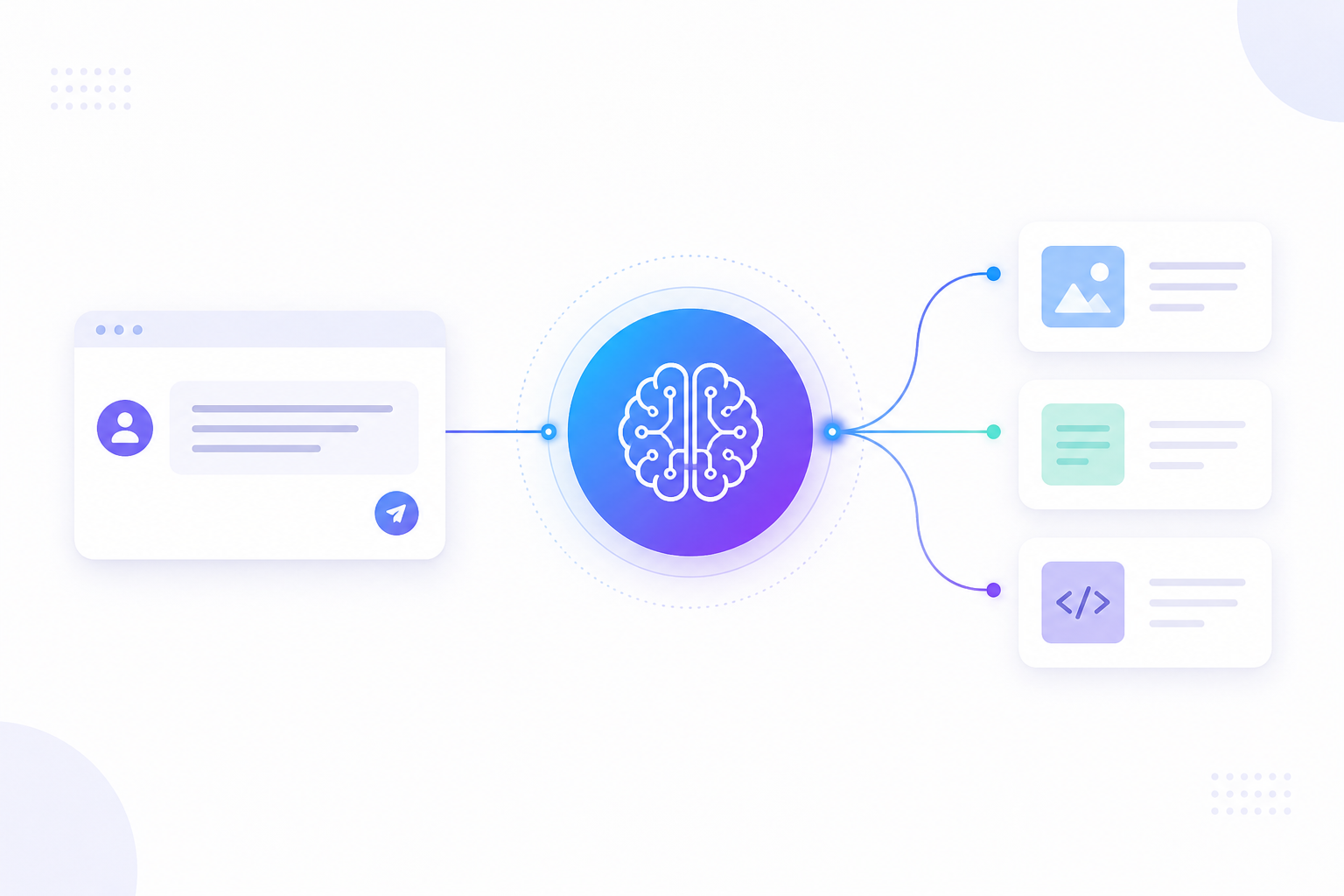
With its rapid adoption by businesses all around the globe, artificial intelligence has become an integral part of business communication and operations processes. The past several years have seen discussions in the domain of AI primarily concentrated on prompt engineering, a set of practices that help users develop effective instructions and queries that could help AI produce better results. Prompt engineering gained popularity quickly because it turned out that, in many cases, the output produced by the model was dependent on the way it was instructed to work.
Context engineering the discipline that has been developing simultaneously with prompt engineering, became the basis of any intelligent AI solution. Businesses were investing into educating their employees in prompt engineering, while content creators, marketing specialists, software developers, and other professionals started using different approaches to optimize AI.
At the same time, the technology behind AI continued evolving and a paradigm shift began unfolding within the industry. It became clear that while prompt engineering would always be useful, what businesses need to pay more attention to is not prompt structure but rather the provision of information, knowledge, and contextual details for AI models.
Understanding the Role of Prompt Engineering

Prompt engineering is a practice of creating high-quality instructions for AI models to achieve better results. The idea of this concept is to ensure that the instructions are clear and relevant to obtain maximum output quality. Early AI generations showed that even small alterations in wording may lead to significant shifts in outcomes. As a consequence, prompt engineering became one of the most widespread practices in the sphere of AI.
The Rise of Prompt Engineering in the AI Era
For instance, the phrase “create a blog post about cybersecurity” may bring about a mediocre outcome. If, however, the instruction would specify audience type, tone of voice, number of words needed, industry-related information, and the main objectives, the result would be much better. Numerous businesses utilized prompt engineering for tasks like content creation, automation of customer services, programming, researches, etc.
The popularity of prompt engineering was dictated by the fact that early AI programs were highly dependent on instructions. Effective prompts helped get accurate answers, whereas poor instructions resulted in low-quality output. For that reason, companies tried their best to create prompt libraries and related structures. Nevertheless, prompt engineering is an outdated practice despite its significance.
The Growing Limitations of Prompt Engineering
The main disadvantage associated with the utilization of prompt engineering relates to the fact that prompts cannot provide any information which is not possessed by the artificial intelligence system used. While prompts may serve to guide the line of reasoning, the lack of information makes it impossible to give a satisfactory response.
Examples of Context AI Needs to Perform Effectively
- Monitoring and observability data
- Customer support databases
- Ticket histories and previous interactions
- Source code repositories
- System and application logs
These issues arise in virtually all industries where the utilization of AI systems becomes widespread. Financial companies would need an AI to analyze transaction histories and other details about customers. Hospitals will want AI assistants to have access to the patient’s medical records, while retail stores will use AI to make recommendations based on inventory data and preferences of their clients.
What Is Context Engineering?
Context engineering is the process of providing information to AI technologies, including the creation of information flows necessary for their operation. Unlike the emphasis put by prompt engineering on instructions, context engineering is concerned with ensuring that AI models are provided with all the knowledge, information, data, memories, and environmental inputs needed for intelligent behavior.
- In practical application, context engineering entails connecting AI models to various sources of information such as databases, enterprise software solutions, CRM platforms, documentation libraries, communication infrastructure, and even live data.
- Context engineering ensures that AI models can access their conversation history, user input and preferences, organizational policy, past interaction records, and other data that could be helpful in making a decision.
- The key idea behind context engineering versus prompt engineering can be illustrated using the analogy of hiring a human employee for work.
Instructions are essential but only if employees have access to all the relevant documents and information from the organization’s records. Otherwise, even a highly qualified employee may have difficulties making informed decisions without adequate context.
Why Context Is Becoming the Most Valuable Asset in AI
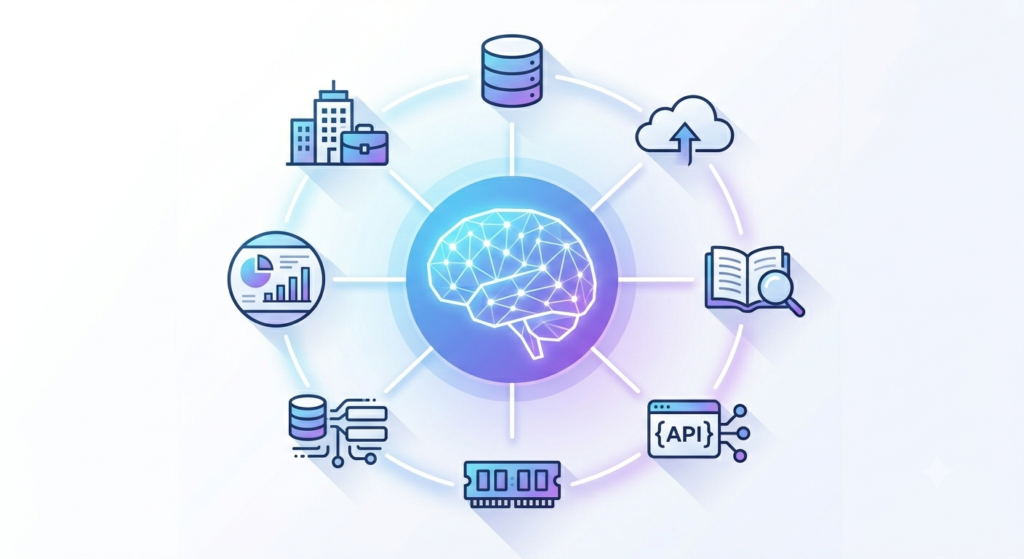
As AI gains momentum in various sectors, companies are realizing that context influences efficiency much more than prompt quality does. Contemporary applications of AI are supposed to solve difficult problems, facilitate decision-making, automate processes, and create personalized experiences for end-users. To perform these functions, the tool requires knowledge of its working environment, user, and other variables involved in the process.
Imagine an AI-driven customer service platform. If the system doesn’t know anything about the company in question, its clients, and their needs, all it can do is rely on publicly available knowledge and give general answers to queries. However, if it receives access to client data, purchase histories, support tickets, and product information, then it can work much more efficiently.
For example, the same logic applies to code development tools that employ machine learning algorithms. The tool can offer some generic solutions, but once you provide it with access to source code, architectural documentation, error logs, and deployment history, you’ll see an improvement in its efficiency.
In other words, reliance on context becomes increasingly important when implementing AI. Companies have already realized that success is not just about finding good models but also building context infrastructures where they can operate efficiently.
Real-World Applications of Context Engineering
Context engineering is already transforming numerous industries.
Customer Support
AI-powered support systems can access customer histories, previous conversations, product subscriptions, and support tickets to provide faster and more personalized assistance.
Healthcare
Healthcare organizations use context-aware AI systems to analyze patient records, treatment histories, diagnostic results, and medical guidelines.
Financial Services
Banks and financial institutions leverage contextual information to improve fraud detection, risk assessment, customer service, and regulatory compliance.
E-Commerce
Retailers use context engineering to deliver personalized product recommendations, targeted promotions, and enhanced customer experiences.
Human Resources
HR teams use AI systems that understand employee records, company policies, training histories, and performance data to support workforce management.
The Rise of Agentic AI and Context-Aware Systems
Some of the key reasons behind the rise of context engineering include the emergence of agentic AI. While traditional AI tools have been designed to respond to inputs or instructions from humans, agentic AI allows agents to plan actions, make decisions, execute instructions, and interact with several systems independently. The development of such sophisticated technologies necessitates greater reliance on contextualization.
For instance, an agent designed to handle customer onboarding tasks would require access to various systems, including CRM, the ability to look at customer information, document validation, appointment scheduling, generating reports, and interacting with other business applications. In doing all these, the agents will require constant access to contextually relevant data.
| Feature | Traditional AI | Agentic AI & Context-Aware Systems |
|---|---|---|
| Role | Responds to prompts | Executes tasks and achieves goals |
| Context | Limited | Rich, real-time, and dynamic |
| Decision-Making | Reactive | Proactive and autonomous |
| Data Access | User input only | Multiple systems and databases |
| Memory | Short-term | Long-term and contextual |
| Business Value | Task assistance | End-to-end workflow automation |
The Business Benefits of Context Engineering
Firms focusing on context engineering tend to see much greater success with AI. More precise results, quicker decision making, greater degrees of personalization, and fewer operational mistakes all stem from enhanced context. Additionally, greater user confidence in AI technologies can be achieved, because instead of giving out advice based on assumptions, AI will have access to business-relevant information.
Moreover, scalability becomes easier when companies adopt context engineering practices. In other words, scaling up an organization’s use of AI becomes much simpler since it no longer requires constant optimization of prompts for each scenario, the focus shifts to increasing the amount of useful data that the AI will have.
Finally, the implementation of context engineering leads to increased organizational efficiency. This means employees spend less time looking for information, and clients get answers faster, allowing the AI to operate more independently.
The Future of AI Belongs to Context
In the future, context engineering could become one of the key areas in the development of enterprise AI technology. With improvements in the development of language models, the distinctions between them could become increasingly irrelevant in comparison to their contexts. Companies that develop sophisticated context infrastructures would benefit from improved accuracy and automation, along with better intelligence of AI-based applications.
The importance of prompt engineering would not vanish; there would always be a need for clear guidelines for directing the behavior of AI. However, prompt engineering alone would no longer suffice. The success stories of the next era of AI would require an understanding of how AI needs to acquire knowledge, memory, and awareness.
Conclusion
In the next stage of the development of artificial intelligence, context plays an important role compared to instructions. Although prompt engineering proved its effectiveness for developing the first capabilities of generative AI, context engineering becomes crucial to ensure the emergence of genuinely intelligent systems. Companies understand the importance of the connection between artificial intelligence and various information resources, corporate knowledge, and data for effective results.
With further integration of AI into enterprise functions, software development, customer interaction, and decision-making, context engineering is likely to play a significant part in determining outcomes. Those companies which develop powerful context frameworks now are ready to use the opportunities provided by AI in the future. It is evident that in the age when information is the cornerstone of intelligence, context engineering should play a key role.