
In today’s fast-changing digital world, companies don’t use separate systems or paper-based work anymore. Everything, data, employees, customers, and processes is connected.
That’s where ERP in Modern IT comes in.
Enterprise Resource Planning (ERP) is no longer just about tracking finances or stock. It has become the backbone of the IT system, enabling businesses to be more agile, efficient and productive.
Digital transformation is not just about digital technologies. It is about connecting systems, streamlining processes and utilising data for insights. And this is where ERP comes in.
In this blog we will look at:
- What ERP in Modern IT means
- Why it’s crucial for digital transformation
- How it integrates with modern technologies
- Its challenges, advantages and the future
Let’s explore in detail.
What is ERP in Modern IT?
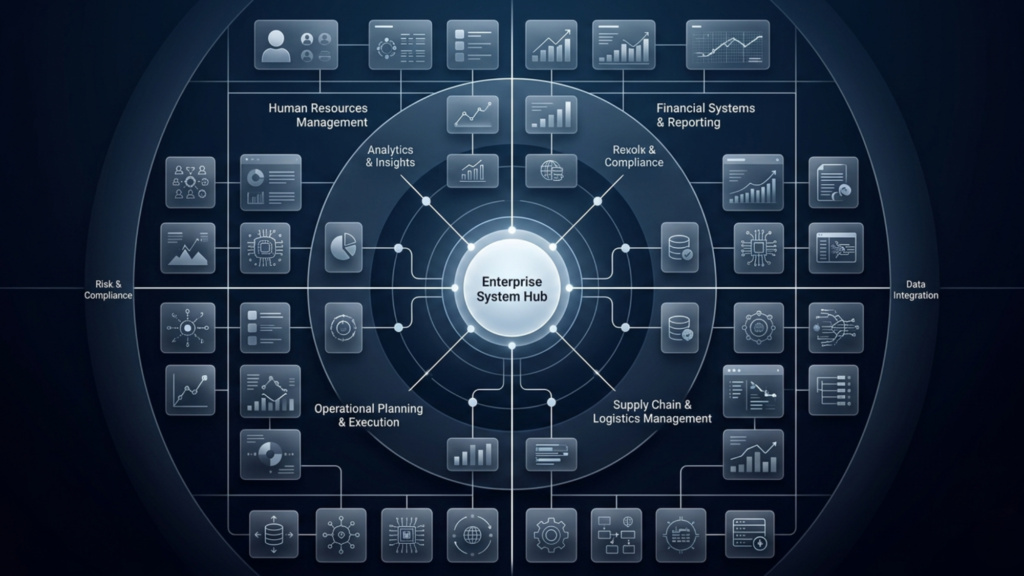
ERP in Modern IT refers to the use of ERP systems as a central platform that connects all business functions within an advanced IT environment.
Instead of separate tools for finance, HR, sales, and operations, ERP brings everything together into a single unified system.
Think of ERP as the brain of your business IT system:
- It collects data from different departments
- Processes that data
- Provides real-time insights
- Helps in decision-making
Traditional ERP vs Modern ERP
| Feature | Traditional ERP | ERP in Modern IT |
|---|---|---|
| Deployment | On-premise | Cloud-based |
| Flexibility | Low | High |
| Integration | Limited | API-driven |
| Accessibility | Office-only | Anywhere, anytime |
| Data Insights | Basic reports | Real-time analytics |
| Scalability | Difficult | Easy |
Why ERP is the Backbone of Digital Transformation
ERP acts as the central nervous system of modern businesses, connecting different departments, processes, and data into one unified platform. It enables organizations to operate more efficiently, make faster decisions, and adapt quickly to changing market demands.
1. Data Integration
ERP in Modern IT integrates departments into a unified system, enabling data to move seamlessly between finance, sales, HR and operations. This eliminates data duplication and provides real-time information.
2. Automation
ERP automates routine processes such as invoicing, reporting and order management. This reduces time, errors and frees up staff to do other tasks.
3. Real-Time Visibility
ERP offers real-time information and reporting, enabling businesses to monitor performance in real time. This enables quicker decision-making and process control.
4. Scalability
ERP can manage more data, users and processes as your business expands. It’s easy to add new features and functions without extensive modifications.
Key Reasons ERP Drives Digital Transformation
ERP plays a critical role in helping businesses transition from traditional operations to digitally driven models. It brings structure, efficiency, and intelligence into everyday processes, making transformation smoother and more effective.
1. Centralized Data Management
In many organizations, data is scattered across different systems, making it difficult to manage and trust. ERP solves this by bringing all business data into a single, unified platform, ensuring consistency and clarity.
Benefits:
- No duplication
- Better accuracy
- Easy access
2. Real-Time Decision Making
Digital transformation demands quick and informed decisions. ERP systems provide real-time data and insights, allowing businesses to respond instantly to changes and opportunities.
Example:
A company can track sales, inventory, and finances in real time.
3. Process Automation
Manual processes are time-consuming and prone to errors. ERP automates routine and repetitive tasks, allowing teams to focus on more strategic work.
ERP automates tasks like:
- Invoice generation
- Payroll processing
- Order management
Result:
- Saves time
- Reduces errors
4. Integration
Businesses today use several applications. ERP works as a link between the various applications, thus creating an ecosystem out of them.
ERP integrates with:
- Customer relationship management systems
- Supply chain management systems
- Human resource management software
- Analytics software
5. Scalability for Growth
When organizations grow, their requirements become more complicated. ERP solutions are scalable in nature; therefore, even as an organization grows, there will be no inefficiency or breakdown of the systems.
Core Components of ERP in Modern IT
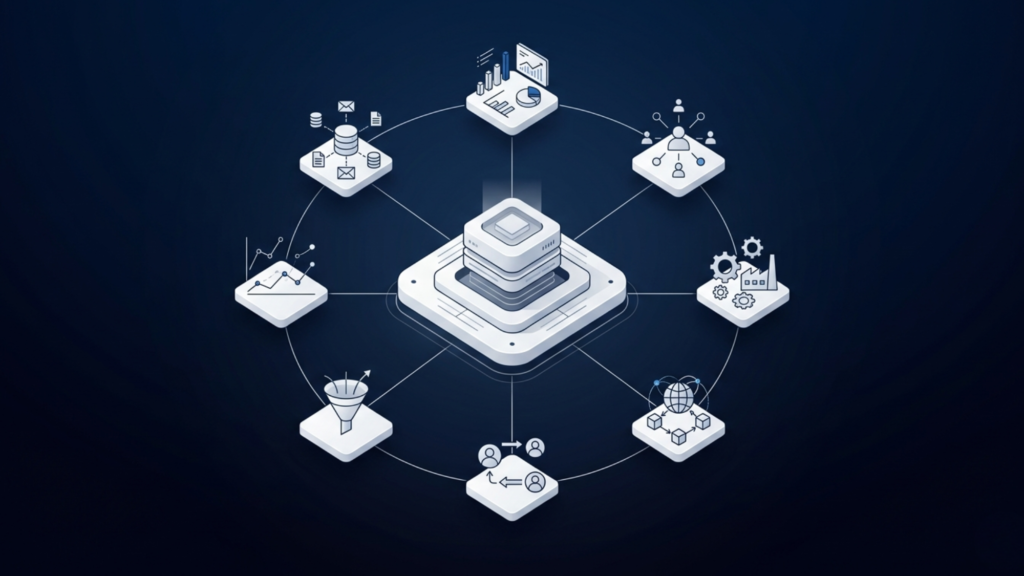
Main ERP Modules
| Module | Function |
|---|---|
| Finance | Accounting, budgeting, reporting |
| HR | Employee data, payroll, recruitment |
| Supply Chain | Inventory, logistics |
| Sales | Order management, CRM integration |
| Procurement | Vendor management, purchasing |
| Manufacturing | Production planning |
How ERP Fits into Modern IT Architecture
ERP in Modern IT is no longer a standalone system. It works as a central hub that connects multiple advanced technologies, creating a fully integrated IT ecosystem.
ERP + Cloud Computing
Cloud-based ERP in Modern IT allows businesses to access their system from anywhere using the internet. It reduces hardware costs and makes updates automatic, saving time and effort.
ERP + Artificial Intelligence
Artificial intelligence adds intelligence to ERP by analyzing the information and forecasting trends in the future. It is capable of detecting anomalies and even automating decision-making for quick business actions.
ERP + IoT (Internet of Things)
ERP gathers live data from all the machines and devices connected using IoT technology. This enables businesses to keep track of their operations immediately.
Example: Machines transmit production data to ERP without human intervention.
ERP + Big Data Analytics
ERP software processes huge data to extract meaningful insights. Businesses get an understanding of consumer behavior, performance, and risks.
ERP + API & Integration
ERP systems of today are connected to other tools using APIs. This ensures seamless data exchange between systems and makes workflows more efficient.
Advantages of ERP in Modern Information Technology
| Advantage | Explanation |
|---|---|
| Efficiency | ERP streamlines repetitive tasks and automates daily operations. This reduces manual effort and helps businesses complete work faster and more accurately. |
| Improved Decision Making | With real-time and updated data, leaders can make quick and informed decisions. It also improves planning and reduces business risks. |
| Improved Collaboration | ERP allows different departments to work on one platform. This improves communication, coordination, and teamwork across the organization. |
| Cost Savings | ERP reduces costs by eliminating duplicate tasks and minimizing errors. It also removes the need for multiple separate systems. |
| Data Consistency | All data is stored in a single system, ensuring accuracy and reliability. This avoids confusion caused by inconsistent or duplicate data. |
| Flexibility | ERP helps businesses quickly adapt to market changes. Companies can easily adjust processes based on customer needs and trends. |
ERPs for Industry Applications within Modern IT Systems
Manufacturing Sector
ERP aids in production planning, inventory monitoring, and product quality maintenance. It facilitates effective manufacturing processes.
Retail Sector
ERP helps monitor inventory, analyze customer behavior, and improve the sales process.
Healthcare
ERP helps in maintaining records of patients, billing, and allocation of resources. It also improves services offered.
Financial Sectors
ERP enables risk management, compliance, and preparation of financial statements.
Information Technology Services
ERP assists in project management, resource allocation, and billing.
Issues of Implementation of ERP in Modern Information Technology
- Initial Investment- ERP implementation will involve the acquisition of software and other related aspects. This could be costly for many organizations.
- Difficulty in Implementing- ERP implementation takes time since it needs adequate planning and implementation processes.
- Change Management- It could be hard for employees to adjust to ERP due to their previous habits. They should be trained properly.
- Data Migration- Data migration from existing system to ERP could be problematic as well. Care should be taken during data migration.
- Customization- Excessive customization might make ERP too complicated. Therefore, it is important to make ERP as simple as possible.
ERP Implementation Best Practices
1. Set Clear Objectives
Organizations should have a clear understanding of their goals and objectives when implementing ERP solutions.
2. Select the Appropriate ERP
The organization should select the most appropriate ERP solution based on its current and future business requirements.
3. Emphasize Training
Organizations should provide adequate training to employees on how to use the ERP solution efficiently.
4. Implement ERP in Phases
ERP implementation should be done in phases to avoid risks associated with implementing the entire ERP solution at once.
5. Monitor and Refine
Continuous monitoring and refining of the ERP solution will ensure successful ERP implementation.
ERP Future Trends in Modern IT Environment
1. ERP in Modern IT Using AI
ERP systems of the future will implement AI algorithms that help in decision-making. The human effort will be significantly reduced due to efficiency improvements.
2. Mobile ERP
ERP systems will become mobile-friendly, thus enabling convenient management of business operations through mobile devices.
3. Low-Code/No-Code ERP
ERP systems will be developed to become customizable by users without any coding skills.
4. Hyper automation
ERP systems will employ AI and robotics for the automated management of entire business operations.
5. ERP in Modern IT with Blockchain
The integration of blockchain technology will ensure high levels of security and transaction reliability in ERP systems.
Why Business Cannot Do Without ERP in Modern IT
Without ERP, firms suffer from inconsistent processes, ineffective operations, and flawed decisions. Each department operates independently, which causes confusion, inefficiency, and mistakes. Thus, organizations cannot sustain uniformity and be responsive to market dynamics.
With the adoption of ERP, everything works systematically and effectively. Procedures are optimized, duties are automated, and data are exchanged seamlessly among departments. Not only does this benefit internal functions, but it also elevates the customer experience, ensuring the success of enterprises.
In a realistic case, the lack of ERP implies that every department uses different systems. Consequently, inefficiency arises since data are not communicated adequately and there are communication barriers. Nonetheless, when ERP in Modern IT is adopted, all systems are connected through a unified platform. Data flow becomes seamless, and decisions are made effectively.
Conclusion
ERP has come far from being simply a solution to manage business operations, as it has now become a fundamental component of modern IT architecture. The digital world of today requires companies to integrate complex systems, analyze massive amounts of data, and streamline their processes. This makes ERP an essential component of any organization, as it brings all aspects of operation into harmony.
The growing demands for rapid action and informed decision-making require businesses to have a unified system, which can be achieved through ERP.
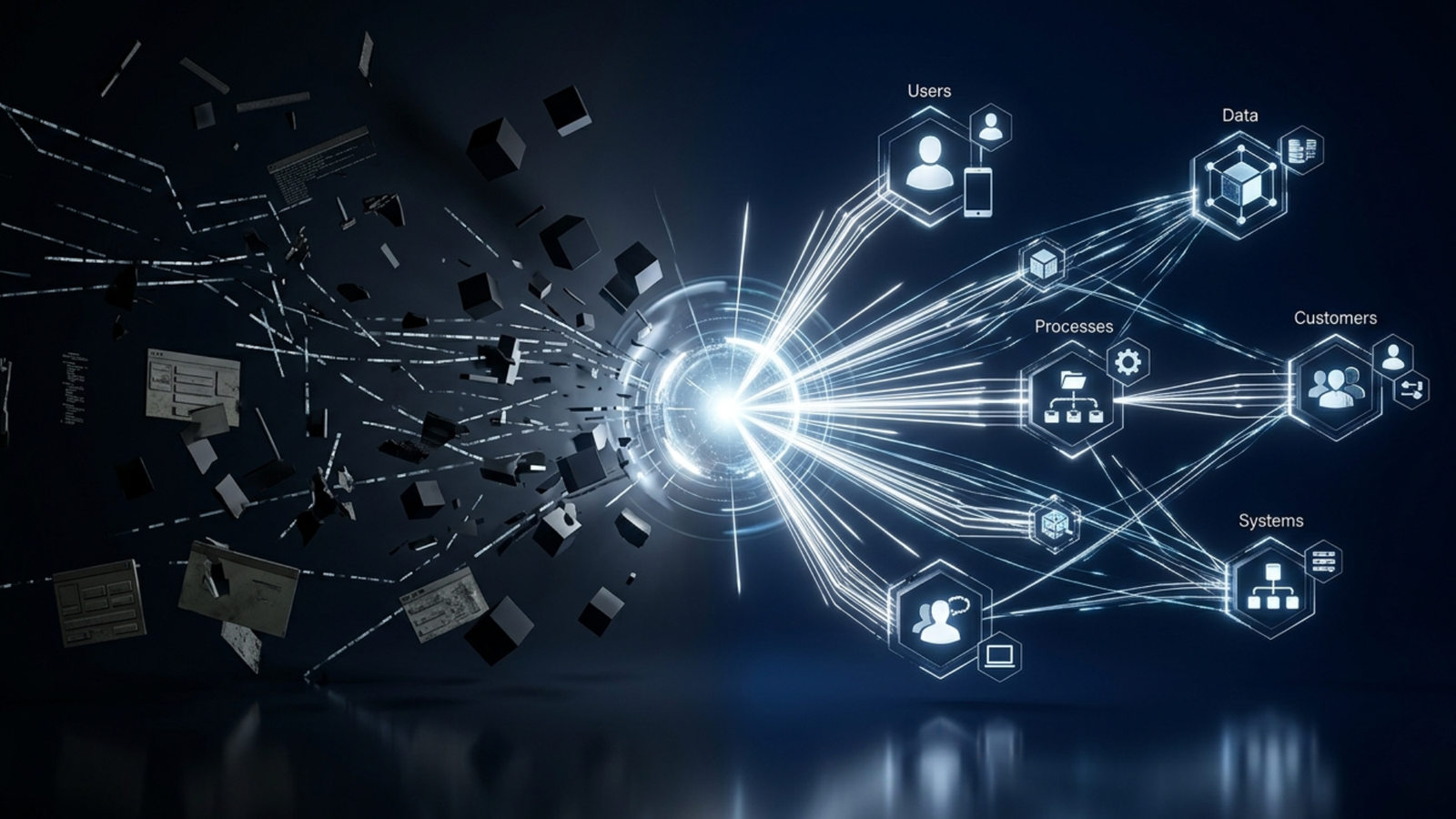
This technology integrates all processes, people, and data into one platform, thus eliminating the risks associated with fragmentations in the process.
In such a fast-paced and information-driven environment, outdated technologies prove to be inadequate, as they cannot keep up with the pace of development. ERP, however, allows managers to monitor performance in real time and make instant adjustments.
Frequently Asked Questions (FAQs)
- What is ERP in Modern IT?
ERP (Enterprise Resource Planning) in Modern IT is a system that integrates all business processes like finance, HR, sales, and operations into one unified platform. - Why is ERP important in digital transformation?
ERP helps businesses connect data and processes, making operations faster, smarter, and more efficient during digital transformation. - How does ERP improve business efficiency?
It automates routine tasks, reduces manual errors, and ensures real-time access to business data. - What are the main components of ERP systems?
Common components include finance management, human resources, supply chain management, customer relationship management, and inventory control. - Is ERP only for large companies?
No, ERP systems are now scalable and can be used by small, medium, and large businesses. - How does ERP support decision-making?
ERP provides real-time data and reports, helping managers make faster and more accurate decisions. - What is cloud-based ERP?
Cloud-based ERP is hosted online, allowing businesses to access systems anytime, anywhere with better flexibility and lower maintenance. - What challenges come with ERP implementation?
Challenges include high initial cost, employee training, system integration, and change management. - How does ERP improve customer experience?
It ensures faster service, better order tracking, and more accurate customer data handling. - What is the future of ERP in Modern IT?
The future of ERP includes AI, automation, predictive analytics, and deeper integration with digital ecosystems.