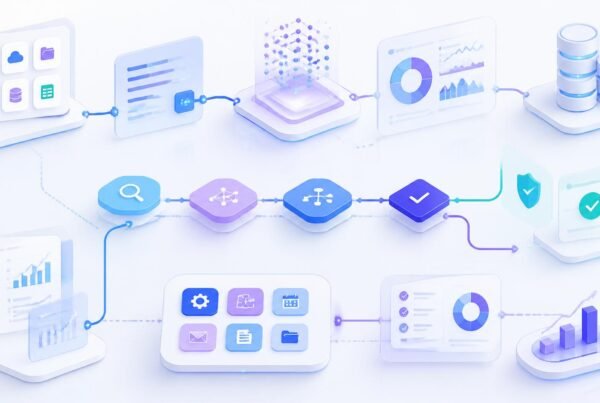

If you have ever tried to install a software package and then had to deal with endless updates, crashes or compatibility issues you know how frustrating traditional software can be. Software as a Service or SaaS is changing the way businesses operate.
SaaS is different from software because it does not need to be installed and it does not require a lot of maintenance or hardware resources. You can access SaaS over the internet. You only have to pay for what you use. It is like renting a furnished office instead of buying and setting one up from scratch.
Today SaaS is not a convenience it is a critical part of how companies are transforming their businesses. SaaS is helping companies save time reduce costs and improve productivity. In this guide we will explore everything from the basics of SaaS to its trends, challenges and real-world applications.
Understanding SaaS: A Simple Explanation
SaaS Technology that lives in the cloud and you can access it via a browser or app. You do not have to install it worry about servers or manage updates. Your provider handles all of that.
A simple way to think about it is to compare software to owning a car. You pay upfront maintain it and deal with breakdowns. SaaS on the hand is like using a ride-sharing service. You pay for what you need. Someone else handles the maintenance.
Key Features of SaaS:
- Cloud-based access: Work from anywhere, anytime, on any device.
- Subscription model: Pay monthly or annually instead of large upfront costs.
- Automatic updates: No more manual updates; you always have the latest version.
- Scalability: Add or remove users and features based on business needs.
SaaS platforms can range from productivity tools like Microsoft 365 and Google Workspace to complex business systems like Salesforce for CRM or NetSuite for ERP.
| SaaS Type | Examples | Key Benefit |
|---|---|---|
| Collaboration | Slack, Teams | Team communication & file sharing |
| CRM | Salesforce, HubSpot | Track leads & improve customer engagement |
| ERP | NetSuite, SAP | Integrate business operations |
| Marketing | Mailchimp, Marketo | Automate campaigns & personalize marketing |
| HR & Payroll | Workday, BambooHR | Simplify hiring, payroll & performance |
| AI-Powered | Dynamics 365 Copilot | Predictive insights & process automation |
Why Businesses Are Choosing SaaS
Many businesses are choosing SaaS because it is cost-efficient, easy to use and accessible. Teams can collaborate globally without worrying about hardware or location. Businesses can scale usage up or down depending on demand. SaaS providers frequently release features ensuring users stay ahead without extra effort.
SaaS makes software simpler, smarter and more adaptive. There are types of SaaS including collaboration and productivity tools, customer relationship management, enterprise resource planning, marketing technology and human resources and payroll.
Here are some popular SaaS categories:
- Collaboration and Productivity Tools. Examples include Slack, Microsoft Teams and Google Workspace. These tools keep teams connected support file sharing and allow real-time collaboration.
- Customer Relationship Management. Examples include Salesforce and HubSpot. These platforms help businesses manage customer data track sales pipelines and improve client engagement.
- Enterprise Resource Planning. Examples include NetSuite and SAP S/4HANA Cloud. These systems integrate all business operations into a platform.
- Marketing Technology. Examples include Mailchimp, Marketo and ActiveCampaign. These tools campaigns, track engagement and personalize experiences.
- Human Resources and Payroll. Examples include Workday, BambooHR and Gusto. These platforms simplify hiring, onboarding, payroll and employee performance tracking.
How SaaS is Revolutionizing Workflows
SaaS is not software it is a game changer for the way businesses operate. Here is how SaaS is changing the way work is done across industries:
- Streamlined Collaboration
Teams do not have to spend a lot of time sending emails forth or looking for files. SaaS tools that are based in the cloud let many people work on the documents at the same time. They can also track changes. Talk to each other in real time. This makes it easier for teams to work together. SaaS is really good at making collaboration easier.
- Automation of Tasks That Have to be Done Over and Over
SaaS platforms can automate tasks such as sending invoices and emails well as tasks that the human resources department has to do. This means that employees have time to focus on work that is important and requires creativity. SaaS is automating tasks that’re repetitive.
- Making Decisions Based on Data
SaaS platforms have tools that can take data and turn it into information that can be used to make decisions. Businesses can use SaaS to track how they are doing find trends and make decisions quickly. SaaS is helping businesses make decisions based on data.
- Being Able to Change and Grow Easily
If a business needs to add a lot of users SaaS can do it without needing new equipment. This is very helpful for businesses that are growing or have to deal with a lot of work at times of the year. SaaS is flexible. Can grow with a business. SaaS is very good, at handling changes.
The Role of Artificial Intelligence in Modern Software as a Service Platforms

Artificial Intelligence is now a part of many Software as a Service products. This makes them smarter and better at adapting. Here’s how it works:
- Predictive Analytics: Artificial Intelligence helps forecast what customers will do. This helps marketing and sales teams make decisions based on facts.
- Personalized Experiences: Software as a Service platforms can show users content and suggestions that they like. This is based on what they prefer.
- Automated Customer Support: Artificial Intelligence chatbots answer customer questions away. This makes customers happier. Reduces wait times.
- Process Optimization: Artificial Intelligence helps make workflows better. It does this in areas like Human Resources and finance. It finds ways to make things more efficient.
The combination of Software as a Service and Artificial Intelligence helps businesses work faster. They can also work smarter and efficiently than before. Software, as a Service and Artificial Intelligence make this possible.
SaaS Trends
| Trend | Impact |
|---|---|
| AI-First SaaS | Smarter tools with predictive insights and automation |
| Vertical SaaS | Tailored solutions for specific industries |
| Collaborative Ecosystems | Seamless integration between multiple SaaS platforms |
| Enhanced Security | Stronger data protection and compliance features |
| Green SaaS | Energy-efficient cloud infrastructure |
Challenges and Considerations in Adopting SaaS
When we think about SaaS we know it has a lot of things to offer.. Saas is not perfect and it has some problems. Companies that want to use SaaS need to know about these problems.
- Data Security and Privacy
When we store business information in the cloud we need to make sure it is safe. Companies must make sure that the SaaS companies they work with follow the rules like the rules of GDPR or HIPAA to keep their business information private and secure.
- Integration with Existing Systems
SaaS works well when it works together with the tools we already use. If SaaS does not work well with our existing tools it can cause problems. Make it harder to get things done.
- Cost Management
The way SaaS charges us with an yearly fee is flexible and can be helpful.. If we have a lot of SaaS services the cost can add up quickly. Companies need to keep track of how they are using SaaS and make sure they are getting their moneys worth from SaaS.
- Dependency on Internet Connectivity
Because SaaS is in the cloud we need to have an internet connection to use it. Companies that use SaaS need to have a plan, in place in case the internet is not working so they can still get their work done and use SaaS when the internet is working again.
Real-World Examples of SaaS Impact
To make this clearer here are some examples of how SaaS’s changing businesses:
- Slack for Remote Teams: A global marketing agency started using Slack and improved teamwork. They reduced email overload. Saved hundreds of hours every month.
- Salesforce for Sales Automation: A B2B tech company used Salesforces CRM features and increased lead conversion by 30%.
- Workday for HR Efficiency: A multinational company switched to Workday for payroll, benefits and performance reviews. This reduced their HR workload by 40%.
- HubSpot for Marketing Campaigns: A mid-sized e-commerce brand used HubSpot to automate email campaigns. They also personalized content. Increased customer engagement by 25%.
Future Trends in SaaS Technology
The SaaS industry is changing fast. Here are the trends to watch in 2026. Beyond:
- Vertical SaaS: SaaS solutions will be designed for specific industries like healthcare, retail and finance.
- AI-First SaaS: AI will become a feature in SaaS, not an optional one. It will help predict trends, automate tasks and make decisions.
- Enhanced Security Features: SaaS providers will use security models like Zero Trust Security and encryption.
- Collaborative Ecosystems: SaaS platforms will work with SaaS tools to create integrated digital ecosystems.
- Sustainability and Green SaaS: SaaS providers will make their infrastructure more energy-efficient. This is because people are more concerned, about the environment.
Tips for Choosing the Right SaaS Platform
When you are looking for a SaaS platform you need to remember that not all of them are the same. If you pick the SaaS platform you will waste a lot of time and money and you will get frustrated. So to make the choice you should think about these important things:
1. Figure Out What Your Business Needs
Before you start looking at SaaS options take a step back and think about what you want to do. Do you want to make your work easier make your customers happier or automate the things you do every day? If you know what you want to achieve you can find the SaaS platforms that’re really good for you and not just the popular ones that do not help you.
2. Check If The SaaS Platform Is Secure
You should always think about the security of your data. SaaS platforms handle important information so you need to make sure that the company that makes the platform is very good at keeping your data safe. Look for things like ISO 27001 SOC 2 or GDPR compliance. If the SaaS platform is secure you can trust it with your business and your customers will trust you too.
3. See If The SaaS Platform Works With Your Tools
A SaaS tool is very useful when it works well with the other software you use. Check if it works with your customer relationship management tool, your enterprise resource planning tool, your email marketing tool or other important systems. If it does not work well with these tools you will have problems. You will have to do more work manually which is not what you want from a SaaS solution.
4. Check If The SaaS Platform Can Grow With Your Business
Your business is always changing and your SaaS platform should be able to change with it. Look for SaaS platforms that can support users add new features or handle more data as your business grows. If you have a SaaS platform that can grow with you you will not have to switch to a tool later which will save you time and money.
5. Try The SaaS Platform Before You Commit
Most SaaS companies give you a trial or a demo version of their platform. You should try it out with your team to see how easy it is to use how well it works and how good the support is. This will help you decide if the SaaS platform is really good, for your business and if it will work well with your team.
Conclusion
SaaS is more, than a simple way to use software. It actually changes how businesses work. When companies move to the cloud they get flexibility. They also spend money. Their teams can work better faster and together. Startups and big companies can use SaaS to get tools without managing hard IT systems.
SaaS is really powerful because it changes with what businesses need. SaaS helps businesses streamline work engage customers and use insights. SaaS platforms give businesses what they need to succeed in a tech world. Businesses that use SaaS make choices. They stay ahead of others.
Using SaaS can be tricky. Security, integration, scalability and cost are important.. With good planning the right checks and a good platform these issues become small problems, not big ones.