
Today, artificial intelligence became one of the most revolutionary innovations for modern companies. All kinds of businesses are using artificial intelligence for automation of routine processes, analysis of huge amounts of data, improvement of customer relations, and fast decision making. However, together with the rise of usage of artificial intelligence technologies by companies, there have been appeared concerns of data privacy, security, compliance, and intellectual property.
A lot of enterprises prefer not to work with public AI services due to the fact that all the information about the company can be exposed to other parties. Financial information, customer information, medical records, legal documents, source codes, and business strategies need to be kept in much safer conditions than those provided by public AI service. Such an increased concern resulted in the appearance of Private AI for Business, which allows using the benefits of artificial intelligence while retaining full control of the information and infrastructure of the company.
Unlike the public AI services, Private AI was created to solve such problems as privacy, compliance, and customization needs of business.

What Is Private AI for Business?
Private AI for Business is defined as artificial intelligence that is used in a closed environment wherein the company owns the data, AI model, and infrastructure. This means that the organization does not transfer any sensitive data to the publicly-hosted AI platform but rather uses private cloud, dedicated server, virtual private cloud (VPC), hybrid IT, or on-premise data centers for conducting the AI workload.
With Private AI for Business, the organizations have full control of how the AI model utilizes the data. This reduces the chances of any information leakage through third-party tools while giving the business the freedom to develop customized AI model as per the business needs.
Some of the applications that can be performed using private AI include intelligent document processing, customer service automation, prediction modeling, software development, security monitoring, financial forecasting, and knowledge management.
Why Businesses Are Moving Toward Private AI
Use of generative AI has pointed out some shortcomings in public AI platforms for businesses. Many firms used public AI systems at first to boost their productivity, but then realized the problems of exposing sensitive information.
Business leaders are asking important questions:
- Can confidential documents remain secure?
- Who owns AI-generated data?
- Can customer information be used to train external AI models?
- Will the organization remain compliant with industry regulations?
- How can AI be integrated securely with existing enterprise systems?
These concerns have accelerated investment in Private AI solutions.
More and more organizations are preferring to use AI that has full transparency, good governance, and high-levels of cybersecurity and compliance. Rather than outsourcing their AI needs to third parties, organizations are developing an environment where AI fits in well with their own security practices.
How Private AI for Business Works
Understanding how Private AI for Business operates helps organizations make informed decisions when planning their AI strategy.
Rather than depending entirely on publicly accessible AI infrastructure, Private AI operates within secure enterprise environments.
The process typically includes several key stages.
Secure Data Collection
Every AI system begins with data.
Organizations collect information from multiple internal sources, including:
- Customer relationship management (CRM) systems
- Enterprise resource planning (ERP) software
- Financial systems
- Human resources platforms
- Internal documentation
- Product databases
- Email systems
- Customer support records
- Knowledge bases
- Business intelligence platforms
Instead of transferring this sensitive information to public AI platforms, businesses keep it inside protected environments where access is carefully managed.
This reduces exposure to external security risks while ensuring compliance with internal governance policies.
Data Preparation
Raw business data often contains inconsistencies, duplicate records, outdated information, or formatting issues.
Before AI models begin processing information, organizations clean, organize, classify, and structure datasets to improve model accuracy.
This stage may involve:
- Removing duplicate records
- Standardizing formats
- Correcting inconsistencies
- Labeling business documents
- Classifying confidential information
- Filtering irrelevant data
High-quality data significantly improves AI performance and reduces inaccurate outputs.
AI Model Deployment
Organizations can deploy AI models in several ways depending on their business requirements.
Common deployment options include:
Private Cloud
AI operates within cloud infrastructure dedicated exclusively to the organization.
On-Premises Infrastructure
AI models run entirely inside company-owned data centers without relying on external cloud providers.
Hybrid AI
Some workloads remain on-premises while others operate in secure cloud environments.
This approach balances flexibility, scalability, and security.
AI Model Training
Unlike public AI systems trained on broad internet data, Private AI models can be fine-tuned using proprietary business information.
Examples include:
- Company policies
- Product documentation
- Technical manuals
- Internal procedures
- Customer support knowledge
- Industry-specific terminology
- Historical business data
This customization improves response quality while ensuring AI understands organization-specific processes.
Secure AI Inference
Once deployed, AI begins processing requests.
Employees interact with AI through secure interfaces such as:
- Enterprise chatbots
- Internal knowledge assistants
- Business intelligence dashboards
- Workflow automation tools
- Customer support platforms
- Document management systems
Since the entire interaction occurs within protected enterprise infrastructure, sensitive information remains under organizational control.
Key Components of Private AI for Business
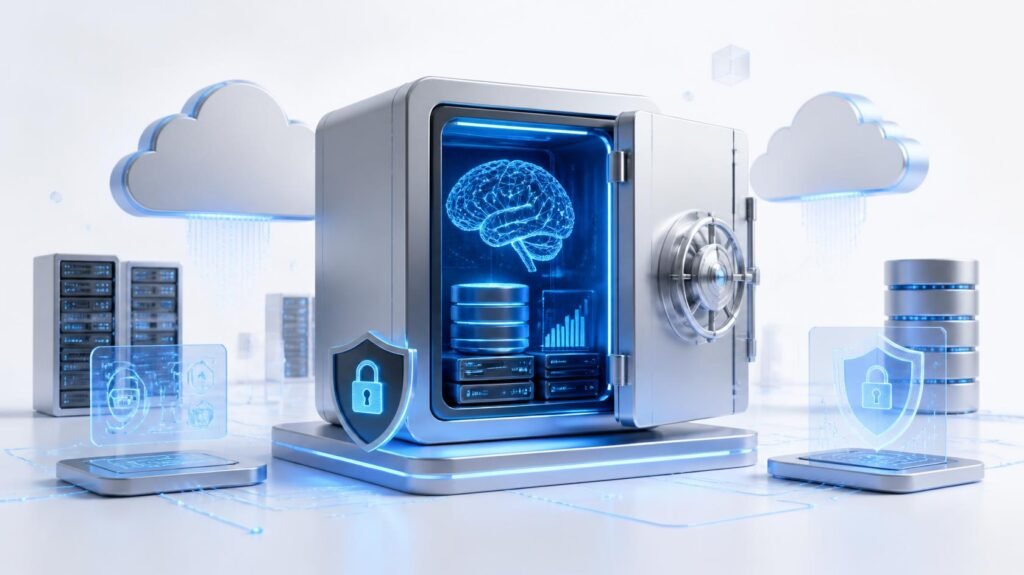
Successful Private AI implementations rely on multiple interconnected technologies working together.
Large Language Models (LLMs)
The private AI technologies of today can implement LLMs for natural language processing, response generation, summarization, Q&A, as well as automation of business communications.
It all depends on whether organizations prefer to work with open source models or enterprise-grade models.
Vector Databases
Private AI uses vector databases to swiftly retrieve information related to the business. Unlike document searches based on exact keyword matching, vector databases detect semantic similarities. This greatly helps AI to give more accurate answers. It is a crucial component of retrieval-augmented generation (RAG) technologies.
Centralized Enterprise Knowledge Base
It provides an opportunity for AI to access accurate information about the company.
Knowledge base may contain:
- Standard operating procedures
- Employee manuals
- Product catalog
- Technical documentation
- FAQ of customers
- Guidelines on compliance
- Training material
Keeping AI connected to trusted internal knowledge improves response reliability.
Identity and Access Management
Not every employee should have access to all business information.
Private AI integrates with enterprise identity systems to ensure users only access information based on their roles and permissions.
For example:
- HR teams access employee records.
- Finance teams view financial reports.
- Legal departments manage contracts.
- Customer support agents retrieve service documentation.
Role-based access enhances both security and compliance.
Encryption
Data protection is fundamental to Private AI.
Organizations encrypt information:
- During storage
- During transmission
- During processing
Encryption helps prevent unauthorized access even if infrastructure is compromised.
Monitoring and Logging
Private AI systems continuously monitor activity.
Administrators can review:
- User access logs
- AI interactions
- System performance
- Security events
- Compliance reports
- Model accuracy
Continuous monitoring improves transparency and helps organizations detect unusual behavior before it becomes a security issue.
Public AI vs. Private AI for Business
While both options use artificial intelligence, there are some key differences between the two, especially concerning security, governance, customization, and control.
Public AI platforms are aimed at ease of access. Individuals will use AI services provided by other parties, which makes this option useful when performing various generic tasks like writing content, generating ideas, or providing answers to frequently asked questions. At the same time, enterprises usually have little control over infrastructure, data management, and customization of models.
Private AI for Business, on the contrary, is specifically tailored to enterprise settings. With this platform, an enterprise can control its own data, secure access, follow industry-specific standards and regulations, and customize models based on its proprietary data.
Benefits of Private AI for Business
Investments in Private AI for Business are made due to the fact that private AI offers much more than data security. It offers a safe base for innovations where businesses can automate processes, make decisions better, be more productive, and still have complete control over important data.
The difference between private AI and public AI is that private AI is specially developed to suit enterprise needs when it comes to governance, compliance, scalability, and customization.
Improved Data Privacy
One of the key benefits of Private AI for Business is improved data privacy. Companies accumulate huge volumes of confidential data daily, ranging from customer information to finance, payroll, intellectual property, contracts, strategy planning, and other data. The transmission of such information through public AI solutions raises serious privacy questions and may result in potential information leakages.
With the use of Private AI, all the data stays in the company’s secured system. It doesn’t matter whether the solution is deployed in private cloud, hybrid, or data center settings – in each case the business fully controls its own data.
Stronger Security
Cybersecurity threats continue to evolve, making data protection a top priority for every organization.
Private AI incorporates advanced security measures such as:
- End-to-end encryption
- Multi-factor authentication
- Role-based access control
- Secure APIs
- Continuous monitoring
- Network isolation
- Threat detection
- Security logging
These security layers significantly reduce the risk of unauthorized access, insider threats, ransomware attacks, and data breaches. Businesses can also integrate Private AI with existing cybersecurity platforms to improve overall security posture.
Regulatory Compliance
Many industries operate under strict regulations governing how customer and business data must be stored and processed.
Examples include:
- Healthcare privacy regulations
- Financial compliance standards
- Government security requirements
- Data protection laws
- Industry-specific governance policies
Private AI for Business enables organizations to implement AI while remaining compliant with these regulatory requirements.
Compliance teams can define data retention policies, monitor AI activities, maintain audit trails, and enforce governance rules without exposing sensitive information to external platforms.
Full Control Over AI Models
Public AI systems provide limited customization. Private AI allows organizations to customize models according to their unique business needs.
Companies can fine-tune AI using:
- Internal documents
- Product knowledge
- Industry terminology
- Customer service guidelines
- Technical documentation
- Company policies
- Historical business data
This customization results in more accurate, context-aware, and business-specific responses. Employees receive answers that reflect their organization’s expertise instead of generic internet information.
Better AI Accuracy
Generic AI models often lack detailed knowledge about an organization’s products, services, workflows, and internal processes.
Private AI solves this challenge by connecting AI models with enterprise knowledge bases.
As a result, AI can:
- Answer employee questions accurately
- Generate reliable business reports
- Retrieve internal documentation
- Provide technical support
- Assist customer service teams
The more relevant business knowledge AI receives, the better its recommendations become.
Improved Employee Productivity
Employees spend a significant portion of their workday searching for information, preparing reports, responding to emails, creating documentation, and completing repetitive administrative tasks.
Private AI automates many of these activities.
Examples include:
- Summarizing lengthy reports
- Drafting business emails
- Creating meeting notes
- Generating presentations
- Producing technical documentation
- Searching enterprise knowledge
- Preparing project updates
Instead of replacing employees, Private AI enables teams to focus on strategic work that requires creativity and critical thinking.
Faster Decision-Making
Modern businesses rely heavily on data-driven decisions. Private AI analyzes large volumes of structured and unstructured information in seconds.
Executives can quickly gain insights into:
- Sales performance
- Customer behavior
- Operational efficiency
- Inventory management
- Financial forecasting
- Marketing performance
- Risk analysis
Faster access to reliable insights helps leadership teams make informed decisions more efficiently.
Reduced Operational Costs
Although implementing Private AI for Business requires an initial investment, it often reduces long-term operating expenses.
Businesses save costs by:
- Automating repetitive work
- Reducing manual errors
- Improving resource utilization
- Accelerating workflows
- Minimizing compliance risks
- Optimizing customer support
Over time, these efficiencies contribute to a significant return on investment.
Increased Customer Satisfaction
Customers expect quick, accurate, and personalized service.
Private AI enables businesses to deliver better customer experiences through:
- Intelligent virtual assistants
- Personalized recommendations
- Faster support responses
- Automated ticket routing
- Real-time knowledge retrieval
- Predictive customer service
Since AI has access to secure customer information, it can provide more relevant assistance while maintaining privacy.
Better Collaboration Across Teams
Information silos remain an issue for organizations. Every department has its own database and therefore cooperation becomes impossible.
Private AI allows for secure connection between different corporate systems and lets people get to the information they need regardless of the location.
Salespeople, marketers, finance specialists, HR managers, operation employees, and customer support teams can get their hands on the data they require without changing the app.
Real-World Use Cases of Private AI for Business
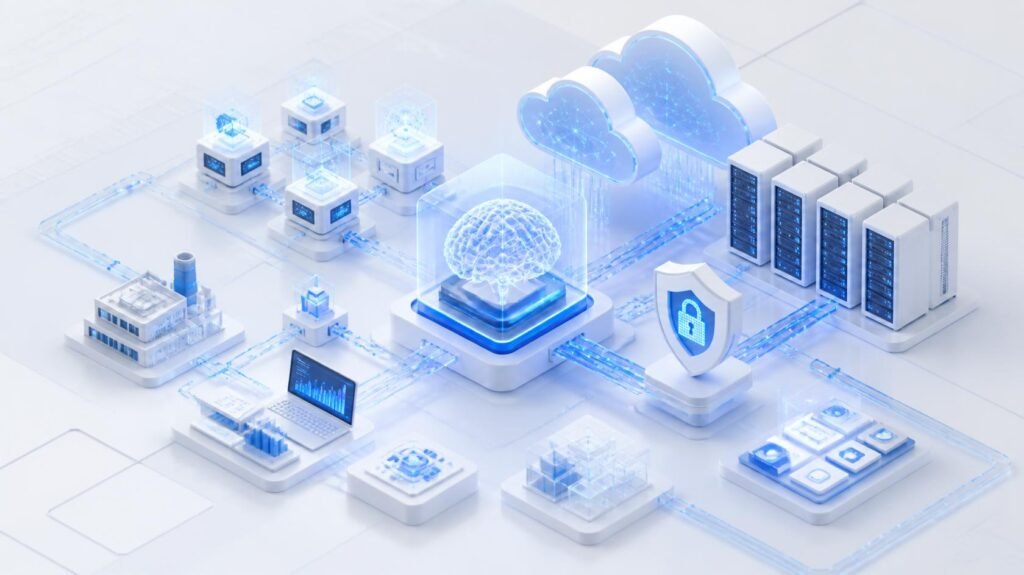
The versatility of Private AI for Business makes it valuable across virtually every business function.
Customer Support Automation
Customer service teams handle thousands of inquiries daily.
Private AI can:
- Answer frequently asked questions
- Retrieve customer histories
- Recommend solutions
- Generate response drafts
- Escalate complex issues
- Analyze customer sentiment
This improves response times while maintaining consistent service quality.
Intelligent Knowledge Management
Large organizations store millions of documents across different systems.
Employees often waste valuable time searching for information.
Private AI creates intelligent knowledge assistants capable of retrieving:
- Company policies
- Technical documentation
- Standard operating procedures
- Employee manuals
- Product specifications
- Training materials
This improves productivity and reduces duplicated work.
Document Processing
Businesses process invoices, contracts, purchase orders, insurance claims, tax documents, legal files, and application forms every day.
Private AI automates:
- Data extraction
- Classification
- Validation
- Summarization
- Approval workflows
Document processing becomes significantly faster and more accurate.
Software Development Assistance
Development teams increasingly rely on AI for coding support.
Private AI helps developers by:
- Generating code suggestions
- Reviewing code quality
- Explaining complex functions
- Identifying bugs
- Creating documentation
- Assisting with testing
Since code remains within the organization’s secure environment, intellectual property stays protected.
Financial Analysis
Finance departments manage enormous amounts of sensitive information.
Private AI supports:
- Budget forecasting
- Revenue analysis
- Fraud detection
- Risk assessment
- Expense categorization
- Financial reporting
Executives receive faster insights without exposing confidential financial data.
Human Resources
HR teams handle confidential employee information that requires strong privacy protection.
Private AI assists with:
- Resume screening
- Employee onboarding
- Benefits documentation
- Policy recommendations
- Performance summaries
- Learning recommendations
Sensitive employee records remain protected throughout the process.
Legal Operations
Legal departments process contracts, compliance documents, litigation records, and regulatory filings.
Private AI can:
- Review contracts
- Identify legal risks
- Summarize agreements
- Compare document versions
- Search legal knowledge
- Track compliance requirements
This reduces administrative workload while improving legal accuracy.
Sales and Marketing
Sales teams use AI to improve customer engagement and increase conversions.
Private AI helps by:
- Analyzing customer behavior
- Creating personalized proposals
- Drafting sales emails
- Predicting customer needs
- Identifying sales opportunities
- Summarizing CRM interactions
Marketing teams can also generate campaign insights while protecting customer data.
Industry Applications of Private AI for Business
Healthcare
Healthcare organizations manage highly sensitive patient information.
Private AI supports:
- Clinical documentation
- Medical imaging analysis
- Patient scheduling
- Research assistance
- Treatment recommendations
- Administrative automation
Patient privacy remains protected while improving healthcare delivery.
Banking and Financial Services
Banks require strict security and regulatory compliance.
Private AI assists with:
- Fraud prevention
- Customer verification
- Loan processing
- Investment analysis
- Compliance reporting
- Risk management
Financial institutions gain AI-powered efficiency without compromising security.
Manufacturing
Manufacturers generate massive amounts of operational data from factories and connected equipment.
Private AI enables:
- Predictive maintenance
- Supply chain optimization
- Quality control
- Production forecasting
- Equipment monitoring
- Inventory management
These improvements reduce downtime and improve operational efficiency.
Retail and E-commerce
Retail businesses use Private AI to deliver personalized shopping experiences while protecting customer information.
Applications include:
- Product recommendations
- Inventory optimization
- Demand forecasting
- Customer support
- Price optimization
- Sales analytics
AI helps retailers improve customer satisfaction and profitability.
Government
Government agencies manage highly confidential information that demands strict security.
Private AI supports:
- Document management
- Citizen services
- Policy research
- Intelligence analysis
- Workflow automation
- Secure knowledge retrieval
This enables agencies to modernize operations while maintaining national security standards.
Insurance
Insurance providers process claims, policies, customer records, and fraud investigations.
Private AI assists with:
- Claims processing
- Risk assessment
- Fraud detection
- Policy recommendations
- Customer support
- Regulatory compliance
These capabilities improve efficiency and reduce operational costs.
Challenges of Implementing Private AI for Business
Even though there are numerous benefits of Private AI for Business with respect to security, compliance, and customization, there are also certain difficulties in implementing the technology.
Being aware of the difficulties associated with implementing Private AI in advance can help companies minimize risks and be successful.
High Initial Investment
One of the challenges that organizations will face right from the outset is the initial cost incurred when setting up an environment for Private AI for Business.
In contrast to public AI systems which normally charge subscription fees for their services, Private AI requires organizations to make investments.
Initial costs may include:
- High-performance servers
- GPU infrastructure
- Private cloud resources
- Storage systems
- AI software licenses
- Network security solutions
- Implementation services
- Employee training
Although these costs can be significant, many organizations recover their investment over time through improved productivity, automation, and reduced operational expenses.
Infrastructure Complexity
Deploying Private AI involves integrating multiple technologies into an organization’s existing IT ecosystem.
Businesses need to manage:
- AI models
- Databases
- Storage systems
- APIs
- Identity management
- Security platforms
- Monitoring tools
- Backup systems
Without proper planning, infrastructure complexity can delay deployment and increase maintenance costs.
Choosing scalable architecture from the beginning helps organizations avoid costly redesigns later.
Data Quality Issues
Artificial intelligence is only as effective as the data it learns from.
Many businesses discover that their internal data contains:
- Duplicate records
- Missing information
- Outdated documents
- Inconsistent formatting
- Incorrect labels
- Unstructured files
Poor-quality data reduces AI accuracy and increases the likelihood of incorrect recommendations.
Before implementing Private AI for Business, organizations should establish strong data governance practices that include data cleansing, validation, classification, and continuous quality monitoring.
Limited AI Expertise
Many organizations face a shortage of professionals with expertise in AI engineering, machine learning, cybersecurity, and data science.
Successfully managing Private AI often requires specialists such as:
- AI engineers
- Machine learning engineers
- Data scientists
- Cloud architects
- Security analysts
- DevOps professionals
- Compliance experts
Companies without experienced AI teams may need external consultants or managed AI services during the initial implementation phase.
Integration with Legacy Systems
Many enterprises still rely on legacy software that was never designed to work with AI technologies.
Examples include:
- Older ERP platforms
- Legacy CRM systems
- Mainframe applications
- Traditional databases
- Custom enterprise software
Connecting these systems with modern AI platforms often requires API development, middleware, and data migration.
Organizations should evaluate compatibility before beginning deployment.
Change Management
Technology adoption is as much about people as it is about software.
Employees may hesitate to use AI because they fear:
- Job displacement
- Increased monitoring
- Learning new systems
- Changes to existing workflows
Successful organizations invest in employee education, AI literacy programs, and transparent communication to build confidence and encourage adoption.
Security Risks in Private AI
Although Private AI for Business provides greater control than public AI systems, businesses must still address potential security risks.
A secure AI environment requires continuous monitoring, governance, and proactive threat management.
Unauthorized Access
If user permissions are poorly configured, unauthorized individuals may gain access to sensitive business information.
Organizations should implement:
- Role-based access control
- Multi-factor authentication
- Identity verification
- Least-privilege access policies
Only authorized employees should be able to access confidential AI systems.
Insider Threats
Not every security threat comes from outside the organization. Employees, contractors, or third-party vendors with excessive permissions can unintentionally or intentionally expose sensitive information.
Businesses should regularly review access permissions and monitor unusual user behavior.
Data Leakage
AI systems often process confidential documents containing financial, legal, healthcare, or customer information.
Without proper safeguards, sensitive information may be unintentionally disclosed through AI-generated responses.
Organizations should implement:
- Data masking
- Output filtering
- Content moderation
- Sensitive data detection
- Secure prompt management
These measures reduce the likelihood of accidental data exposure.
Model Manipulation
Attackers may attempt to manipulate AI models by introducing misleading or malicious data.
This can affect AI accuracy and produce unreliable recommendations.
Businesses should:
- Validate training data
- Monitor model performance
- Restrict model updates
- Conduct regular testing
Maintaining model integrity is essential for trustworthy AI.
Cyberattacks
Private AI infrastructure may become a target for ransomware, phishing campaigns, malware, or denial-of-service attacks.
Organizations should strengthen cybersecurity by implementing:
- Firewalls
- Endpoint protection
- Network segmentation
- Continuous vulnerability assessments
- Intrusion detection systems
- Security information and event management (SIEM)
Regular security audits help identify vulnerabilities before attackers can exploit them.
Best Practices for Implementing Private AI for Business
A successful Private AI for Business strategy requires more than simply deploying AI models. Organizations should establish a structured implementation framework that aligns technology with business goals.
Define Clear Business Objectives
Every AI initiative should begin with a clear purpose.
Examples include:
- Automating customer support
- Improving document management
- Enhancing cybersecurity
- Increasing employee productivity
- Optimizing supply chains
- Improving financial forecasting
Clearly defined objectives make it easier to measure success and prioritize AI investments.
Start with High-Value Use Cases
Instead of deploying AI across the entire organization immediately, businesses should begin with projects that offer measurable value.
Examples include:
- AI-powered knowledge assistants
- Invoice processing
- Customer service automation
- Internal document search
- Meeting summarization
Early success builds confidence and encourages wider adoption.
Build Strong Data Governance
Data governance should be established before AI deployment.
Organizations should define:
- Data ownership
- Classification policies
- Retention schedules
- Access permissions
- Data quality standards
- Compliance requirements
High-quality governance improves both AI performance and regulatory compliance.
Choose the Right Deployment Model
Organizations should evaluate whether a private cloud, hybrid cloud, or on-premises deployment best meets their needs.
Factors to consider include:
- Security requirements
- Budget
- Scalability
- Regulatory obligations
- Existing infrastructure
- Performance expectations
Selecting the appropriate architecture ensures long-term flexibility.
Implement Continuous Monitoring
AI systems require ongoing oversight.
Businesses should monitor:
- System performance
- Model accuracy
- Security events
- Resource utilization
- User feedback
- Compliance metrics
Continuous monitoring allows organizations to improve AI over time while quickly identifying potential issues.
Educate Employees
AI adoption depends heavily on employee understanding.
Organizations should provide training covering:
- Responsible AI usage
- Security best practices
- Privacy requirements
- Prompt engineering
- AI limitations
- Ethical guidelines
Educated employees are more likely to use AI effectively and responsibly.

Step-by-Step Implementation Guide for Private AI for Business
Implementing Private AI for Business becomes more manageable when organizations follow a structured roadmap.
Step 1: Assess Business Requirements
Identify the departments and workflows where AI can deliver the greatest value.
Conduct interviews with business leaders to understand operational challenges and define measurable objectives.
Step 2: Evaluate Existing Infrastructure
Review current IT systems, cloud environments, storage capacity, network architecture, and security controls.
Determine whether upgrades are necessary before deploying AI.
Step 3: Select an AI Platform
Choose an enterprise AI platform that aligns with organizational needs.
Consider factors such as:
- Scalability
- Security
- Integration capabilities
- Compliance features
- Vendor support
- Customization options
Step 4: Prepare Enterprise Data
Collect, clean, organize, and classify business data.
Ensure sensitive information is properly protected before AI training begins.
Step 5: Deploy AI Infrastructure
Install AI models within the selected environment.
Configure storage, networking, user authentication, monitoring tools, and backup systems.
Step 6: Integrate Business Applications
Connect AI with enterprise systems such as:
- CRM platforms
- ERP software
- HR systems
- Customer support tools
- Business intelligence platforms
- Document repositories
This enables AI to access relevant business information securely.
Step 7: Train and Fine-Tune AI Models
Customize AI using proprietary business knowledge.
Fine-tuning improves response accuracy, enhances contextual understanding, and aligns AI outputs with organizational terminology and workflows.
Step 8: Test Before Full Deployment
Conduct extensive testing to verify:
- Security
- Performance
- Accuracy
- Compliance
- Scalability
- User experience
Resolve issues before expanding deployment across the organization.
Step 9: Launch and Optimize
Deploy AI gradually across departments.
Collect employee feedback, monitor system performance, and continuously refine AI models based on real-world usage.
Organizations that embrace continuous improvement will maximize the long-term value of their Private AI for Business investment.
The Future of Private AI for Business
The future of Private AI for Businesses is intricately linked to the development of enterprise technology, cybersecurity, and digital transformations. As companies produce increasing amounts of data and as the regulation of AI advances, companies will be driven to choose AI tools that deliver security, transparency, and full control over confidential data.
Industry experts claim that enterprise adoption of AI will keep growing in the next ten years. Rather than using public AI services, businesses will be building private AI ecosystems to meet their needs in terms of regulatory compliance, strategic goals, and security protocols. Several emerging trends can be seen driving the future of Private AI.
Greater Adoption of Hybrid AI
There is a shift towards hybrid AI platforms that are built by combining the benefits of cloud computing and the secureness of on-premise infrastructure.
Such deployments enable companies to perform sensitive computations in private networks while using cloud computing services for non-sensitive calculations. It gives scalability without reducing the level of security of data.
Small and Efficient AI Models
AI language models require lots of computing power. With the development of AI technologies, more companies use small but effective AI models.
They are more efficient and cost-effective than large models.
AI Governance Will Become a Business Priority
As governments introduce new AI regulations, organizations will need stronger governance frameworks.
Future Private AI for Business platforms will include advanced governance capabilities such as:
- Automated compliance monitoring
- AI risk assessment
- Model transparency
- Audit trails
- Bias detection
- Policy enforcement
Businesses that establish governance early will be better prepared for evolving regulatory requirements.
Expansion of AI Agents
AI is moving beyond simple chatbots.
Future enterprise environments will use intelligent AI agents capable of independently performing complex business processes such as:
- Managing customer interactions
- Coordinating workflows
- Scheduling meetings
- Generating reports
- Monitoring cybersecurity events
- Supporting software development
- Managing procurement processes
Private AI ensures these autonomous systems operate securely within organizational boundaries.
Increased Integration Across Business Systems
Private AI will become deeply integrated with enterprise platforms including:
- Customer Relationship Management (CRM)
- Enterprise Resource Planning (ERP)
- Human Resource Management Systems (HRMS)
- Business Intelligence tools
- Collaboration platforms
- Customer support software
- Supply chain management systems
Instead of isolated AI applications, businesses will build connected AI ecosystems that improve decision-making across departments.
AI-Powered Cybersecurity
Cybersecurity will become one of the largest applications of Private AI.
Organizations will increasingly rely on AI to:
- Detect cyber threats
- Monitor suspicious activities
- Identify insider risks
- Automate incident response
- Predict vulnerabilities
- Analyze security logs
Private AI enables these capabilities without exposing sensitive security data to external providers.
Private AI vs Public AI
Decision making between Public AI and Private AI for Business depends on organizational needs and objectives.
Public AI provides great services for general-purpose productivity work, idea generation, and content creation. Such solutions are easy to use and to implement quickly, but offer little in terms of infrastructure control and customizations.
However, Private AI is meant for those organizations which require more security, governance, and data ownership.
Key differences include:
- Data Control: Public AI stores and processes information on external infrastructure, while Private AI keeps business data within the organization’s controlled environment.
- Security: Private AI provides stronger protection through enterprise-grade security controls, encryption, and access management.
- Customization: Organizations can fine-tune Private AI using proprietary knowledge, industry terminology, and internal documentation.
- Compliance: Private AI is better suited for meeting regulatory requirements and maintaining audit readiness.
- Integration: Private AI integrates more effectively with enterprise applications, databases, and business workflows.
- Cost: Public AI generally has lower upfront costs, whereas Private AI requires greater initial investment but often delivers higher long-term value for enterprise use.
For businesses handling sensitive information or operating in regulated industries, Private AI for Business offers a more secure and sustainable solution.
How to Measure the Success of Private AI
Implementing AI is only the beginning. Organizations should regularly evaluate its performance to ensure it delivers measurable business value.
Important performance indicators include:
- Reduction in manual work
- Employee productivity improvements
- Faster customer response times
- AI response accuracy
- Compliance performance
- Cost savings
- Reduction in operational errors
- Customer satisfaction scores
- Return on investment (ROI)
- System availability and uptime
Regular monitoring enables businesses to refine AI models, improve workflows, and maximize long-term benefits.
Why Businesses Should Invest in Private AI Now
Artificial intelligence is becoming a competitive necessity rather than a future innovation.
Organizations that invest in Private AI for Business today can:
- Strengthen data security
- Improve regulatory compliance
- Increase operational efficiency
- Accelerate decision-making
- Enhance customer experiences
- Protect intellectual property
- Build trustworthy AI systems
- Gain a competitive advantage
Early adoption also provides valuable experience in managing enterprise AI before industry regulations become more demanding.
Conclusion
Innovation of artificial intelligence is revolutionizing the world of business, but the effectiveness of AI can only be achieved if used safely and effectively. Private AI for Business serves as a great tool for businesses that want to embrace the innovation of AI and keep all their data and operations secure.
Unlike the public versions of AI, private version allows you to protect your intellectual property, stay up to date with the industry standards, and tailor your AI solutions by using internal company knowledge. This brings numerous advantages, such as enhanced security, accuracy, efficiency, and customer experience.
While implementation of Private AI does not come easy and requires certain efforts and investments from companies, the benefits are worth it. Companies that create an environment for AI in the early stages will gain more opportunities and stay ahead in the competition. Enterprise AI solutions are becoming more and more popular and necessary, and Private AI for Business will serve as a key player in this process.
Frequently Asked Questions (FAQs)
1. What is Private AI for Business?
Private AI for Business is an artificial intelligence solution deployed within a secure enterprise environment, allowing organizations to maintain full control over their data, AI models, infrastructure, and security policies.
2. Why is Private AI important?
Private AI protects sensitive business information, improves compliance, enhances cybersecurity, and allows organizations to customize AI models using proprietary knowledge.
3. Which industries benefit the most from Private AI?
Industries including healthcare, banking, insurance, manufacturing, government, legal services, retail, telecommunications, and education benefit significantly from Private AI due to strict privacy and compliance requirements.
4. Is Private AI more secure than Public AI?
Yes. Because organizations manage their own infrastructure, access controls, encryption, and governance policies, Private AI for Business generally provides stronger security than public AI platforms.
5. Can small businesses use Private AI?
Yes. Cloud-based private AI platforms have made secure AI solutions more accessible to small and medium-sized businesses, allowing them to benefit without building extensive on-premises infrastructure.
6. What technologies are commonly used in Private AI?
Private AI environments often include:
- Large Language Models (LLMs)
- Vector databases
- Retrieval-Augmented Generation (RAG)
- Private cloud infrastructure
- Kubernetes
- Secure APIs
- Identity and Access Management (IAM)
- Encryption technologies