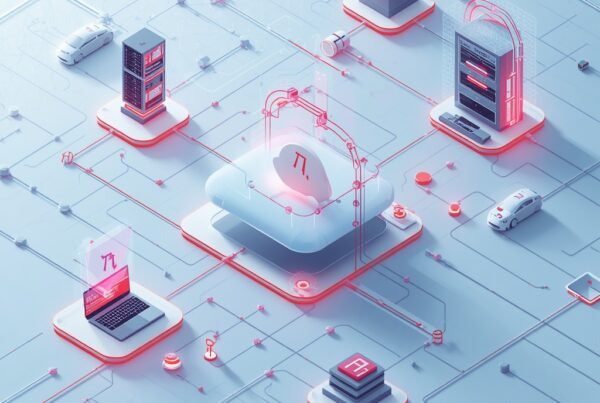


The increasing shift towards cloud computing poses cybersecurity challenges to businesses today. On the one hand, cloud environments are characterized by high flexibility, scalability, and economic efficiency, yet on the other hand, they create many opportunities for cyberattacks. Traditional cybersecurity techniques are usually not fast enough to deal with modern threats effectively.
This is why AI-Cloud Security becomes increasingly essential. Using such tools, companies can detect, analyze, and act on threats quickly and efficiently. AI-driven solutions can monitor millions of events within cloud environments instantly, spot malicious activity, and neutralize attacks even before they happen.
The relevance of Threat Detection increases significantly year by year. The modern threat landscape becomes ever-changing and unpredictable. Ransomware, phishing campaigns, insider threats, and zero-day vulnerabilities create severe risks for the cybersecurity of any company regardless of its size. Businesses should rely on advanced intelligent security technologies that will be able to spot potential threats beforehand.
Here comes our guide on the use of AI-Cloud Security. We will talk about how it enhances threat detection, discuss the main prevention techniques, highlight benefits and challenges of applying this tool, present industry applications, and point out future trends in cloud cybersecurity up to 2026.
What Is AI-Cloud Security?

The term AI-Cloud Security can be defined as the use of AI technologies to safeguard cloud computing systems, applications, networks, and data from any form of cyber attacks. The use of machine learning technology, predictive analysis techniques, and automated reactions helps to determine and prevent any possible security threats.
Different from conventional security measures that are dependent on rule- and signature-based approaches, AI-Cloud Security systems employ self-learning abilities that help identify unusual behavior and new threats through data patterns.
Core Components of AI-Cloud Security
| Component | Purpose |
|---|---|
| Machine Learning | Learns from historical security data |
| Behavioral Analytics | Detects unusual user behavior |
| Threat Intelligence | Analyzes global cyber threat data |
| Automated Response | Reacts to attacks in real time |
| Risk Scoring | Prioritizes critical threats |
| Predictive Analytics | Forecasts potential attacks |
These technologies work together to provide stronger security protection across cloud environments.
Why Traditional Cloud Security Is No Longer Enough
Cloud environments generate enormous volumes of data every second. Security teams struggle to manually analyze logs, alerts, and network traffic.
Several factors make traditional cloud security less effective:
- Growing attack surfaces
- Sophisticated ransomware attacks
- Insider threats
- Multi-cloud complexity
- Remote work environments
- Increasing compliance requirements
Modern cyberattacks often bypass traditional signature-based detection systems because attackers constantly change their techniques.
AI helps close this gap by identifying patterns that human analysts and conventional tools may miss.
The Growing Importance of Threat Detection
Threat Detection is one of the most critical aspects of modern cybersecurity.
Organizations today face:
- Malware attacks
- Phishing campaigns
- Credential theft
- Data breaches
- Insider threats
- Supply chain attacks
- Cloud misconfigurations
A delayed response can result in:
| Consequence | Impact |
|---|---|
| Data Loss | Customer information exposure |
| Financial Damage | Recovery and legal costs |
| Downtime | Operational disruption |
| Compliance Violations | Regulatory penalties |
| Reputation Damage | Loss of customer trust |
Effective Threat Detection allows organizations to identify suspicious activity before attackers achieve their objectives.
How AI Improves Threat Detection

Artificial intelligence brings speed, accuracy, and scalability to cybersecurity operations.
Instead of relying solely on predefined attack signatures, AI continuously evaluates activity across the cloud environment.
1. Behavioral Analysis
AI establishes a baseline of normal behavior.
Examples include:
- Typical login locations
- Standard working hours
- Common device usage
- Normal network activity
When unusual behavior occurs, the system generates alerts.
For example:
A user who normally logs in from Mumbai suddenly attempts access from another country while downloading large amounts of sensitive data.
AI immediately recognizes this anomaly.
2. Real-Time Monitoring
AI systems continuously monitor:
- Cloud applications
- APIs
- Databases
- Endpoints
- User activities
- Network traffic
This provides instant visibility into suspicious behavior.
Traditional monitoring often generates thousands of alerts daily. AI helps prioritize alerts based on actual risk.
3. Predictive Threat Detection
Modern AI systems analyze historical attack patterns.
This enables organizations to:
- Predict emerging threats
- Identify vulnerable systems
- Anticipate attack paths
- Strengthen defenses proactively
Predictive security significantly reduces response times.
4. Malware Detection
Cybercriminals frequently modify malware code to evade traditional antivirus solutions.
AI-powered security tools analyze:
- File behavior
- Execution patterns
- Process interactions
- Memory usage
This allows them to detect previously unseen malware variants.
5. Insider Threat Detection
Not all threats come from external attackers.
Employees, contractors, and privileged users may intentionally or accidentally expose sensitive information.
AI detects:
- Unauthorized data access
- Unusual file transfers
- Privilege abuse
- Suspicious user activity
This strengthens internal security controls.
Key Benefits of AI-Cloud Security
Organizations adopting AI-powered security solutions gain significant advantages.
1. Faster Threat Detection
One of the most important benefits of AI-Cloud Security is that it offers fast detection. Today’s cloud environments produce huge volumes of data in seconds. Manual analysis by human beings becomes virtually impossible. AI allows for quick processing and analyzing of millions of security events. The result is fast identification of any suspicious activity.
Quick identification of threats will give organizations an opportunity to act in time and stop the attack before it develops into a major security incident.
2. Reduced False Positives
Classic approaches to security tend to create hundreds if not thousands of alerts every day, the majority of which later prove to be insignificant actions. It leads to alert fatigue for cybersecurity specialists and increases the possibility of failing to detect any possible threats.
Modern AI-based security systems can filter out irrelevant alerts and detect true threats using analytics and machine learning. It allows cybersecurity specialists to concentrate on real threats rather than being distracted by irrelevant events.
3. Automated Incident Response
It is necessary to respond swiftly to cyber attacks to minimize their impact. The use of AI-Cloud Security makes it possible for the organization to automate most parts of its responses.
In case there is any threat, artificial intelligence solutions can lock down accounts that have been breached, quarantine affected devices, remove any unauthorized permissions, and limit any malicious behavior before it spreads across the network.
4. Improved Security Visibility
Security management within the context of cloud technology can prove to be tough, particularly for companies having several cloud technologies. AI offers a holistic and unified view of the whole cloud landscape, providing more information regarding security-related challenges that organizations could face.
AI helps organizations to become more aware of their own security postures by offering a deeper insight into what is happening within the cloud environment.
5. Continuous Learning and Adaptation
In contrast to regular security methods that use predetermined policies, AI-based security solutions keep on learning and becoming better. The machine learning algorithms study new data sets and recognize the new trends in attack patterns.
With every passing moment when the software receives more data, it becomes more effective at detecting any anomaly and foreseeing the threat ahead. The continuous learning process makes sure that the solution will protect organizations from any threats, whether recognized by them or unknown.
AI-Driven Threat Prevention Strategies
Threat prevention focuses on stopping attacks before they cause damage.
Zero Trust Security
The Zero Trust model assumes no user or device should be trusted automatically.
Key principles include:
- Verify every access request
- Enforce least privilege access
- Continuously validate identities
AI enhances Zero Trust by analyzing user behavior and risk levels.
Identity and Access Management
AI improves identity protection through:
- Adaptive authentication
- Risk-based access control
- Continuous user verification
This reduces unauthorized access risks.
Cloud Configuration Monitoring
Misconfigured cloud resources remain a leading cause of data breaches.
AI continuously scans:
- Storage buckets
- Virtual machines
- Databases
- Security groups
The system automatically flags risky configurations.
Automated Patch Management
Unpatched software creates opportunities for attackers.
AI prioritizes vulnerabilities based on:
- Exploit likelihood
- Business impact
- Asset criticality
Organizations can patch high-risk systems faster.
AI-Cloud Security in Multi-Cloud Environments
Many businesses use multiple cloud providers.
Common environments include combinations of:
- Amazon Web Services
- Microsoft Azure
- Google Cloud Platform
Managing security across multiple clouds is challenging.
AI provides:
| Security Capability | Benefit |
|---|---|
| Unified Monitoring | Centralized visibility |
| Cross-Cloud Analytics | Better threat correlation |
| Automated Policy Enforcement | Consistent security |
| Risk Prioritization | Faster response |
This helps organizations maintain stronger security across diverse infrastructures.
The Role of Machine Learning in Threat Detection
Machine learning serves as the foundation of AI-Cloud Security.
Supervised Learning
Supervised learning uses labeled cybersecurity data to recognize known attack patterns and threats. It helps AI systems detect malware, phishing attempts, and other previously identified security risks with high accuracy.
Unsupervised Learning
Unsupervised learning analyzes large datasets without predefined labels to identify unusual activities and anomalies. This approach is effective for detecting new and emerging threats that do not match known attack signatures.
Reinforcement Learning
Reinforcement learning enables AI systems to improve their security decisions through continuous feedback and experience. Over time, it learns the most effective responses to different cyber threats and security incidents.detection accuracy and response effectiveness.
AI-Powered Security Operations Centers (SOC)
Modern Security Operations Centers face increasing workloads.
AI helps SOC teams by:
- Correlating alerts
- Automating investigations
- Prioritizing incidents
- Reducing analyst fatigue
Benefits include:
| Metric | Traditional SOC | AI-Powered SOC |
|---|---|---|
| Alert Processing | Manual | Automated |
| Response Speed | Hours | Minutes |
| Threat Visibility | Limited | Comprehensive |
| False Positives | High | Lower |
AI allows security professionals to focus on high-priority incidents.
Industry Applications of AI-Cloud Security
Financial Services
Banks use AI for:
- Fraud detection
- Transaction monitoring
- Identity verification
- Compliance management
Healthcare
Healthcare organizations protect:
- Patient records
- Medical devices
- Cloud-hosted applications
E-Commerce
Retail companies secure:
- Payment systems
- Customer information
- Digital storefronts
Manufacturing
Manufacturers use AI to secure:
- Industrial IoT devices
- Supply chain systems
- Production environments
Common Challenges of AI-Cloud Security
While AI offers significant advantages, organizations may encounter challenges.
Data Quality Issues
AI requires accurate training data.
Poor-quality data can affect detection accuracy.
Privacy Concerns
Monitoring large volumes of user activity raises privacy considerations.
Organizations must balance security with compliance requirements.
Model Bias
Improperly trained models may produce inaccurate threat assessments.
Regular testing and validation are essential.
Skilled Workforce Requirements
Security teams need expertise in:
- AI systems
- Machine learning
- Cloud infrastructure
- Cybersecurity operations
Best Practices for Implementing AI-Cloud Security
Successful implementation requires a structured approach.
Define Security Objectives
Organizations should clearly identify their critical assets, sensitive data, and key business risks before implementing AI-Cloud Security. Well-defined objectives help security teams focus resources on protecting the most valuable systems and information.
Use Quality Data Sources
AI systems perform best when trained on accurate, complete, and relevant security data. High-quality data improves threat detection accuracy and reduces the chances of false alerts.
Integrate Threat Intelligence
Combining internal security insights with external threat intelligence feeds helps organizations gain a broader view of the threat landscape. This enables faster identification of emerging cyber threats and attack patterns.
Continuously Train Models
Cyber threats evolve constantly, making regular model updates essential. Continuous training helps AI systems adapt to new attack techniques and maintain high detection accuracy.
Automate Responsibly
While automation improves response times, organizations should implement safeguards and oversight mechanisms. This ensures automated actions do not disrupt legitimate business operations or create unintended security issues.
Monitor Performance
Track:
- Detection rates
- False positives
- Incident response times
- Security outcomes
Emerging Trends in AI-Cloud Security

The cybersecurity landscape continues to evolve rapidly.
Several trends are expected to shape the future.
1. Generative AI for Cybersecurity
Generative AI will assist security teams by:
- Summarizing incidents
- Generating threat reports
- Accelerating investigations
2. Autonomous Security Operations
Future platforms will automatically:
- Detect threats
- Investigate incidents
- Execute remediation actions
with minimal human intervention.
3. AI-Powered Zero Trust
Advanced AI systems will continuously evaluate risk levels and dynamically adjust access permissions.
4. Predictive Cyber Defense
Organizations will move from reactive security to proactive prevention. AI will identify attack indicators before incidents occur.
5. Enhanced Cloud Compliance Automation
AI will simplify compliance management for regulations and industry standards.
6. Security for AI Workloads
As businesses deploy more AI applications, protecting AI models and datasets will become increasingly important.
7. Explainable AI Security
Organizations will demand greater transparency regarding how AI makes security decisions. Explainable AI will improve trust and compliance.
Future Outlook
The future of AI-Cloud Security is highly promising as organizations continue to expand their cloud infrastructure and digital operations. Every day, businesses generate massive amounts of cloud-based data, making it increasingly difficult for traditional security systems to provide comprehensive protection. At the same time, cybercriminals are developing more sophisticated attack techniques that can bypass conventional security measures.
As cybersecurity challenges become more complex, AI-driven security solutions are expected to become a necessity rather than an optional investment. By leveraging artificial intelligence, machine learning, and automation, organizations can identify threats faster, respond to incidents more effectively, and strengthen their overall security posture.
Future AI-Cloud Security platforms will offer advanced capabilities such as faster Threat Detection, autonomous incident response, predictive risk forecasting, and intelligent compliance management. These innovations will help security teams stay ahead of emerging threats while reducing operational complexity and costs.
Conclusion
As cloud adoption accelerates, cybersecurity challenges continue to grow in both scale and complexity. Traditional security approaches are struggling to keep up with sophisticated attacks, dynamic cloud infrastructures, and expanding digital ecosystems. AI-Cloud Security offers a smarter, faster, and more adaptive approach to protecting modern organizations.
By leveraging artificial intelligence, machine learning, behavioral analytics, and automation, businesses can significantly enhance Threat Detection, reduce response times, minimize false positives, and proactively prevent cyber incidents before they escalate. From real-time monitoring and insider threat detection to predictive analytics and autonomous response, AI is redefining how organizations secure their cloud environments.
Looking ahead, innovations such as generative AI, autonomous security operations, AI-powered Zero Trust frameworks, and predictive cyber defense will continue transforming cloud security strategies. Organizations that invest in AI-driven security solutions today will gain stronger resilience, improved compliance, greater operational efficiency, and a competitive advantage in an increasingly digital world.
The future of cybersecurity is intelligent, automated, and cloud-centric and AI-Cloud Security is leading the way.
Frequently Asked Questions
What is AI-Cloud Security?
AI-Cloud Security uses artificial intelligence technologies to protect cloud environments, applications, and data from cyber threats through intelligent monitoring, Threat Detection, and automated response.
How does AI improve Threat Detection?
AI analyzes large volumes of security data in real time, identifies anomalies, recognizes attack patterns, and detects suspicious activities faster than traditional security tools.
Can AI prevent cloud data breaches?
Yes. AI helps reduce breach risks through continuous monitoring, automated threat response, behavior analysis, and proactive vulnerability management.
Is AI-Cloud Security suitable for small businesses?
Yes. Many cloud security providers offer scalable AI-powered solutions suitable for organizations of all sizes.
What are the biggest future trends in AI-Cloud Security?
Key trends include autonomous security operations, predictive cyber defense, generative AI security tools, AI-powered Zero Trust, and explainable AI systems.