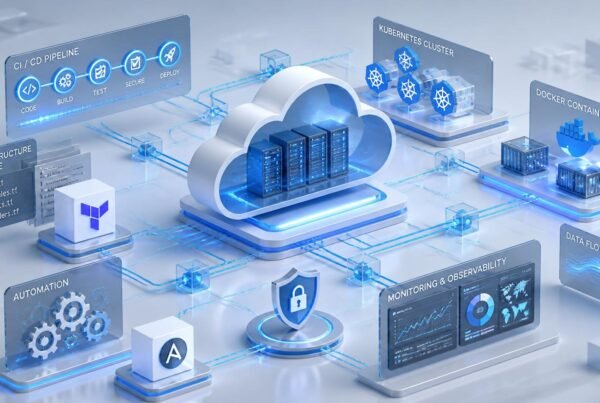

The emergence of cloud computing has changed everything for companies, allowing them to gain access to various computing resources in a cost-effective manner. Cloud computing has become the backbone of every digital transformation initiative that any organization pursues today. However, the rise of the use of artificial intelligence poses new challenges that the traditional infrastructure cannot cope with.
First of all, it requires tremendous computing capacity, fast connectivity, and massive storage options. The deployment of big language models, running generative AI applications, managing large-scale data streams, and other activities put tremendous pressure on the traditional cloud-based infrastructure. For that reason, technology vendors have already invested billions of dollars into building a special kind of data center capable of supporting future AI projects.
What Are AI Data Centers?
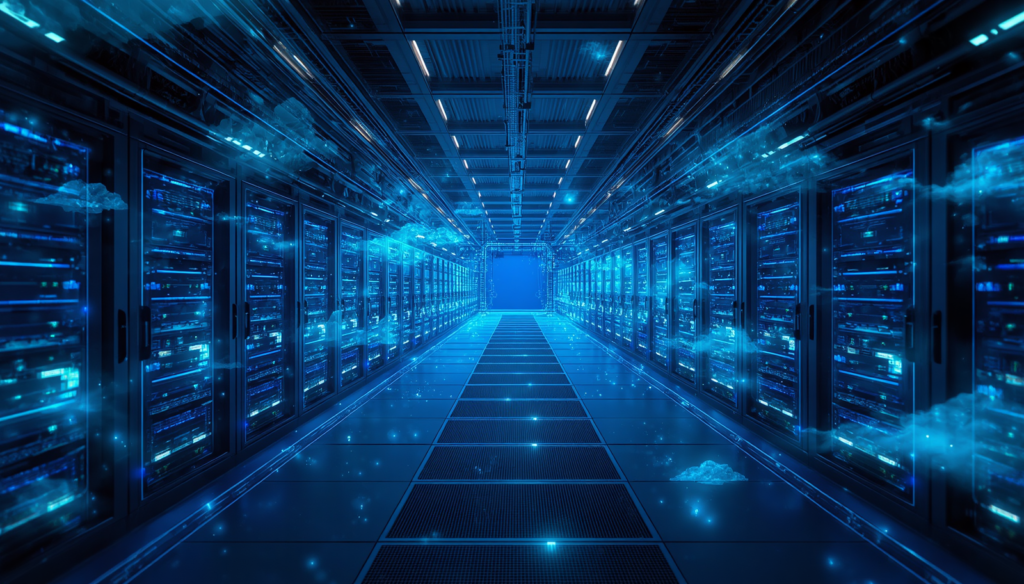
AI data centers represent customized facilities whose primary purpose is working with AI and machine learning workloads. AI data centers feature computing technology that processes big data and carries out various computations extremely fast compared to regular computers.
While standard data centers mainly employ CPU technology, AI data centers involve GPU, TPU, and other types of AI accelerators that perform parallel processing very well. Therefore, such an infrastructure makes it possible to work with machine learning models and provide generative AI technologies with greater effectiveness.
- AI-Centric Infrastructure Design: Unlike traditional cloud technologies, AI data centers are specifically built to support AI and machine learning workloads, with every infrastructure component optimized for high-performance computing.
- Advanced Networking Capabilities: High-speed, low-latency networking enables faster data transfer between processors, storage systems, and AI models, improving overall performance.
- Optimized Storage Systems: AI data centers use scalable, high-capacity storage solutions designed to handle massive datasets required for training and running AI applications.
- Intelligent Power Management: Advanced power distribution systems efficiently support energy-intensive AI workloads while maximizing operational reliability.
- Enhanced Machine Learning Performance: Specialized hardware such as GPUs and AI accelerators enables faster model training, reduced processing times, and improved AI outcomes.
Why Artificial Intelligence Is Driving Infrastructure Transformation
From being a nascent concept, AI has grown to become a key pillar of businesses in various sectors including healthcare, finance, manufacturing, retail, and education, among others. The use of AI has been seen to make processes more efficient and help organizations make decisions while creating a personalized customer experience.
There are unique requirements when it comes to running AI workloads. Modern AI models have billions of parameters and large amounts of data sets used to train them. Running these workloads in traditional infrastructures may prove to be costly, inefficient, and time-consuming.
- Massive Computational Requirements: Modern AI models contain billions of parameters and require significant computing power for training and deployment.
- Large-Scale Data Processing: AI workloads depend on vast datasets, making efficient storage, processing, and management essential.
- Limitations of Traditional Infrastructure: Conventional cloud environments can struggle to handle AI workloads efficiently, leading to higher costs, slower performance, and scalability challenges.
- Growing Enterprise AI Adoption: Businesses across industries are increasingly implementing AI technologies to improve operations, decision-making, and customer experiences.
- Need for Continuous Learning: AI systems require infrastructure that can support ongoing model training, updates, and optimization.
Traditional Data Centers Versus AI Data Centers
The differences between traditional and AI data centers highlight the significant changes occurring within cloud computing infrastructure.
| Feature | Traditional Data Centers | AI Data Centers |
|---|---|---|
| Main Processing Hardware | CPUs | GPUs, TPUs, AI Accelerators |
| Primary Purpose | General Computing | AI and Machine Learning |
| Workload Type | Business Applications | AI Training and Inference |
| Network Design | Standard Connectivity | Ultra-Low Latency Networking |
| Storage Requirements | Moderate | Extremely High |
| Cooling Systems | Air Cooling | Advanced Liquid Cooling |
| Scalability | Traditional Scaling | Massive AI Scaling |
| Resource Optimization | Manual Management | AI-Driven Optimization |
These differences demonstrate why many organizations are investing heavily in AI-ready infrastructure. As AI becomes a strategic priority, cloud environments must evolve to support increasingly demanding workloads.
The Growing Importance of GPUs
Amongst the essential technologies driving AI data centers are graphics processing units (GPUs). They have initially been invented to manage graphic-intensive processes like playing games and rendering videos. Nevertheless, their ability to perform tens of thousands of simultaneous computations makes them perfect for AI-related applications.
The training of AI requires the performance of billions of mathematical computations. While this task can be done by CPUs, it can be performed much more efficiently by GPUs since they specialize in parallel computing.
Thanks to GPU cloud computing, one can rent the power of advanced AI infrastructure through cloud services without buying expensive GPU hardware. Thus, companies of all sizes will have an opportunity to engage in AI research.
In the context of the growing complexity of AI algorithms, GPUs will become even more important in the development of cloud technology in the years to come.
How AI Data Centers Improve Cloud Performance
Data centers with AI technology demonstrate greater performance compared to regular cloud infrastructures because of their specific architectural design, which enables enterprises to perform more efficient work processes.
One of the most critical benefits of AI data centers is enhanced data processing speed. Since most AI models require working with a large amount of data on a constant basis, AI data centers allow companies to perform such computations fast and reliably.
The ability to optimize resources is another valuable characteristic of these data centers since machine learning algorithms enable them to adjust their performance depending on the needs of an organization.
- Massive Computing
- Large Datasets
- AI Adoption
- Infrastructure Limits
- Continuous Learning
- Real-Time Analytics
- Intelligent Automation
- Generative AI
Scalability is yet another significant advantage that makes AI data centers extremely attractive for modern organizations. As companies continue growing, they need additional computing resources, and using these facilities makes it much easier to obtain them quickly.
Therefore, AI data centers play a pivotal role in building business infrastructures based on data analytics.
The Evolution of Cloud Services
The rise of AI data centers is changing the types of services offered by cloud providers. Traditional cloud platforms focused primarily on storage, computing power, and application hosting. Today’s cloud services increasingly revolve around AI capabilities.
| Traditional Cloud Services | AI-Focused Cloud Services |
|---|---|
| Virtual Machines | AI Training Platforms |
| File Storage | AI Data Lakes |
| Database Hosting | AI Analytics Services |
| Web Application Hosting | Model Deployment Platforms |
| Network Services | AI Networking Infrastructure |
| Compute Resources | GPU and Accelerator Clusters |
This shift reflects growing enterprise demand for AI-powered solutions. Organizations no longer view cloud computing solely as an infrastructure service. Instead, they increasingly see it as a platform for innovation, automation, and intelligence.
Cloud providers are responding by introducing AI development tools, managed machine learning platforms, and specialized infrastructure designed specifically for AI workloads.
High-Speed Networking and AI Workloads
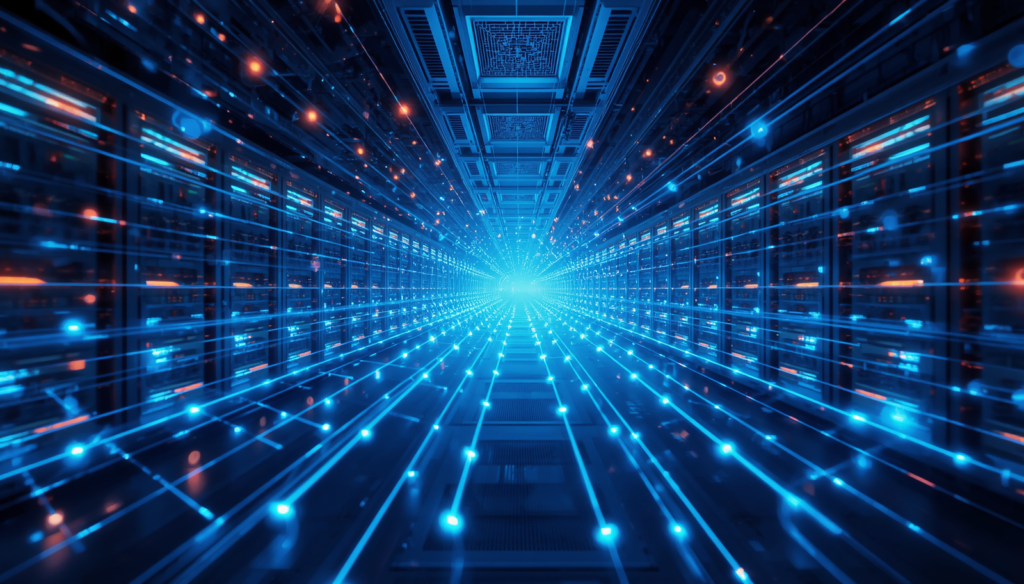
The usage of AI technology implies constant transfer of large volumes of data from one processor or storage system to another as well as to the cloud. The existing networks often turn out to be inefficient in cases when it comes to big AI-related projects.
To address this problem, special networking technologies are implemented in data centers that are used for AI operations. They provide for the efficient transfer of data by increasing its speed, thus improving the overall performance and efficiency.
Such technologies are especially needed in the process of training large language models and operating AI-powered apps. Any lag or delay negatively affects the performance when millions of computations are performed.
Networks will be an integral part of AI-related cloud computing in the future.
Sustainability Challenges and Opportunities
The fast-growing number of data centers of artificial intelligence is associated with energy consumption and environmental sustainability challenges. It requires a lot of energy to train AI, and there is a steady growth of the computational power demand.
One way to solve this problem is through the use of renewable energy sources and energy-efficient infrastructure. The application of solar, wind, and hydroelectric energy helps cloud providers mitigate the negative impact on the environment.
New approaches to cooling systems may also contribute to decreasing the amount of consumed energy. Air-based solutions have difficulties coping with heating from AI processors, whereas liquid cooling systems can offer better results in terms of efficiency.
The question of sustainability becomes a priority issue for cloud computing providers, as many customers tend to choose such organizations.
Liquid Cooling and Next-Generation Infrastructure
With the increase in the capability of AI hardware, heat dissipation has been one of the biggest challenges faced today. With high-performance AI processors that produce a lot of heat during processing, existing cooling mechanisms have become inefficient.
Unlike air-based cooling, liquid-based cooling is highly efficient when it comes to removing heat from processors and can help save costs and improve efficiencies for energy consumption and higher server density.
Several upcoming data centers for next-gen AI processors are being constructed with liquid-based cooling in mind. This allows providers to fully leverage the technology while remaining sustainable.
There will be a massive shift towards liquid cooling with the increasing AI workload.
Industry Impact of AI Data Centers
AI data centers have an effect on almost all industries. They are used in the field of medicine to assist in imaging analysis, drug discovery, and customized treatment. In finance, AI systems are utilized for fraud detection, risks assessment, and stock market predictions.
In retail, AI-enabled cloud-based systems are used by companies for inventory optimization, behavior prediction, and customized experiences. They are also used by manufacturers in order to enhance quality control and maintenance.
Access to infrastructure that is ready for the deployment of AI systems leads businesses to develop new solutions and implement advanced technologies without having to establish in-house data centers.
With more and more adoption of AI, their impact will only increase in the future.
Security Considerations in AI Cloud Environments
Security continues to be among the critical factors for organizations using AI technology in their operations. AI models require access to very sensitive data, which makes security a necessity.
Current AI data centers come with state-of-the-art security features like encryption capabilities, identity management, access control, and intrusion detection mechanisms. Several service providers have also taken steps to adopt the Zero Trust security model.
It is necessary to ensure that the use of AI by an organization is aligned with relevant industry standards. Appropriate governance and security solutions are key to ensuring safety and security.
This is especially true considering that the use of AI is expected to increase in the future.
Future Trends Shaping AI Data Centers
There are several trends that are predicted to shape the future development of AI data centers. The first one is related to the growing prevalence of self-managing infrastructure. In the coming years, AI solutions will be capable of monitoring, optimizing, and maintaining data centers without much human involvement.
The second trend involves the use of edge computing combined with an AI cloud solution. With this approach, companies can analyze data on-site, which allows for faster reaction.
The third trend is associated with the development of more energy-efficient AI-based equipment. Due to increasing sustainability concerns, providers will continue focusing on environmentally friendly solutions.
According to industry insiders, there is also a growing trend towards using AI-native cloud platforms dedicated specifically to AI tasks.
Conclusion
AI data centers mark a radical shift in the future of cloud computing technology. By leveraging specialized hardware, high-quality networking capabilities, intelligent automation, and efficient cooling solutions, such facilities can be seen as providing the backbone that allows today’s AI workloads to perform properly.
As companies incorporate artificial intelligence into their processes, the need for infrastructure that is AI-enabled will rise. With that, new technology and approaches aimed at serving the needs of cloud-based AI have emerged.
Sustainability, security, and efficiency remain crucial factors for any cloud provider in the evolving landscape of AI. However, the future of cloud computing technology will revolve around the incorporation of artificial intelligence.
Companies capable of embracing AI cloud computing technology will find themselves better equipped to innovate, compete, and succeed. AI data centers will not simply act as upgrades to existing facilities; rather, they represent the foundation for future cloud computing technology development.