

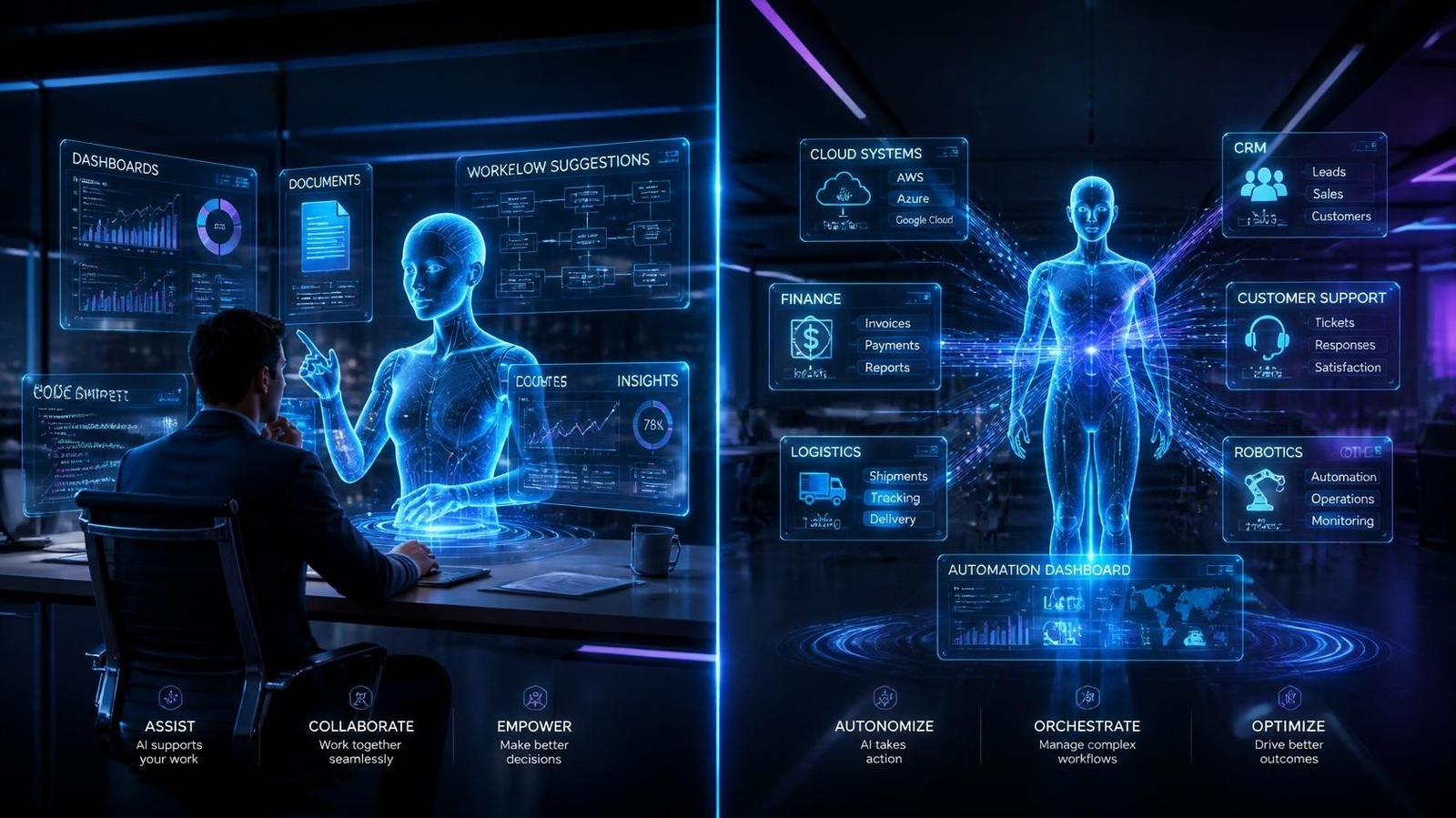
Artificial Intelligence (AI) is no longer a futuristic technology it has become a competitive advantage for businesses across every industry. From automating repetitive tasks to enhancing customer experiences and improving decision-making, AI is transforming the way organizations operate. As companies continue to embrace digital transformation, two terms have become increasingly common: AI Copilots and AI Agents.
Although these technologies are often used interchangeably, they are designed for different purposes. An AI Copilot acts as an intelligent assistant that helps employees complete their work more efficiently, while an AI Agent can independently plan, make decisions, and execute tasks with minimal human involvement. Understanding this distinction is essential because choosing the right AI solution can significantly impact your organization’s productivity, operational efficiency, and return on investment.
Whether you are a startup looking to improve team productivity or a large enterprise aiming to automate complex business processes, understanding the strengths and limitations of AI Copilots and AI Agents will help you make an informed decision. In this guide, we’ll compare both technologies, explore their business applications, and help you determine which AI solution is best suited for your organization.
What Are AI Copilots?
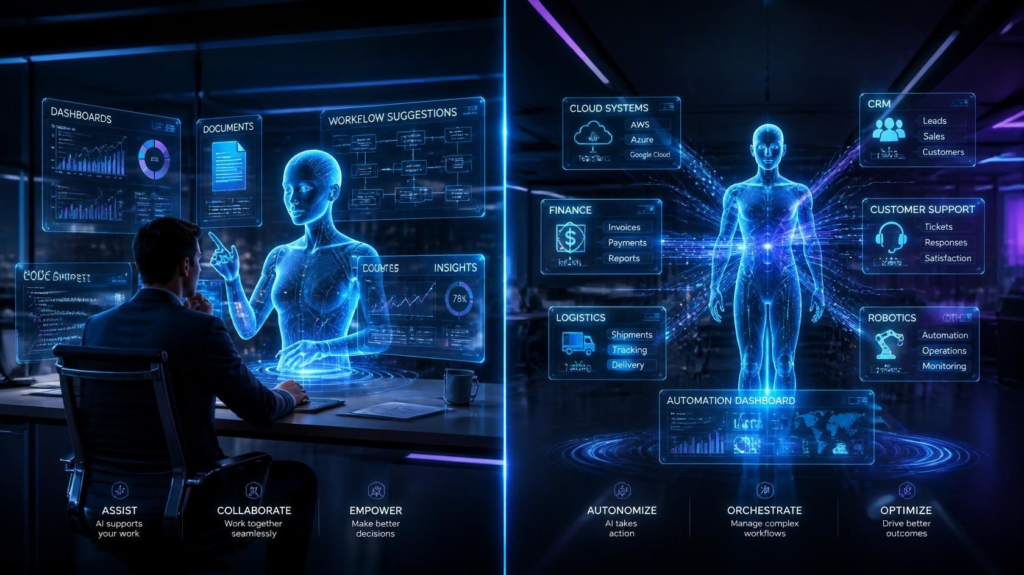
An AI Copilot is an intelligent virtual assistant that works alongside humans to improve productivity rather than replace them. Instead of performing work independently, it assists users by generating ideas, drafting content, analyzing information, answering questions, and simplifying repetitive tasks. The human user remains in control of every decision while the AI provides relevant suggestions and recommendations.
Businesses across various industries are using AI Copilots to reduce manual work and improve productivity. Common applications include:
- Software Development: Generate code, suggest bug fixes, explain complex code, and create technical documentation.
- Marketing: Create blog outlines, generate SEO-friendly headings, write social media posts, and rewrite product descriptions.
- Sales: Draft personalized emails, prepare sales proposals, summarize client meetings, and research prospects.
- Customer Service: Suggest responses, summarize customer conversations, and retrieve relevant support information.
- Finance: Analyze financial reports, summarize data, and assist with forecasting and budgeting.
- Human Resources: Write job descriptions, screen resumes, prepare interview questions, and draft employee communications.
How AI Copilots Improve Business Productivity
Organizations lose countless hours every week performing repetitive administrative work. Writing emails, preparing reports, summarizing meetings, searching for documents, and creating presentations are all necessary tasks, but they consume valuable time that could be spent on higher-value activities.
AI Copilots address this challenge by becoming an intelligent workplace assistant. Instead of starting every task from scratch, employees receive instant drafts, recommendations, and summaries that require only minor editing. This not only increases productivity but also improves consistency and accuracy across teams.
For example, a customer support executive can use an AI Copilot to instantly summarize a customer’s previous interactions before responding to a ticket. A sales representative can generate personalized follow-up emails based on meeting notes, while an HR manager can draft job descriptions and interview questions within minutes. Across departments, the result is the same employees spend less time on repetitive work and more time on strategic decision-making.
What Are AI Agents?
While AI Copilots assist users, AI Agents take automation a step further. An AI Agent is an autonomous system capable of planning, making decisions, and completing multi-step tasks without requiring constant human guidance. Instead of waiting for individual instructions, it works toward a defined objective and determines the best sequence of actions needed to achieve that goal.
Imagine assigning an employee the responsibility of processing customer refund requests. Rather than asking for approval at every step, that employee checks the purchase history, verifies eligibility, approves the refund, updates the accounting system, notifies the customer, and closes the request independently. An AI Agent operates in much the same way.
How AI Agents Transform Business Operations
As organizations grow, managing repetitive workflows across multiple departments becomes increasingly difficult. Manual processes often lead to delays, inconsistent execution, and higher operational costs. AI Agents solve this problem by automating complete business processes rather than individual tasks.
For instance, an e-commerce business can deploy an AI Agent to monitor inventory in real time. When stock levels fall below a certain threshold, the agent can automatically place purchase orders, notify suppliers, update inventory records, and inform the operations team. No employee needs to manually monitor stock throughout the day.
AI Agents help businesses automate complex workflows and improve operational efficiency. Some common applications include:
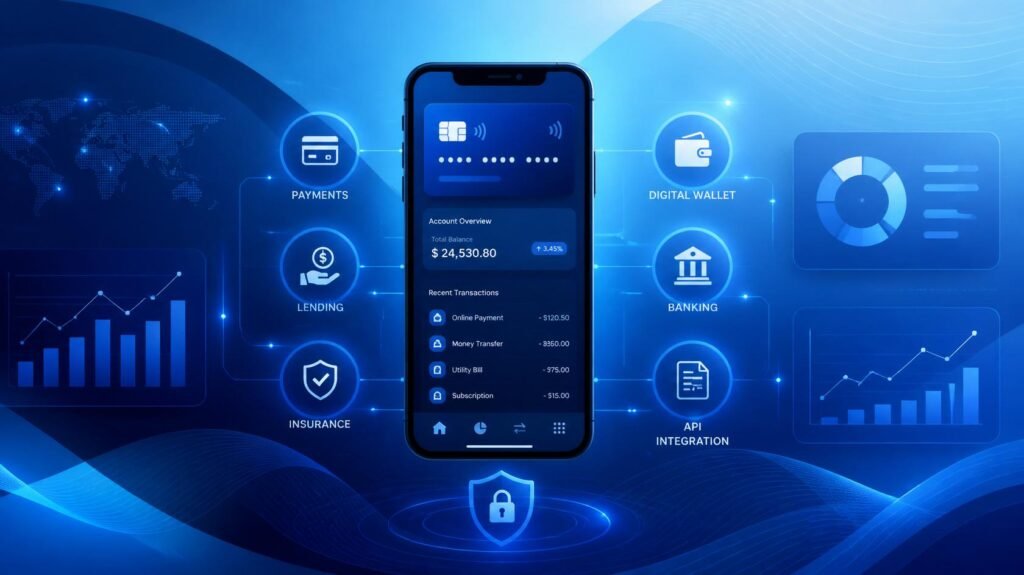
- E-commerce: Monitor inventory in real time, automatically reorder stock, notify suppliers, update inventory records, and inform the operations team when stock levels are low.
- Financial Services: Verify documents, detect fraudulent transactions, generate compliance reports, and escalate exceptional cases that require human review.
- Business Automation: Learn from previous interactions, adapt to changing conditions, and continuously improve performance over time.
These capabilities reduce manual effort, improve accuracy, speed up business processes, and make AI Agents an ideal solution for organizations looking to scale their automation initiatives.
AI Copilots vs AI Agents: Understanding the Core Difference
Although both technologies are built on artificial intelligence, they differ significantly in how they operate and the value they provide. AI Copilots are designed to assist people during their work, whereas AI Agents are built to perform work independently.
A Copilot depends on human prompts and guidance before taking action. It excels at supporting employees with content creation, coding assistance, research, and decision support. In contrast, an AI Agent focuses on achieving a business objective by planning and executing multiple tasks autonomously.
The distinction becomes clearer when considering day-to-day operations. If a marketing manager asks AI to write a campaign email, that is the role of a Copilot. However, if the AI automatically identifies customer segments, creates personalized email campaigns, schedules delivery, monitors performance, and optimizes future campaigns without constant supervision, it functions as an AI Agent.
The choice between the two depends on whether your organization wants AI to assist employees or automate complete workflows.
| Feature | AI Copilots | AI Agents |
|---|---|---|
| Primary Role | Assist users in completing tasks | Perform tasks autonomously |
| Human Involvement | High | Minimal |
| Decision Making | Human-driven | AI-driven within defined goals |
| Task Type | Individual or short tasks | Multi-step business workflows |
| Best For | Productivity and collaboration | End-to-end automation |
| Learning Capability | Limited to user interaction | Continuously adapts and optimizes |
| Business Goal | Enhance employee efficiency | Increase operational efficiency |
As businesses continue investing in AI, many organizations are finding that the best approach is not choosing one over the other but combining both technologies. AI Copilots empower employees to work smarter, while AI Agents automate repetitive processes behind the scenes, creating a highly efficient and intelligent workplace.
Benefits of AI Copilots
AI Copilots help organizations improve productivity by assisting employees with everyday tasks while keeping humans in control of the final decisions. Instead of spending hours on repetitive work, employees can focus on strategic initiatives, creativity, and solving complex business challenges.
Some of the key benefits of AI Copilots include:
- Provides a Better Employee Experience: Minimizes repetitive work, helping employees stay engaged and productive throughout the day.
- Boosts Productivity: Automates repetitive tasks like drafting emails, creating reports, and summarizing documents, allowing employees to complete work faster.
- Supports Better Decision-Making: Provides data-driven insights, recommendations, and quick access to relevant information for informed decisions.
- Improves Work Quality: Generates accurate drafts and suggestions that help reduce errors and maintain consistency.
- Saves Time: Handles time-consuming administrative tasks so employees can focus on high-value activities.
- Enhances Collaboration: Summarizes meetings, organizes information, and makes company knowledge easily accessible across teams.
- Increases Employee Efficiency: Reduces manual effort and enables teams to accomplish more without increasing workload.
- Encourages Innovation: Frees up time for brainstorming, problem-solving, and developing new ideas instead of routine tasks.
Key Benefits of AI Copilots
| Benefit | Business Impact |
|---|---|
| Increased Productivity | Employees complete tasks in less time. |
| Better Decision Support | AI provides insights and recommendations based on available data. |
| Improved Content Creation | Generates blogs, emails, reports, and presentations quickly. |
| Reduced Manual Work | Automates repetitive daily activities. |
| Enhanced Collaboration | Summarizes meetings and shares knowledge across teams. |
| Higher Employee Satisfaction | Staff spend more time on meaningful work instead of repetitive tasks. |
For organizations that depend heavily on knowledge workers, AI Copilots can significantly improve efficiency without disrupting existing workflows. Since humans remain responsible for reviewing and approving outputs, businesses maintain quality control while benefiting from AI-powered assistance.
Benefits of AI Agents
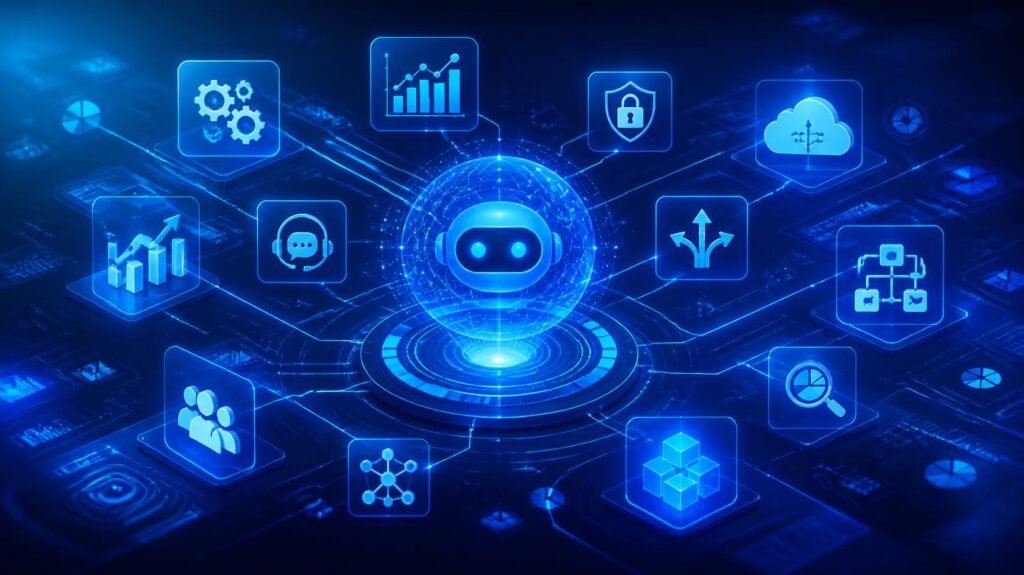
While AI Copilots assist employees, AI Agents are designed to automate entire business processes. Their greatest strength lies in their ability to work independently toward a defined objective. Once assigned a task, an AI Agent can plan the required steps, interact with multiple business systems, make decisions within predefined rules, and complete the workflow without requiring continuous human supervision.
This level of automation allows businesses to reduce operational costs while increasing speed and accuracy. Unlike traditional automation tools that follow fixed rules, AI Agents can adapt to changing situations, making them suitable for dynamic business environments.
For example, an AI Agent managing customer service requests can analyze incoming queries, determine their priority, retrieve customer information, generate appropriate responses, escalate complex cases when necessary, and update CRM records automatically. This reduces response times while allowing human agents to focus on more complex customer interactions.
Businesses also appreciate AI Agents because they operate around the clock. They do not require breaks, enabling organizations to provide continuous service and monitor operations even outside regular business hours.
| Benefit | Business Impact |
|---|---|
| End-to-End Automation | Completes entire workflows with minimal human involvement. |
| Lower Operational Costs | Reduces dependence on manual labor for repetitive processes. |
| Faster Execution | Performs tasks much faster than traditional workflows. |
| Continuous Availability | Operates 24/7 without interruptions. |
| Improved Accuracy | Minimizes human errors in repetitive operations. |
| Scalability | Handles increasing workloads without proportional staffing increases. |
As businesses grow, AI Agents become increasingly valuable because they can manage larger volumes of work while maintaining consistent performance. This makes them particularly attractive for enterprises seeking long-term operational efficiency.
Real-World Business Applications
Although AI Copilots and AI Agents share the same technological foundation, they solve different business problems. Their applications vary depending on whether an organization needs employee assistance or workflow automation.
Marketing
Marketing teams are among the biggest adopters of AI technology. AI Copilots assist marketers by generating blog posts, writing social media captions, creating email campaigns, researching keywords, and analyzing campaign performance. These tools help content creators produce high-quality marketing materials more efficiently.
AI Agents, on the other hand, take marketing automation further. They can identify audience segments, launch personalized campaigns, monitor customer engagement, optimize advertising budgets, and adjust marketing strategies based on performance data—all with minimal human intervention.
Customer Service
Customer support departments use AI Copilots to help agents respond faster by suggesting replies, summarizing customer conversations, and retrieving relevant knowledge base articles. Human representatives remain responsible for final communication, but AI significantly reduces response times.
AI Agents automate much of the support process by answering common questions, routing tickets to the appropriate department, tracking issue resolution, and following up with customers automatically. This enables businesses to provide faster and more consistent support experiences.
Sales
Sales professionals use AI Copilots to prepare proposals, summarize meetings, generate follow-up emails, and identify promising sales opportunities. These capabilities allow representatives to spend more time building relationships instead of handling administrative tasks.
AI Agents can independently qualify leads, schedule meetings, update CRM records, send reminders, and nurture prospects throughout the sales pipeline. By automating repetitive activities, sales teams can focus on closing deals and expanding customer relationships.
Human Resources
HR departments benefit from AI Copilots when creating job descriptions, screening resumes, preparing interview questions, and drafting employee communications. These tools simplify recruitment and reduce administrative workload.
AI Agents support HR by automating interview scheduling, onboarding workflows, document verification, payroll approvals, leave management, and employee notifications. This improves efficiency while creating a smoother employee experience.
Finance
Finance professionals use AI Copilots to analyze financial reports, summarize expenses, generate forecasts, and answer complex financial queries. These insights help leaders make informed business decisions more quickly.
AI Agents extend automation by processing invoices, reconciling transactions, detecting fraud, monitoring compliance, and generating financial reports automatically. This reduces manual effort while improving financial accuracy.
AI Copilots vs AI Agents Across Industries
The adoption of AI varies depending on industry requirements. Some organizations primarily need intelligent assistance, while others require complete process automation.
| Industry | AI Copilot Use Case | AI Agent Use Case |
|---|---|---|
| Healthcare | Summarizing patient records | Scheduling appointments and managing workflows |
| Banking | Financial analysis and reporting | Fraud detection and transaction monitoring |
| Retail | Product recommendations and content creation | Inventory management and order processing |
| Manufacturing | Maintenance documentation | Production monitoring and supply chain automation |
| Education | Lesson planning and content generation | Student enrollment and administrative automation |
| IT Services | Code generation and debugging | Infrastructure monitoring and automated incident response |
The table highlights an important trend: AI Copilots primarily enhance employee productivity, whereas AI Agents automate operational processes that previously required significant manual effort.
Can AI Copilots and AI Agents Work Together?
Rather than viewing AI Copilots and AI Agents as competing technologies, many organizations are discovering that they complement each other. AI Copilots improve the productivity of employees by providing intelligent assistance, while AI Agents automate repetitive workflows behind the scenes.
Consider an e-commerce company launching a promotional campaign. A marketing manager might use an AI Copilot to draft campaign content, refine messaging, and create product descriptions. Once the campaign is approved, an AI Agent could automatically segment customers, schedule email campaigns, monitor engagement metrics, adjust promotions based on customer behavior, and generate performance reports.
This combination creates a seamless workflow where employees focus on strategy and creativity while AI handles execution and optimization. Businesses adopting both technologies often experience higher productivity, improved customer experiences, and greater operational efficiency than those relying on only one approach.
As AI technology continues to evolve, the collaboration between humans, AI Copilots, and AI Agents will become a defining characteristic of successful digital organizations.
Conclusion
Artificial intelligence is reshaping the way businesses operate, and both AI Copilots and AI Agents are at the forefront of this transformation. While they share the common goal of improving efficiency, they are designed to solve different business challenges. AI Copilots act as intelligent assistants that help employees complete tasks faster, make informed decisions, and enhance productivity. AI Agents, on the other hand, go beyond assistance by autonomously managing workflows, executing multi-step processes, and optimizing business operations with minimal human intervention.
Choosing between an AI Copilot and an AI Agent depends on your organization’s objectives. If your goal is to empower employees, improve collaboration, and simplify everyday tasks, an AI Copilot is the right choice. However, if you’re looking to automate complex workflows, reduce operational costs, and scale your business efficiently, AI Agents offer a more comprehensive solution.
For many organizations, the most effective strategy is to combine both technologies. AI Copilots can enhance employee performance, while AI Agents automate repetitive and time-consuming processes in the background. Together, they create a smarter, more agile, and future-ready workplace capable of driving innovation, improving customer experiences, and maintaining a competitive edge in an increasingly AI-driven world.
Frequently Asked Questions (FAQs)
1. What is the main difference between AI Copilots and AI Agents?
The primary difference is that AI Copilots assist humans in completing tasks, while AI Agents can independently plan, execute, and manage tasks with minimal human intervention. Copilots enhance productivity, whereas Agents focus on end-to-end automation.
2. Which is better for businesses: AI Copilots or AI Agents?
Neither is universally better—it depends on your business needs. AI Copilots are ideal for improving employee productivity and collaboration, while AI Agents are better suited for automating complex workflows and repetitive business processes.
3. Can AI Copilots and AI Agents work together?
Yes. Many organizations use both technologies together. Employees can use AI Copilots for content creation, research, and decision support, while AI Agents automate workflows such as customer service, inventory management, and data processing.
4. What industries benefit the most from AI Copilots and AI Agents?
Almost every industry can benefit, including healthcare, finance, retail, manufacturing, education, logistics, IT, and customer service. The applications vary depending on business goals and operational requirements.
5. Are AI Agents fully autonomous?
AI Agents can operate autonomously within predefined rules and objectives. However, many businesses still maintain human oversight for high-risk decisions, regulatory compliance, or exceptional situations.