
The increase in complexity of supply chains is mainly attributed to the globalization of the market, growing customer demands, labor shortages, and economic volatility. Today, companies are supposed not only to provide timely delivery but also save money, keep their clients satisfied and cope with disruption well.
Artificial intelligence (AI) has proved itself to be one of the most revolutionary solutions for supply chain management. It helps to forecast customers’ needs, control inventory and automate many processes related to warehouse management and logistics.
Instead of working exclusively with historical data and planning manually, companies use artificial intelligence to process large volumes of information and take appropriate actions based on the results of the analysis.
This approach allows increasing efficiency, reducing costs, getting more visibility and being better prepared to unexpected situations.
In this detailed guide, we will discuss the leading AI trends in supply chain management.
Why AI is Revolutionizing Supply Chain Management
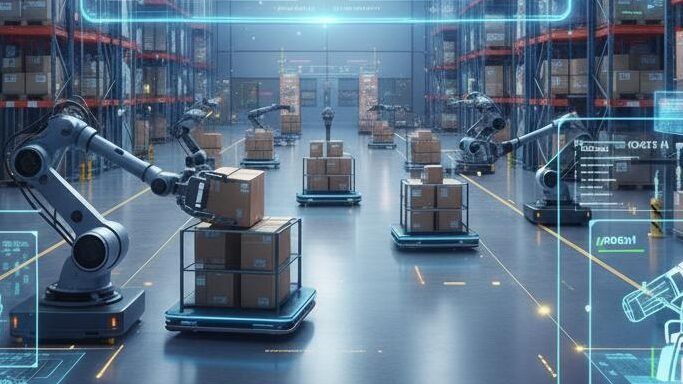
Conventional supply chains use tools such as spreadsheets and manual forecasts for planning, and their approach is usually reactive in nature.
With the help of AI, companies can predict demand, optimize inventories, perform mundane tasks automatically, and make decisions based on real-time data.
Some of the most prominent benefits include:
- Accurate forecasting
- Reduction in the cost of holding inventory
- Rapid delivery
- Operational cost savings
- Customer satisfaction
- Supply chain transparency
- Supplier collaboration
- Disruption management
As the development of AI technology progresses, the companies that use AI will have a considerable competitive edge.
Trend 1: Predictive Demand Forecasting
Predicting customer demand has always been one of the biggest challenges in supply chain Management. The traditional approaches to forecasting have to rely on sales history, which makes them ineffective in case of unexpected changes in the market.
AI-based forecasting is based on the use of machine learning algorithms that process different kinds of information, such as:
- History of sales
- Seasonal demands
- Weather conditions
- Behavior of consumers
- Economic indicators
- Information from social networks
- Marketing campaigns
Thus, instead of predicting future needs, AI constantly updates its forecasts.
Benefits
- Reduces stock shortages
- Prevents overstocking
- Improves inventory planning
- Enhances production scheduling
- Increases customer satisfaction
| Traditional Forecasting | AI Forecasting |
|---|---|
| Historical data only | Multiple real-time data sources |
| Manual updates | Automatic continuous learning |
| Lower accuracy | Higher forecasting precision |
| Reactive planning | Proactive planning |
Businesses using AI forecasting can significantly improve planning accuracy while minimizing waste and operational costs.
Trend 2: Intelligent Inventory Management
Inventory management directly affects profitability. Excess inventory ties up capital, while insufficient inventory results in lost sales.
AI continuously monitors inventory levels across warehouses and retail locations.
It analyzes:
- Sales velocity
- Supplier lead times
- Seasonal demand
- Customer buying patterns
- Regional demand differences
Based on this analysis, AI recommends optimal reorder quantities and replenishment schedules.
AI Applications
- Automatic replenishment
- Safety stock optimization
- Multi-warehouse inventory balancing
- Inventory classification
- Dead stock identification
Benefits
- Reduced carrying costs
- Better product availability
- Lower inventory waste
- Faster replenishment
- Improved warehouse utilization
Trend 3: Autonomous Warehouse Automation
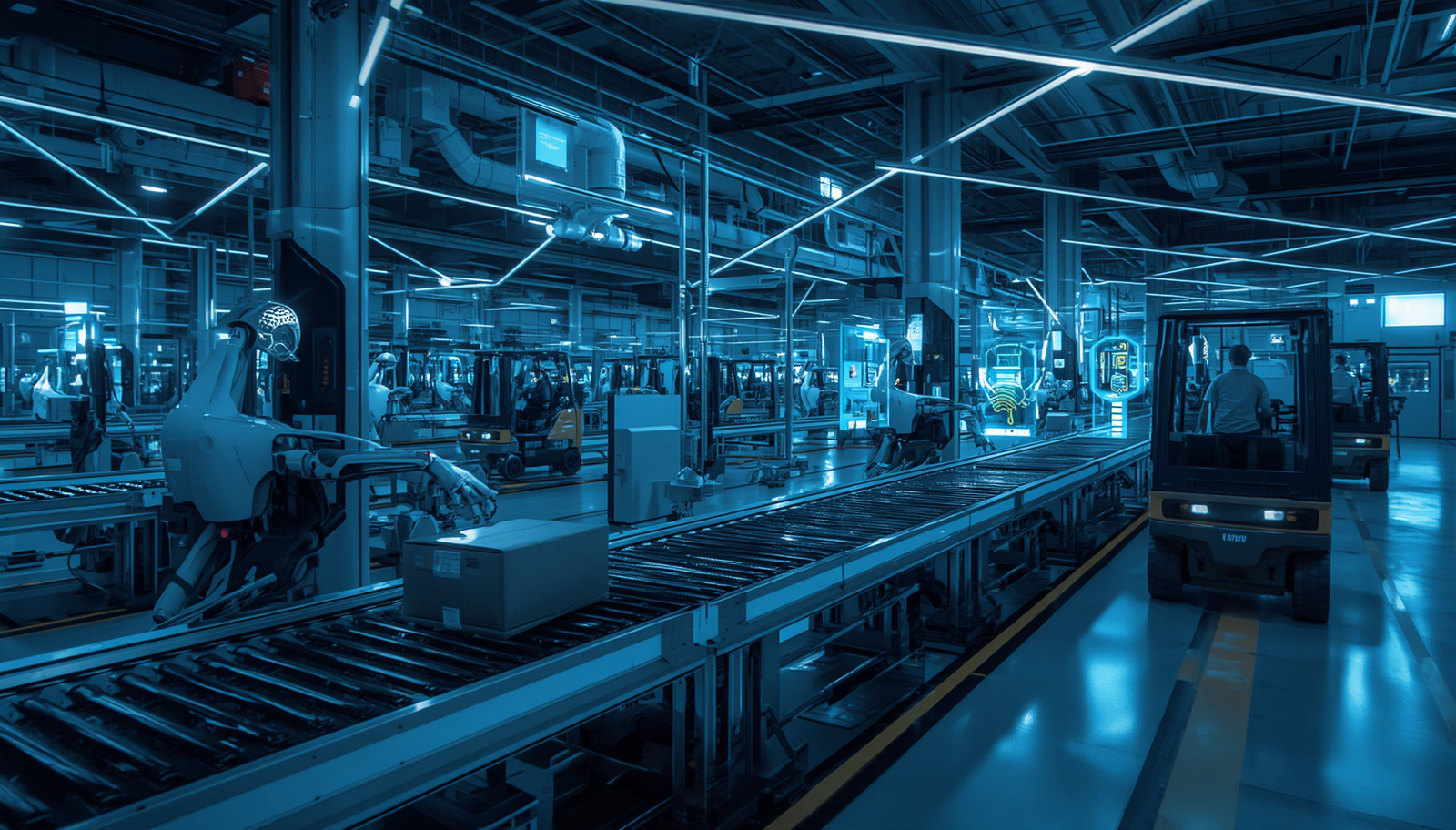
Modern warehouses are rapidly evolving into intelligent facilities where robots, sensors, and AI systems work together to improve operational efficiency.
AI-powered warehouse automation includes:
- Autonomous mobile robots
- Robotic picking systems
- Automated sorting
- Smart packaging
- Drone inventory counting
Rather than replacing human workers entirely, these technologies handle repetitive and physically demanding tasks, allowing employees to focus on higher-value responsibilities.
Warehouse AI also optimizes storage layouts by analyzing product demand, movement frequency, and available space.
Key Advantages
- Faster order fulfillment
- Fewer picking errors
- Lower labor costs
- Higher productivity
- Improved workplace safety
Many e-commerce companies now operate highly automated warehouses capable of processing thousands of orders every hour with remarkable accuracy.
Trend 4: AI-Powered Route Optimization
Transportation represents one of the largest expenses within the supply chain.
Traditional delivery planning often relies on fixed routes that fail to account for changing conditions such as traffic congestion, weather, or road closures.
AI transforms route planning by analyzing real-time data from:
- GPS systems
- Traffic updates
- Fuel prices
- Weather forecasts
- Delivery priorities
- Driver availability
The system dynamically recommends the fastest and most cost-effective routes.
Major Benefits
- Reduced fuel consumption
- Faster deliveries
- Lower transportation costs
- Increased driver productivity
- Improved customer satisfaction
AI can also optimize multi-stop deliveries by determining the most efficient sequence of destinations, reducing travel time and improving overall logistics performance.
Key Takeaways from the First Four Trends
| AI Trend | Primary Business Benefit | Operational Impact |
|---|---|---|
| Predictive Demand Forecasting | Accurate demand prediction | Better planning and fewer stockouts |
| Intelligent Inventory Management | Optimized inventory levels | Lower costs and improved availability |
| Autonomous Warehouse Automation | Faster warehouse operations | Higher productivity and accuracy |
| AI-Powered Route Optimization | Smarter transportation planning | Reduced delivery time and fuel costs |
Trend 5: Digital Twins Are Revolutionizing Supply Chain Planning
One of the most exciting AI trends in supply chain management is the use of Digital Twins. A digital twin is a virtual representation of a physical supply chain, including warehouses, manufacturing plants, transportation networks, suppliers, and inventory locations. By continuously collecting real-time data from sensors, IoT devices, enterprise software, and logistics systems, the digital twin mirrors actual supply chain operations.
This technology enables businesses to simulate different scenarios before implementing changes in the real world. For example, organizations can predict the impact of supplier delays, transportation disruptions, sudden spikes in customer demand, or changes in production capacity. Instead of making decisions based on assumptions, managers can evaluate multiple strategies in a virtual environment and choose the most effective solution.
AI enhances digital twins by analyzing historical trends, forecasting future events, and recommending corrective actions automatically. This significantly reduces operational risks while improving planning accuracy and business agility.
Benefits of Digital Twins
- Real-time operational visibility
- Better strategic planning
- Faster response to disruptions
- Lower operational risks
- Improved resource utilization
- Enhanced collaboration across departments
Trend 6: AI-Powered Procurement Intelligence
Procurement has traditionally involved manual supplier evaluations, contract management, purchase approvals, and price negotiations. AI is transforming this process by automating procurement workflows while providing deeper insights into supplier performance and purchasing decisions.
Modern AI systems analyze supplier history, pricing trends, delivery performance, contract compliance, financial stability, and market conditions. Based on this analysis, businesses can identify the most reliable suppliers, negotiate better contracts, and minimize procurement risks.
AI also detects unusual purchasing behavior, identifies duplicate orders, and recommends cost-saving opportunities. As procurement becomes more intelligent, organizations can reduce expenses while maintaining high-quality supplier relationships.
AI Improves Procurement Through
- Automated supplier selection
- Contract analysis
- Purchase order automation
- Price prediction
- Supplier performance monitoring
- Fraud detection
- Spend analysis
Companies using AI-driven procurement gain better visibility into spending patterns, allowing procurement teams to focus on strategic sourcing rather than repetitive administrative work.
Trend 7: Computer Vision Enhances Warehouse Accuracy
Computer Vision combines artificial intelligence with cameras and image recognition technologies to automate visual inspection throughout the supply chain. Instead of relying solely on manual inspections, businesses can use AI to identify products, verify inventory, monitor warehouse activities, and inspect package quality with exceptional speed and accuracy.
In warehouses, computer vision automatically counts inventory, detects misplaced products, verifies barcode accuracy, and identifies damaged goods before shipment. Manufacturing companies also use computer vision to inspect products for quality defects during production.
The technology improves inventory accuracy while reducing costly human errors.
Common Applications
- Barcode scanning
- Inventory counting
- Package inspection
- Product quality control
- Worker safety monitoring
- Warehouse surveillance
- Automated receiving operations
Organizations implementing computer vision often experience significant improvements in warehouse productivity and order accuracy.
Trend 8: AI-Based Supply Chain Risk Prediction
Global supply chains face numerous uncertainties, including natural disasters, geopolitical conflicts, supplier failures, transportation delays, cyberattacks, and economic fluctuations. AI helps businesses identify these risks before they become operational problems.
By continuously monitoring thousands of internal and external data sources, AI systems can detect early warning signs that human planners might overlook. These systems analyze weather forecasts, shipping data, supplier performance, financial news, commodity prices, and geopolitical developments to estimate potential disruptions.
When AI predicts an elevated risk, it immediately recommends mitigation strategies such as sourcing from alternative suppliers, adjusting inventory levels, rerouting shipments, or increasing production.
Major Advantages
- Early disruption detection
- Better contingency planning
- Reduced financial losses
- Stronger supplier resilience
- Improved operational continuity
Businesses that proactively manage supply chain risks can recover faster from disruptions while maintaining customer satisfaction.
Trend 9: Generative AI Is Transforming Supply Chain Decision-Making
Generative AI has quickly become one of the most influential technologies across industries, and supply chain management is no exception. Unlike traditional AI models that primarily analyze historical data, Generative AI creates new insights, recommendations, reports, and strategic plans based on complex datasets.
Supply chain professionals can now interact with AI using natural language. Instead of manually searching through reports, they can ask questions such as:
- Which suppliers present the highest risk?
- Why did transportation costs increase this month?
- What inventory should be replenished next week?
- Which warehouse has excess stock?
Generative AI instantly produces detailed summaries, forecasts, dashboards, and recommendations, helping executives make faster and more informed decisions.
It also assists in creating procurement reports, supplier communications, inventory summaries, and operational documentation, significantly reducing administrative workload.
Key Benefits
- Faster business reporting
- Improved executive decision-making
- Automated documentation
- Better collaboration
- Enhanced productivity
- Natural language analytics
Trend 10: Autonomous Supply Chains
The ultimate goal of AI-driven supply chain management is the autonomous supply chain. Under this concept, the AI systems constantly analyze performance, forecast future events, make processes more efficient, and take decisions while reducing human interference to the minimum.
Unlike manual identification of the issues, automatic systems independently perform inventory balancing, product reordering, shipment routing, warehouse scheduling, and production planning.
Autonomous supply chains incorporate AI, machine learning, robotics, IoT, cloud, and predictive analytics into one interconnected system.
Though total automation is currently being developed further, major companies have already automated considerable parts of their operations.
Characteristics of Autonomous Supply Chains
- Self-learning systems
- Automated procurement
- Intelligent inventory management
- Predictive maintenance
- Dynamic transportation planning
- Continuous optimization
- Real-time decision-making
As AI technologies continue to mature, autonomous supply chains will become the standard for highly competitive businesses.
Comparison of AI Trends in Supply Chain Management
| AI Trend | Primary Purpose | Key Business Benefit |
|---|---|---|
| Digital Twins | Virtual supply chain simulation | Better planning and forecasting |
| Procurement Intelligence | Smart purchasing decisions | Reduced procurement costs |
| Computer Vision | Warehouse and quality inspection | Higher operational accuracy |
| Risk Prediction | Disruption forecasting | Improved resilience |
| Generative AI | Decision support and reporting | Faster strategic planning |
| Autonomous Supply Chains | End-to-end automation | Maximum efficiency |
Benefits of AI in Supply Chain Management
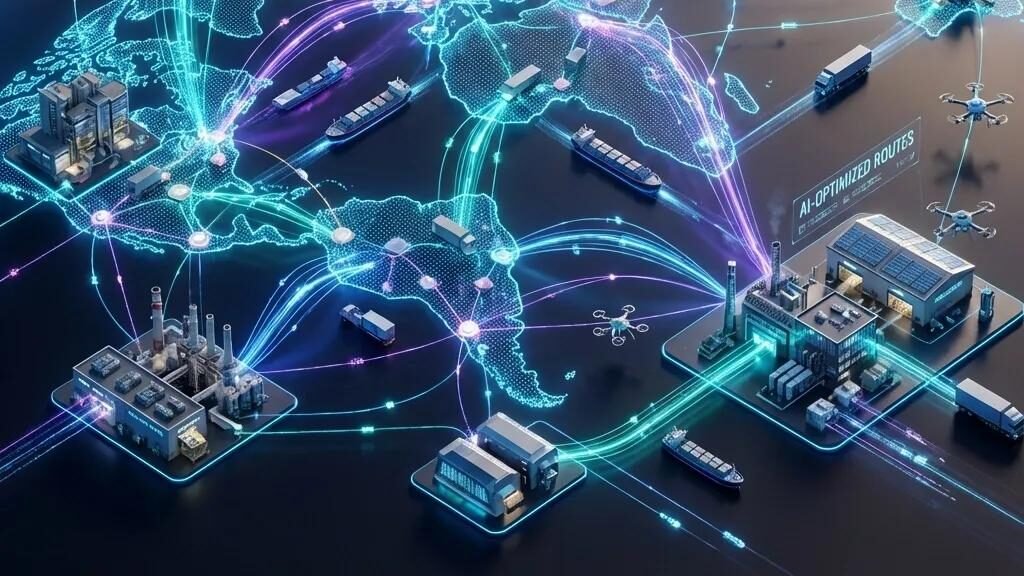
Artificial intelligence is not only a technological advancement anymore—it is a key element for companies that want to stay relevant in the ever-changing global environment. AI is a technology that allows companies to automate all stages of their supply chain from procurement to logistics and customer services.
One of the advantages of AI is the ability to work with a large number of information. It analyzes information obtained from several different sources which helps to predict future needs and make timely decisions. Thus, it leads to increased operational efficiency and rational use of resources.
Moreover, AI makes possible automating routine processes and allowing workers to engage in such strategically important processes as cooperation with suppliers and customers, planning, etc. Simultaneously, predictive analysis allows firms to predict any problems that can occur in the process of business operation.
Benefits of Using AI in the Supply Chain Management
- Accuracy in forecasting
- Cost savings on inventory
- Fast delivery of orders
- Warehouse efficiency
- Better suppliers’ management
- Decreased transportation costs
Business Impact of AI
| Business Area | AI Impact |
|---|---|
| Inventory | Reduced overstock and stockouts |
| Logistics | Faster and more efficient deliveries |
| Procurement | Smarter supplier selection |
| Warehousing | Automated operations with fewer errors |
| Forecasting | Improved demand prediction |
| Customer Service | Faster response and order accuracy |
Challenges of Implementing AI in Supply Chain Management
However, despite all these benefits, the application of AI technologies needs some preparations and investments. One of the main issues that need to be resolved concerns the availability of high-quality data since the use of low-quality data may affect the performance of an AI solution negatively, making it less efficient for making decisions.
Another problem concerns the integration of AI solution with existing enterprise systems, which include ERP, WMS, and TMS platforms. Moreover, some companies may meet resistance from their employees regarding the implementation of new technologies, which makes training very important in such cases.
One more issue concerns cybersecurity since AI-based systems usually handle a lot of sensitive information of the company and its customers. Thus, security precautions need to be taken in order to keep this information secure and compliant with regulations.
Finally, another difficulty associated with the application of AI is its high costs. However, in the long term, the results may be profitable.
Common Challenges and Solutions
| Challenge | Solution |
|---|---|
| Poor Data Quality | Establish strong data governance |
| High Implementation Costs | Start with pilot projects and scale gradually |
| Integration Complexity | Use cloud-based AI platforms and APIs |
| Skills Gap | Invest in employee training and AI expertise |
| Cybersecurity Risks | Strengthen security protocols and compliance |
The Future of AI in Supply Chain Management
The future of supply chain management is going to get smarter, interconnected, and self-governing. Technologies like machine learning, robotics, Internet of Things (IoT), blockchain, and Generative AI are going to influence business operations and change how the planning, production, transportation, and delivery of goods and services are conducted by businesses.
The role of predictive analytics, real-time tracking and management, and automation is only going to grow in order to increase the ability of businesses to become resilient and react promptly to changes in the market environment. Digital twins and autonomous systems are going to develop and allow businesses to simulate their activities, optimize resources usage, and avoid disruptions from happening.
Another critical direction for the development of businesses is the use of AI in making them sustainable. With the help of AI technologies, businesses are going to decrease carbon emissions, make transportation routes efficient, eliminate waste, and save energy in the supply chain.
Conclusion
The emergence of artificial intelligence is drastically changing the supply chain industry by empowering firms to work with increased agility, accuracy, and intelligence. Digital twin, generative AI, autonomous supply chains, and many others are some examples of technologies that are revolutionizing the way firms handle their global supply chain challenges.
It goes without saying that firms that embrace artificial intelligence are working towards becoming better, more sustainable, and efficient organizations. In the coming days as technology evolves, artificial intelligence will continue to form the basis of modern supply chain management strategies.
Frequently Asked Questions (FAQs)
1. What is AI in supply chain management?
AI in supply chain management refers to the use of artificial intelligence technologies such as machine learning, predictive analytics, computer vision, and automation to optimize procurement, inventory, logistics, warehousing, forecasting, and decision-making.
2. What are the biggest AI trends in supply chain management?
Some of the leading AI trends include predictive demand forecasting, intelligent inventory management, digital twins, autonomous warehouses, procurement intelligence, Generative AI, supply chain risk prediction, and autonomous supply chains.
3. How does AI improve inventory management?
AI analyzes sales patterns, supplier lead times, and demand forecasts to optimize stock levels, reduce overstocking, prevent stockouts, and automate replenishment processes.
4. Can AI reduce supply chain costs?
Yes. AI reduces costs by improving forecasting accuracy, optimizing transportation routes, automating warehouse operations, minimizing inventory waste, and streamlining procurement processes.
5. What is the future of AI in supply chain management?
The future includes highly autonomous supply chains powered by AI, robotics, IoT, blockchain, and real-time analytics, enabling smarter decisions, greater resilience, and more sustainable operations.